
Valves Manufacturer Tel: +86 13380377051
What Special Industrial Applications Are Double Eccentric Ball Valves Suitable For?
Double eccentric ball valves, also known as double offset or C-ball valves, represent an advanced evolution in valve technology, designed to address the limitations of traditional floating or trunnion-mounted ball valves. Unlike standard ball valves where the ball is centered, the double eccentric design incorporates two offsets: one between the stem axis and the ball’s centerline, and another between the sealing surface and the valve centerline. This configuration enables a cam-like action during operation, allowing the ball to disengage from the seat early in the rotation cycle, reducing friction, wear, and operational torque while enhancing sealing reliability.
These valves are particularly valued in industries requiring robust performance under extreme conditions, such as high pressures, temperatures, abrasive media, or frequent cycling. Their ability to provide bubble-tight shutoff, bi-directional sealing, and minimal maintenance makes them ideal for specialized applications where conventional valves might fail prematurely or require excessive energy for actuation. As industries push for greater efficiency, safety, and sustainability, double eccentric ball valves have gained prominence in sectors like oil and gas, petrochemicals, water treatment, and power generation.
This article explores the special industrial applications of double eccentric ball valves, highlighting their technical advantages and suitability for demanding environments. By examining specific use cases across various sectors, we illustrate how their unique design—featuring no-cavity construction, frictionless rotation, and durable materials—enables superior performance. Drawing from industry sources, these valves are engineered for severe service, offering low torque operation and extended durability. With global markets emphasizing reliability in harsh conditions, understanding these applications is essential for engineers, operators, and decision-makers.
Design and Key Features of Double Eccentric Ball Valves
To appreciate their suitability for special applications, it’s crucial to understand the core design of double eccentric ball valves. The “double eccentric” refers to the dual offsets that create a camming motion. When opening, the ball swings away from the seat almost immediately, operating without contact for most of the 90-degree turn. This minimizes friction, which in traditional valves can lead to high torque requirements and accelerated wear.
Key features include:
- C-Shaped or Semi-Ball Obturator: Often a hemispherical or segmented ball, reducing weight and material while maintaining full-bore flow.
- Metal-to-Metal Sealing: Hard coatings like tungsten carbide or stellite ensure durability in abrasive or high-temperature environments, achieving Class VI shutoff.
- No Cavity Design: Eliminates trapped fluids, preventing pressure buildup and enhancing safety in volatile media.
- Low Torque Operation: Up to 70% reduction in torque compared to floating ball valves, allowing smaller actuators and lower energy use.
- Wide Temperature and Pressure Range: From cryogenic (-196°C) to high-heat (+585°C) and pressures up to ANSI Class 2500 or PN160.
- Fire-Safe and Bi-Directional: Inherent fire resistance and sealing in both directions, complying with standards like API 607.
These attributes stem from innovative engineering, such as the convex-to-convex sealing that sweeps away particles, preventing entrapment.
Materials like stainless steel, Inconel, or Monel further enhance corrosion resistance, making them versatile for corrosive fluids and slurries.
Overall, this design bridges the gap between ball valves’ full-flow capabilities and butterfly valves’ low-friction benefits, positioning them for specialized roles.
Advantages in Industrial Contexts
The advantages of double eccentric ball valves directly translate to their suitability for special applications. Their frictionless operation extends valve life, with ratings for millions of cycles, reducing downtime and maintenance costs. In high-cycling scenarios, the absence of dynamic seals or springs eliminates common failure points found in trunnion designs.
Energy efficiency is another key benefit; the low torque allows for manual operation in larger sizes or integration with compact actuators, cutting power consumption in automated systems. For abrasive media, the hard-sealed surfaces resist erosion, maintaining sealing integrity over time. The no-cavity feature mitigates risks in compressible or hazardous fluids, preventing explosions from trapped product expansion. In terms of flow control, some variants like segmented control types offer precise modulation up to 40% opening, combining isolation and regulation in one unit. This multifunctionality reduces the need for multiple valves, simplifying systems and lowering installation costs. Environmentally, their tight sealing minimizes fugitive emissions, aligning with regulations in sensitive industries.
These advantages make double eccentric ball valves not just alternatives but preferred solutions in environments where reliability under stress is non-negotiable.
Applications in Oil and Gas Industry
The oil and gas sector demands valves that withstand extreme pressures, corrosive hydrocarbons, and abrasive slurries, making double eccentric ball valves highly suitable. In upstream operations, such as drilling and extraction, these valves handle high-pressure gas and oil flows, providing reliable shutoff in emergency isolation systems. Their low torque ensures quick actuation, critical for blowout prevention. Midstream applications, including pipelines and storage, benefit from their full-bore design, which minimizes pressure drop and turbulence. For natural gas liquids (NGL) processing, the bi-directional sealing prevents leaks in bidirectional flow lines. In heavy oil processing, where viscous and abrasive media prevail, the particle-sweeping mechanism maintains performance, extending intervals between maintenance.
Downstream refining sees extensive use in amine scrubbing units, where corrosive amines remove sulfur from gases. The valves’ corrosion-resistant materials and tight sealing handle these aggressive chemicals effectively. LNG liquefaction and regasification facilities rely on them for cryogenic services, managing temperatures down to -196°C without seat deformation. Liquid oxygen, nitrogen, and hydrogen applications in gas separation plants also utilize their cryogenic compatibility.
Case in point: In offshore platforms, double eccentric ball valves are used in subsea manifolds, enduring high pressures (up to 10,000 psi) and saline corrosion. Their compact design reduces weight, crucial for floating structures. Overall, in oil and gas, these valves enhance safety, efficiency, and longevity in harsh, remote environments.
Applications in Petrochemical and Chemical Processing
Petrochemical plants involve handling volatile, corrosive, and toxic substances, where valve failure can lead to catastrophic incidents. Double eccentric ball valves excel here due to their robust sealing and material options. In chemical storage and transfer, they control flows of acids, solvents, and slurries, with hard seals resisting chemical attack. For heavy oil units and cracking processes, the valves manage high-temperature hydrocarbons, preventing leaks that could cause fires. Amine scrubbing, a common process for gas sweetening, benefits from their durability in sour gas environments. In polymer production, where abrasive catalysts are present, the frictionless operation and particle clearance extend service life.
Manufacturing sectors involving chemicals, such as pharmaceuticals or fertilizers, use these valves for precise control in batch processes. Their cavity-free design is vital for hygienic applications, preventing contamination from trapped residues. In high-pressure reactors, the low torque facilitates integration with automated controls, improving process efficiency.
These applications underscore the valves’ role in enhancing safety and compliance with standards like ISO 15848 for low emissions.
Applications in Pulp and Paper Industry
The pulp and paper industry deals with abrasive slurries, corrosive liquors, and high-cycling operations, making double eccentric ball valves a fitting choice. Black and green liquor handling—key in the kraft process—involves caustic, high-temperature fluids that erode standard valves. The hard-coated surfaces and cam action resist this wear, ensuring reliable isolation. In digesters and bleach plants, these valves control steam and chemical flows, with fire-safe designs adding protection in flammable environments. For stock preparation and paper machine systems, the full-bore flow maintains efficiency without clogging from fibrous media.
Maintenance is minimized, crucial in 24/7 operations where downtime costs are high. Their versatility extends to wastewater treatment within mills, handling sludge with high solids content.
Applications in Power Generation and Steam Systems
Power plants require valves for high-pressure steam and feedwater systems, where double eccentric ball valves shine. In boiler systems, they serve as drain valves, handling condensate and preventing water hammer with quick, low-torque operation.
High-pressure (HP) feedwater applications benefit from their pressure rating, ensuring tight shutoff to maintain boiler efficiency. Process steam lines in combined-cycle plants use them for isolation, withstanding temperatures up to 585°C.In nuclear or fossil fuel plants, the bi-directional sealing supports redundant systems, enhancing safety. Cryogenic applications in gas-fired plants align with LNG handling.
Applications in Water and Wastewater Treatment
Water and wastewater sectors demand valves for high-flow, abrasive conditions. Double eccentric ball valves are ideal for pipelines with velocities up to 20 m/s, offering low resistance and energy savings. In treatment plants, they control sludge and effluent, with no-cavity design preventing blockages.
For desalination or irrigation, corrosion resistance handles saline water. Their durability reduces replacement frequency in municipal systems.
Applications in Cryogenic and Specialized Sectors
Cryogenic industries, including LNG and industrial gases, utilize these valves for liquid O2/N2/H2, with materials preventing brittleness at low temperatures. Cold box applications in air separation plants benefit from precise control. In aerospace or medical gas systems, their reliability is paramount.
Conclusion
Double eccentric ball valves are suited for special applications across oil and gas, petrochemicals, pulp and paper, power, water, and cryogenics due to their superior design. They offer unmatched reliability, efficiency, and safety, driving adoption in demanding industries. As technology advances, their role will expand, supporting sustainable operations.
For more about what special industrial applications are double eccentric ball valves suitable for?, you can pay a visit to Jewellok at https://www.jewellok.com/ for more info.
-
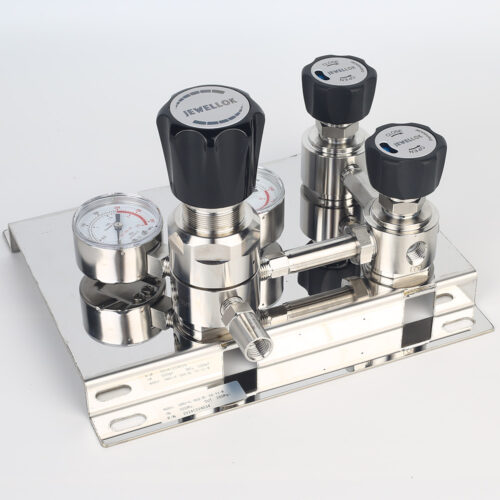
Stainless Steel 316L Single Stage Regulator Pressure Control Panels JSP-1E Series For Semiconductor Fluid Control
-
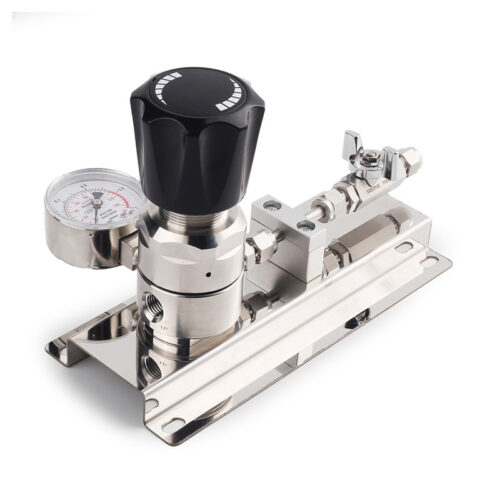
Buy Cleanroom Certified Ultra High Purity Gas Valve Equipment Designed For Advanced Solar Lines
-
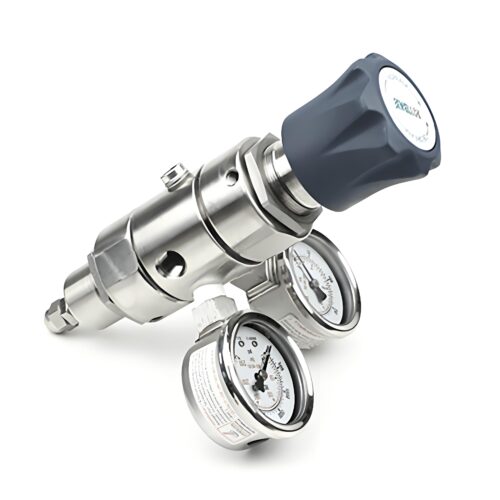
DPR1 Ultra High Purity Two Stage Dual Stage Pressure Reducing Regulator Semiconductor Grade Regulators
-
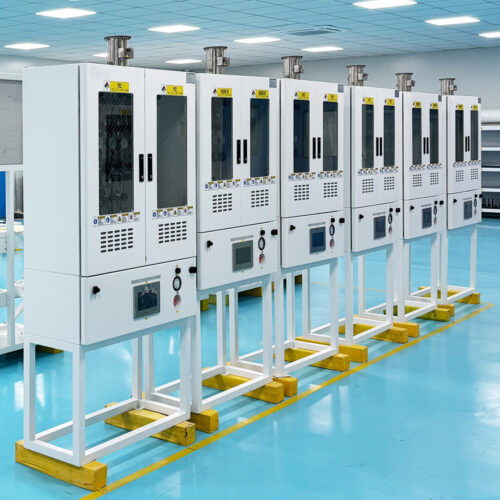
Liquid Chemical Delivery Module (CDM) for Semiconductor Fabrication and Ultra-High Purity Manufacturing
-
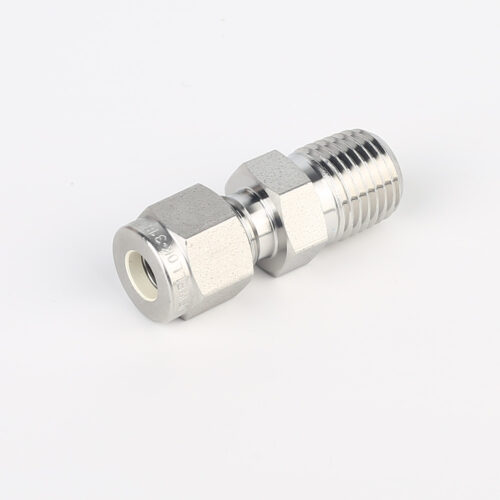
768L Stainless Steel Male Tube Butt Weld Connector | Clean Weld Fittings And Ultra-High Purity Fittings
-
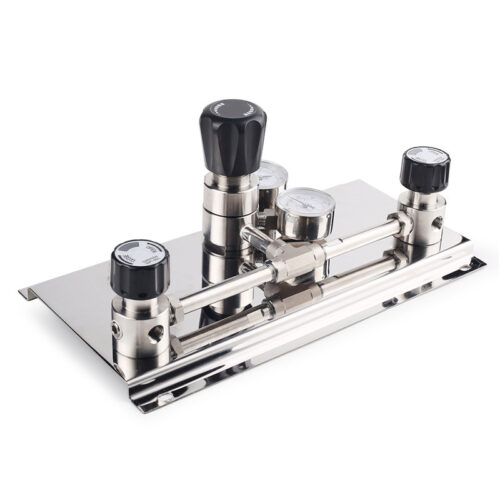
High Purity Semi-Auto Stainless Steel Changeover Manifold System, Nitrogen High Pressure Control Panel With Semiconductor Valve Manifold Box Diaphragm Valves
-
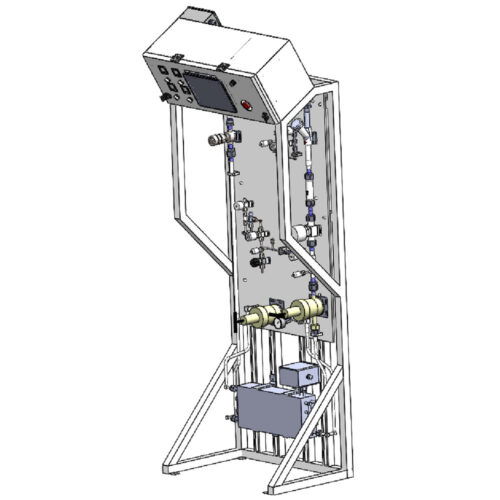
Fully Automated Gas Cabinet Gas Rack Gas Delivery Systems JW-300-GR
-
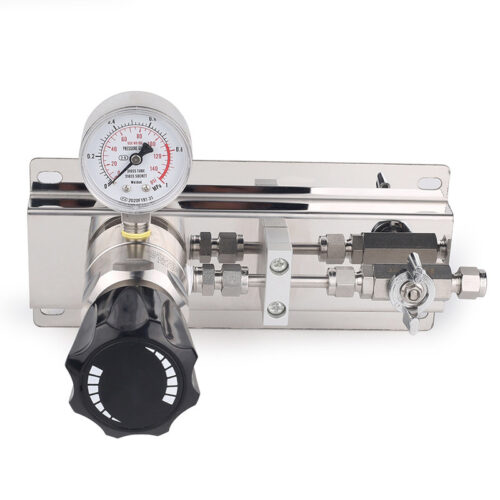
Medical Oxygen Single Stage Manual Gas Changeover Manifold Panel High-Purity Two-Stage Manual Gas Manifold Gas Pressure Control Panels