
Valves Manufacturer Tel: +86 13380377051
How Does An Argon Gas Pressure Regulator Work?
Argon, a noble gas making up about 0.93% of Earth’s atmosphere, is renowned for its inert properties, meaning it does not readily react with other elements. This characteristic makes it invaluable across numerous industries, from welding to food preservation and scientific research. However, argon is typically stored in high-pressure cylinders, often at pressures exceeding 2,000 psi, which necessitates careful handling to prevent accidents and ensure efficient use. Enter the argon gas pressure regulator—a critical device that reduces this high inlet pressure to a safe, consistent outlet pressure suitable for specific applications.
The primary function of an argon regulator is to control the flow and pressure of the gas, maintaining stability even as cylinder pressure fluctuates or demand changes downstream. Without it, the uncontrolled release of high-pressure argon could lead to equipment damage, inconsistent processes, or safety hazards like leaks that displace oxygen, causing asphyxiation in enclosed spaces. In welding, for instance, precise argon flow is essential to shield the weld pool from atmospheric contaminants, ensuring high-quality joins.
The significance of these regulators extends beyond safety; they enhance efficiency and cost-effectiveness. In industrial settings, such as metal fabrication, argon regulators help optimize gas usage, reducing waste and operational costs. In laboratories, they deliver precise pressures for analytical instruments, while in the food industry, they aid in modified atmosphere packaging to extend shelf life. Regulatory bodies like OSHA and the Compressed Gas Association (CGA) emphasize proper use to mitigate risks associated with compressed gases.
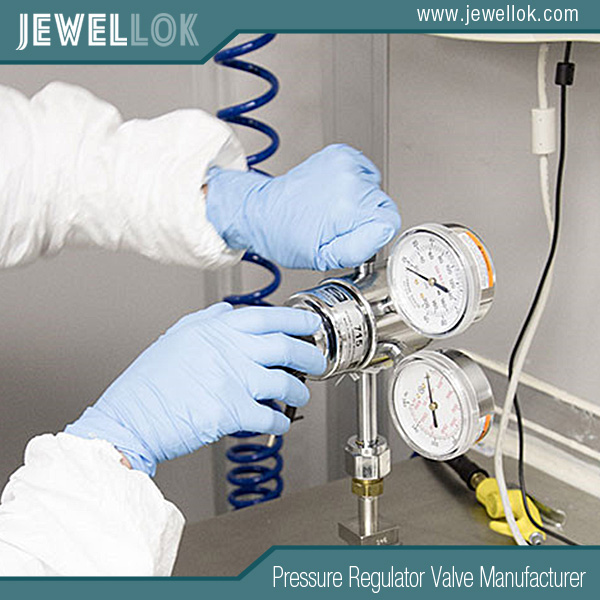
The evolution of gas regulators traces back to the early 20th century, coinciding with the rise of arc welding technologies. Modern argon regulators incorporate advanced materials and designs, such as stainless steel for corrosion resistance and dual-stage mechanisms for superior pressure stability. Available in various configurations, they cater to diverse needs, from portable welding setups to large-scale industrial manifolds.
This article explores the workings of argon gas pressure regulators in depth, covering their principles, components, operational steps, types, applications, and maintenance. By understanding these devices, users can make informed decisions, improving performance and safety in argon-dependent processes.
Basic Principles of Pressure Regulation
Pressure regulation for argon follows fundamental mechanical and fluid dynamics principles, centered on achieving equilibrium between forces to deliver consistent output. At its essence, the regulator acts as a valve that automatically adjusts to maintain a predetermined outlet pressure, regardless of variations in inlet pressure or flow rate.
Key elements include a reducing valve, a sensing mechanism, and a loading force. High-pressure argon enters the inlet, where a poppet valve controls flow through an orifice. A diaphragm or piston senses the outlet pressure, while a spring provides the reference force to set the desired pressure.
The process relies on force balance: The spring pushes the diaphragm to open the valve, allowing argon to flow. As outlet pressure builds, it counters the spring via the diaphragm. Equilibrium is reached when outlet pressure matches the setpoint, modulating the valve to sustain it. If downstream demand increases, pressure drops, prompting the spring to open the valve further. Conversely, excess pressure closes it.
Argon’s properties influence regulation. As a monatomic gas with low thermal conductivity, it experiences minimal Joule-Thomson cooling during expansion, unlike some gases, but regulators must still handle potential temperature effects. Compressibility factors are considered, adhering to gas laws like Boyle’s and Charles’s.
Direct-operated regulators use process pressure directly for control, suitable for many argon applications due to simplicity. Pilot-operated types offer finer control for high-flow scenarios. Performance is measured by droop (pressure drop with increased flow) and lock-up (slight rise when flow ceases). Low-droop designs are preferred for welding, where consistent shielding gas flow is critical.
These principles ensure argon delivery at pressures like 10-50 psi for TIG welding, preventing defects like porosity. Understanding them aids in troubleshooting issues like creep (gradual pressure rise) or chatter (vibration).
Components of an Argon Gas Pressure Regulator
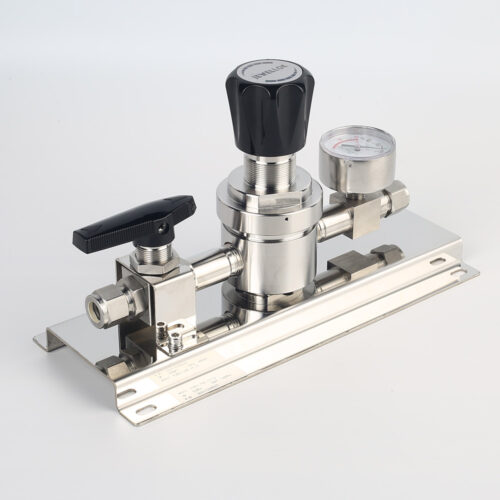
An argon regulator comprises several precision-engineered parts, each contributing to safe and efficient operation. The body, often brass or stainless steel, houses components and resists argon’s non-corrosive nature while handling high pressures. Brass suits general welding; stainless steel for high-purity needs.
Inlet and outlet ports use CGA 580 fittings standard for argon, nitrogen, and helium, ensuring compatibility. The valve assembly includes a poppet and seat; the poppet seals to regulate flow, made from durable materials like Viton for leak-proof performance.
The diaphragm, typically stainless steel or elastomer, senses pressure changes sensitively. Diaphragms minimize friction for accuracy; pistons offer robustness for high pressures.
A adjustable spring, via a knob, sets the outlet pressure, compressing against the diaphragm. Gauges monitor inlet (high-pressure) and outlet (delivery) pressures, essential for real-time adjustments.
Filters remove contaminants; relief valves vent overpressure in relieving models. Flowmeters, integrated in some, measure cubic feet per hour (CFH) for welding precision.
For inline regulators, quick connectors facilitate placement on tubing lines. Materials ensure purity, avoiding adsorption in sensitive applications.
How It Works: Step-by-Step Mechanism
Operating an argon regulator involves a sequence of steps ensuring controlled gas delivery.
Step 1: Connection. Secure the regulator to the argon cylinder using CGA 580. Close the cylinder valve; relieve spring tension by backing off the adjustment knob.
Step 2: Initial Pressurization. Open the cylinder valve slowly; high-pressure argon (e.g., 2,500 psi) enters the inlet, but the valve stays closed.
Step 3: Pressure Adjustment. Turn the knob to compress the spring, forcing the diaphragm to open the poppet, allowing flow to the outlet.
Step 4: Equilibrium. Outlet pressure rises, pushing back on the diaphragm until it balances the spring at the setpoint (e.g., 20 psi).
Step 5: Demand Response. Increased flow drops pressure; the diaphragm relaxes, opening the valve. Decreased flow builds pressure, closing it.
Step 6: Inlet Variations. As cylinder empties, single-stage models may show slight output rise; dual-stage maintain stability via intermediate reduction.
In welding, this ensures steady 15-25 CFH flow, shielding effectively. Diagrams depict inlet left, spring top, poppet center, outlet right.
Types of Argon Gas Pressure Regulators
Varieties cater to specific uses.
Single-Stage: Simple one-step reduction, cost-effective for stable inlets.
Dual-Stage: Two reductions for constant output, ideal for precision welding.
Flowmeter Regulators: Combine regulation with flow measurement for TIG/MIG.
High-Pressure: For cylinders up to 6,000 psi.
Inert Gas Specific: Optimized for argon, with compatible materials.
Relieving/Non-Relieving: Vent excess or not.
Applications of Argon Gas Pressure Regulators
Argon regulators enable diverse uses.
Welding: Shielding in TIG/MIG to prevent oxidation.
Metal Fabrication: Alloy production, titanium manufacturing.
Food Preservation: Modified atmospheres.
Lighting: Filling incandescent bulbs.
Laboratories: Carrier gas in chromatography.
Industrial: Blanketing in chemical processes.
Maintenance and Safety
Maintenance prolongs life: Inspect monthly for leaks, clean annually, replace parts as needed. Test functionality, purge with inert gas.
Safety: Use correct fittings, avoid overpressure, wear PPE, check ratings. Annual professional service recommended.
Conclusion
Argon gas pressure regulators are vital for safe, efficient gas handling. Their mastery optimizes industrial and scientific endeavors, emphasizing quality and compliance.
For more about how does an argon gas pressure regulator work, you can pay a visit to Jewellok at https://www.jewellok.com/ for more info.
-

Integrated Gas System (IGS) Modular Integrated Gas Systems (TMS) Integrated Gas Supply System For Semiconductor And Laboratory
-
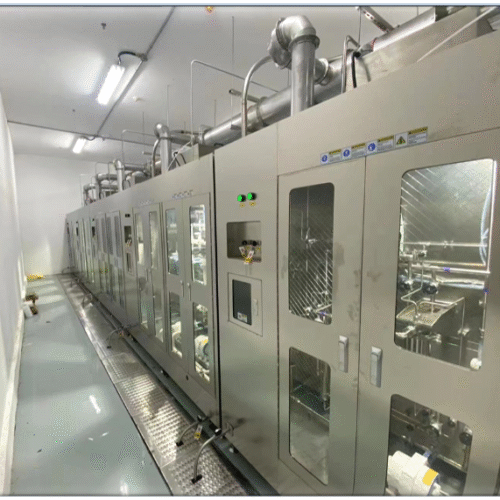
Ultra-High Purity Bulk Liquid Chemical Delivery System (BCDS) for Maintaining Parts-Per-Trillion Purity in Manufacturing
-
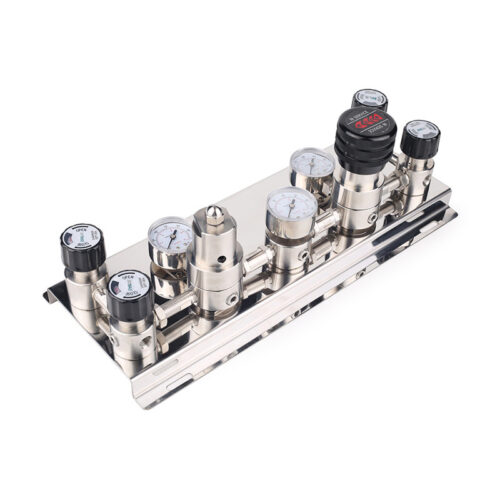
Stainless Steel High Pressure Specialty Gas Changeover Manifold For High Purity Oxygen Nitrogen Argon Helium Hydrogen Co2
-
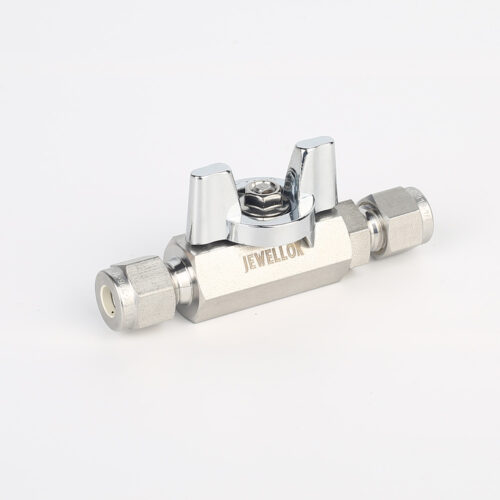
Stainless Steel High-Purity High Temperature Metal Seated Ball Valves JBV3 Series
-
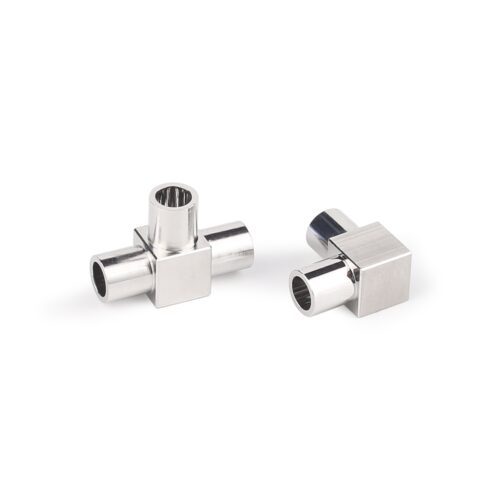
Stainless Steel Mini Elbow Mini Tee Mini Cross Mini Tribow Ultrahigh Purity Mini Butt Weld Fittings
-
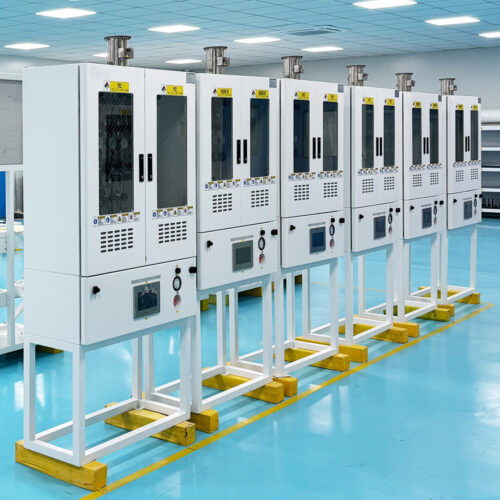
VMB Valve Manifold Panels And Boxes High Purity Configurable Systems JW-200-VMB & JW-100-VMB
-

Liquid Chemical Delivery Module And Chemical Delivery System Semiconductor Chemical Automatic Liquid Supply Equipment
-
High Purity And Industria Gas Stick Assemblies Precise Pressure Control Gas Systems JSR-1ETG-BV Series