
Valves Manufacturer Tel: +86 13380377051
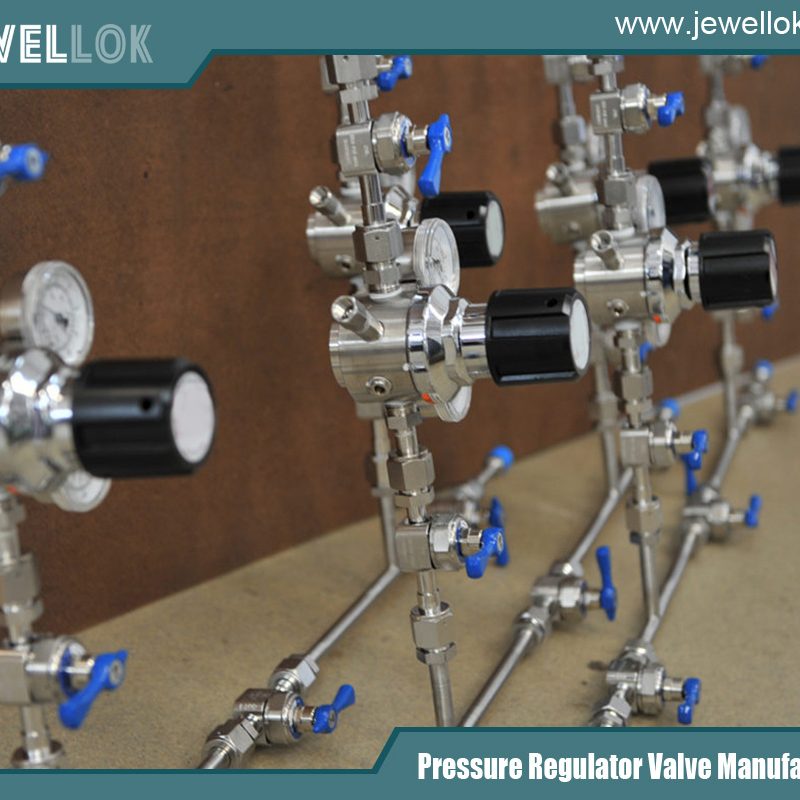
How Does A Nitrogen Gas Pressure Regulator Work?
In the world of industrial gases, nitrogen stands out as one of the most versatile and widely used elements. Comprising about 78% of Earth’s atmosphere, nitrogen is an inert gas that doesn’t react easily with other substances, making it ideal for a variety of applications ranging from food preservation to welding and medical procedures. However, handling nitrogen, especially when stored in high-pressure cylinders, requires precise control to ensure safety, efficiency, and optimal performance. This is where the nitrogen gas pressure regulator comes into play.
A nitrogen gas pressure regulator is a mechanical device designed to reduce the high pressure of nitrogen gas from a storage cylinder or pipeline to a lower, more manageable and consistent output pressure suitable for downstream equipment or processes. Essentially, it acts as a gatekeeper, maintaining a stable outlet pressure despite fluctuations in inlet pressure or demand. Without such a regulator, the raw pressure from a nitrogen cylinder—often exceeding 2,000 psi—could damage tools, cause leaks, or even lead to explosions.
The importance of these regulators cannot be overstated. In industries like HVAC (heating, ventilation, and air conditioning), they are used for purging systems and pressure testing to prevent contamination or oxidation. In brewing and food packaging, nitrogen regulators help maintain the quality of products by displacing oxygen, which can spoil food or alter flavors. Laboratories rely on them for precise gas delivery in analytical instruments, while welding operations use them to create inert atmospheres that prevent weld defects. Safety is paramount; improper pressure control can result in hazardous situations, such as over-pressurization leading to equipment failure or gas leaks that displace oxygen in confined spaces, potentially causing asphyxiation.
The concept of pressure regulation dates back to the 19th century with the advent of gas lighting and industrial gas use, but modern regulators have evolved with advancements in materials and design to handle high-purity gases like nitrogen. Today, they come in various types, from simple single-stage models to sophisticated dual-stage versions, each tailored to specific needs. Understanding how these devices work not only enhances operational efficiency but also ensures compliance with safety standards set by organizations like OSHA and CGA (Compressed Gas Association).
This article delves into the intricacies of nitrogen gas pressure regulators, exploring their components, operational mechanisms, types, applications, and maintenance practices. By the end, readers will have a comprehensive grasp of these essential tools, empowering them to select and use them effectively in their respective fields.
Basic Principles of Pressure Regulation
At its core, pressure regulation is about achieving balance in a system where gas flows from a high-pressure source to a low-pressure application. The fundamental principle revolves around force equilibrium, where the regulator automatically adjusts to maintain a set outlet pressure.
Pressure regulators operate on the basis of three key elements: a pressure-reducing element, a sensing element, and a reference force element. The pressure-reducing element, often a valve or poppet, controls the flow by opening or closing an orifice. The sensing element detects changes in outlet pressure, and the reference force—typically a spring—provides the setpoint for the desired pressure.
In a typical setup, high-pressure nitrogen enters the regulator through the inlet port. The spring exerts force to open the valve, allowing gas to flow to the outlet. As the outlet pressure builds, it pushes against the sensing element (like a diaphragm), which opposes the spring force. When the outlet pressure reaches the setpoint, the forces balance, and the valve closes slightly to maintain equilibrium. If demand increases downstream, causing a drop in outlet pressure, the sensing element relaxes, allowing the spring to open the valve more and restore pressure. Conversely, if pressure rises too high, the sensing element compresses the spring, closing the valve.
This dynamic adjustment ensures stability. For gases like nitrogen, which are compressible, regulators must account for factors such as temperature changes (per Boyle’s and Charles’s laws) that affect pressure. Nitrogen’s inert nature means it doesn’t corrode components easily, but regulators still need to handle potential contaminants like moisture or oils from cylinders.
Direct-operated regulators, common for nitrogen, rely solely on the process pressure for control, making them simple and cost-effective. Pilot-operated variants use a secondary pilot valve for finer control in high-flow scenarios. Performance metrics include “droop,” the drop in outlet pressure as flow increases, and “lockup,” the slight pressure rise when flow stops. Ideal regulators minimize these to provide accurate control.
Understanding these principles is crucial because nitrogen applications often require precise pressures—too high, and you risk damage; too low, and processes fail. For instance, in pneumatic systems, consistent pressure ensures reliable tool operation.
Components of a Nitrogen Gas Pressure Regulator
A nitrogen gas pressure regulator is a symphony of precisely engineered parts working in harmony. Let’s break down the main components, drawing from standard designs used in industrial and laboratory settings.
The body forms the housing, typically made from brass, stainless steel, or aluminum for durability and corrosion resistance. Brass is economical for general use, while stainless steel is preferred for high-purity nitrogen to prevent contamination. The body includes inlet and outlet ports, often threaded for CGA (Compressed Gas Association) fittings specific to nitrogen, such as CGA 580 for standard pressures up to 3,000 psi.
At the heart is the valve assembly, comprising the poppet or main valve and seat. The poppet, often spring-loaded, seals against the seat to control flow. Materials like elastomers (Buna-N or Viton) or thermoplastics ensure a tight seal, crucial for preventing leaks in nitrogen systems where purity is key.
The diaphragm or piston serves as the sensing element. Diaphragms, made from elastomers or thin metal like stainless steel, offer sensitivity and no friction, ideal for low-pressure applications. Pistons are used for higher pressures, providing ruggedness but with potential hysteresis due to friction. In high-purity regulators, stainless steel diaphragms minimize adsorption of contaminants.
The spring acts as the loading or reference force mechanism. Adjustable via a hand knob or screw, it sets the outlet pressure by compressing against the diaphragm. Springs are usually made from music wire or stainless steel for longevity.
Gauges are essential: the high-pressure gauge monitors inlet pressure from the cylinder, while the low-pressure gauge shows outlet pressure. Some models include a relief valve to vent excess pressure, especially in relieving types that protect against over-pressurization.
Additional features might include filters to remove particulates, bonnets for protection, and vents for relieving models. In ultra-high-purity regulators for nitrogen in semiconductors, barstock bodies and metal-to-metal seals reduce dead space and contamination risks.
Each component’s material is chosen for compatibility with nitrogen, which is non-corrosive but can carry impurities. Proper assembly ensures leak-free operation, often tested with helium for integrity.
How It Works: Step-by-Step Mechanism
To truly appreciate a nitrogen gas pressure regulator, let’s walk through its operation step by step, focusing on a common single-stage direct-operated model.
Step 1: Connection and Initialization. Attach the regulator to the nitrogen cylinder using the appropriate CGA fitting. Ensure the cylinder valve is closed. Back off the adjustment knob to release spring tension, preventing sudden pressure surges.
Step 2: Pressurization. Slowly open the cylinder valve. High-pressure nitrogen (e.g., 2,200 psi) enters the inlet. With no flow, the valve remains closed by default.
Step 3: Setting the Pressure. Turn the adjustment knob clockwise to compress the spring. This force pushes the diaphragm downward, opening the poppet valve. Nitrogen flows through the orifice to the outlet, building pressure.
Step 4: Force Balance. As outlet pressure rises, it acts on the diaphragm’s underside, countering the spring force. At the setpoint (e.g., 50 psi), the diaphragm stabilizes, partially closing the valve to maintain equilibrium.
Step 5: Responding to Demand. If downstream equipment draws more gas, outlet pressure drops. The diaphragm deflates, allowing the spring to open the valve wider, increasing flow until pressure restores. If demand decreases, pressure builds, inflating the diaphragm to close the valve.
Step 6: Handling Fluctuations. As the cylinder depletes, inlet pressure falls. In single-stage regulators, this can cause a slight rise in outlet pressure (supply pressure effect). Dual-stage models mitigate this: the first stage reduces to an intermediate pressure (e.g., 300 psi), and the second maintains the final output stably.
In diagrams, this is often shown as a cross-section: inlet on left, spring atop diaphragm, poppet below, outlet on right. Arrows indicate force directions—spring down, pressure up.
For nitrogen-specific considerations, regulators prevent icing from rapid expansion (Joule-Thomson effect) by using heated models in high-flow apps. High-purity versions minimize internal volume to avoid gas trapping.
This mechanism ensures safe, consistent delivery, but users must monitor gauges and avoid exceeding ratings.
Types of Nitrogen Gas Pressure Regulators
Nitrogen regulators vary by design to suit diverse needs.
Single-Stage Regulators: Basic, one-step reduction. Ideal for stable inlet pressures, like line regulators in labs. Affordable but prone to droop.
Dual-Stage Regulators: Two-step for constant output despite cylinder depletion. Essential for analytical instruments.
High-Pressure Regulators: Handle up to 7,500 psi, for high-cylinder pressures.
High-Purity and Ultra-High-Purity: Stainless steel, low dead volume for semiconductors and chromatography.
Flowmeter Regulators: Integrate flow measurement for precise delivery.
Relieving vs. Non-Relieving: Relieving vent excess; non-relieving for hazardous setups.
Specialty types include heated for cold environments and back-pressure for overpressure protection.
Applications of Nitrogen Gas Pressure Regulators
Nitrogen regulators are ubiquitous.
In HVAC and Refrigeration, they purge lines and test pressure, preventing oxidation.
Welding and Metal Fabrication: Create inert shields for TIG welding.
Food and Beverage: Preserve freshness in packaging; regulate draft systems.
Medical and Laboratories: Deliver gas for anesthesia, chromatography.
Industrial: Blanketing in chemical plants, tire inflation.
Semiconductors: Ultra-pure for manufacturing.
Maintenance and Safety
Regular maintenance ensures longevity. Inspect monthly for leaks, corrosion; test functionality. Clean or replace worn parts; store capped. Safety: Use proper fittings, avoid over-tightening; vent relieving models safely. Wear PPE; check ratings. Schedule professional servicing annually.
Conclusion
Nitrogen gas pressure regulators are indispensable for safe gas handling. Mastering their workings enhances efficiency across industries. Always prioritize quality and safety for optimal results.
For more about how does a nitrogen gas pressure regulator work, you can pay a visit to Jewellok at https://www.jewellok.com/ for more info.
-
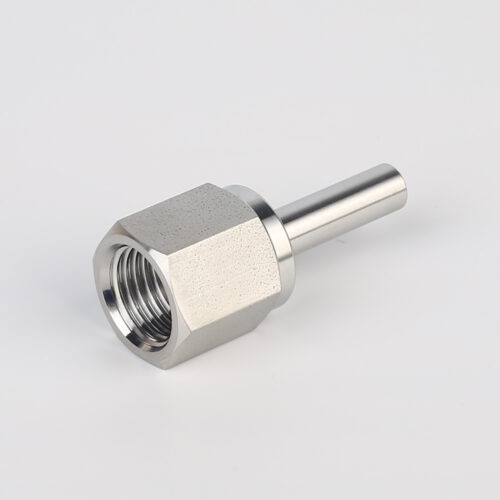
739LF High Purity Female Adapter Tube To Pipe Fittings And Connectors
-
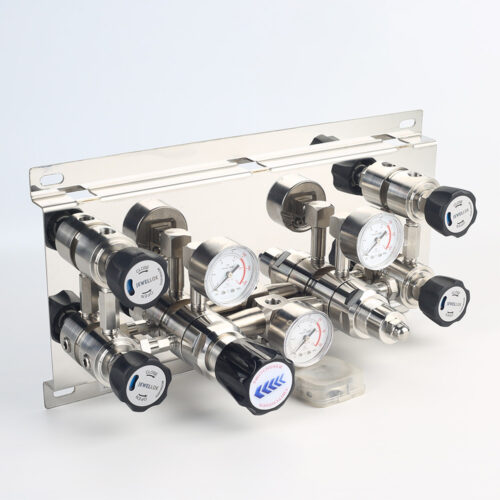
Pressure Control Panels For High Purity Gas Control System JSP-3AE Series From Pressure Control Panels Suppliers And Manufacturer
-
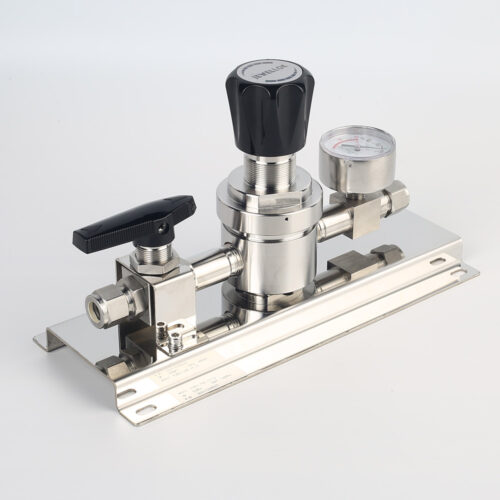
High Purity And Industria Gas Stick Assemblies Precise Pressure Control Gas Systems JSR-1ETG-BV Series
-
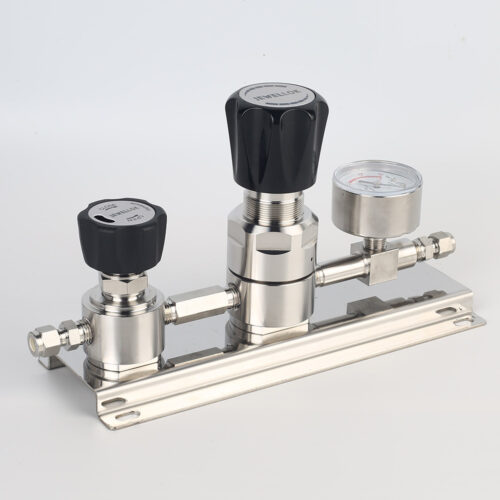
High Purity High Flow Pressure Control Regulators & Valves Gas Stick Assemblies JSR-2TG Series
-
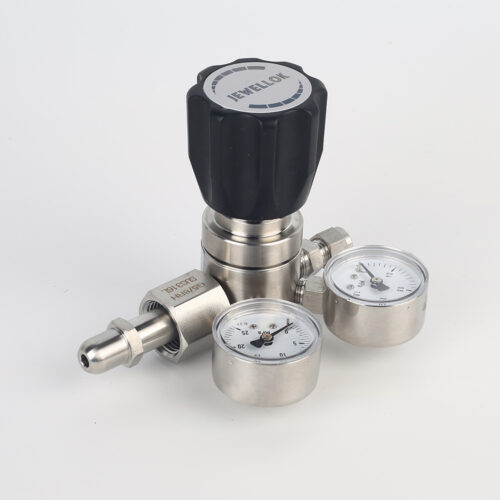
High Purity High Pressure Gas Cylinder Pressure Regulators Pressure Reducing Valve JSR-1E Series
-
Precision Liquid Chemical Delivery Module (CDM) with PLC Control for Parts-Per-Trillion Purity in Solar Cell Production
-
JR1000 Series UHP Ultra High Purity Single Stage Pressure Reducing Regulator And Low To Intermediate Flow
-
Specialty Gas Valves Ultra High Purity Gas Valves Ultra High Purity Gas Cylinder Valves UHP Cylinder Valve Ultra High Purity Gas Regulator