
Valves Manufacturer Tel: +86 13380377051
How Does A Carbon Dioxide Gas Pressure Regulator Work?
Carbon dioxide (CO2) is a versatile gas used in a wide array of applications, from carbonating beverages and welding to maintaining aquariums and supporting plant growth in greenhouses. However, CO2 is typically stored in high-pressure cylinders, often at pressures exceeding 800-900 psi, which is far too high for most practical uses. To safely and effectively utilize this gas, a Carbon Dioxide (CO2) gas pressure regulator is essential. This device acts as a control mechanism that reduces the high inlet pressure from the cylinder to a lower, more manageable outlet pressure suitable for the intended application. At its core, a CO2 pressure regulator is an internal valve system designed to maintain consistent pressure output despite fluctuations in the source pressure or demand.
It ensures that the gas flows at a precise rate, preventing over-pressurization that could damage equipment or pose safety risks. Without regulators, handling compressed gases like CO2 would be hazardous and inefficient. For instance, in draft beer systems, regulators control the pressure to dispense beer without excessive foaming, while in medical or industrial settings, they ensure stable delivery for processes like respiratory therapy or laser cutting.
Understanding how these regulators function is crucial for users in industries such as food and beverage, manufacturing, and horticulture. This article delves into the mechanics of CO2 pressure regulators, exploring their components, operating principles, types, applications, safety considerations, and maintenance. By the end, readers will have a comprehensive grasp of this vital piece of equipment, enabling safer and more effective use.
The history of pressure regulators dates back to the 19th century, evolving alongside the industrialization of gas handling. Today, modern regulators incorporate advanced materials and designs to handle corrosive gases like CO2, which can form carbonic acid in moist environments. CO2 regulators are specifically engineered to withstand these conditions, often featuring brass or stainless steel construction for durability.
In essence, the regulator bridges the gap between high-pressure storage and low-pressure application, embodying principles of fluid dynamics and mechanical engineering. As we explore further, we’ll see how simple yet ingenious mechanisms like springs and diaphragms achieve this precision.
Basic Principles of Gas Pressure Regulation
To appreciate how a CO2 pressure regulator works, it’s important to start with the fundamental principles of gas pressure and regulation. Pressure is defined as force per unit area, and in gases, it arises from the kinetic energy of molecules colliding with container walls. According to Boyle’s Law, the pressure of a gas is inversely proportional to its volume at constant temperature: P1V1 = P2V2. This means that compressing CO2 into a cylinder increases its pressure dramatically.
CO2 cylinders typically hold the gas in a liquefied state under pressures around 850 psi at room temperature, allowing for efficient storage. However, most applications require pressures in the range of 5-150 psi, depending on the use—far lower than the cylinder’s native pressure. Direct connection without regulation could lead to explosive release, equipment failure, or inconsistent performance.
Pressure regulation involves reducing and stabilizing this high inlet pressure to a desired outlet pressure. Regulators achieve this through a feedback mechanism that automatically adjusts gas flow based on downstream demand. The core idea is balance: forces from the gas pressure are countered by mechanical elements to maintain equilibrium.
There are two main categories of pressure regulators: direct-operated and pilot-operated. Direct-operated regulators, common for CO2 applications, use the outlet pressure directly to control the valve opening. When demand increases (e.g., more gas is used), outlet pressure drops, prompting the regulator to open wider and allow more gas in. Conversely, if demand decreases, outlet pressure rises, closing the valve slightly to reduce flow.
This self-regulating process relies on the ideal gas law (PV = nRT), where pressure (P), volume (V), amount of gas (n), and temperature (T) are interrelated. Regulators must account for temperature changes, as CO2 expands or contracts with heat, potentially affecting pressure. For example, a cold cylinder might deliver lower pressure initially, but as it warms, pressure stabilizes.
Another key principle is the “droop” or “decaying inlet characteristic,” where outlet pressure may vary slightly with inlet pressure changes or flow rates. Single-stage regulators are more prone to this, while dual-stage models minimize it for greater stability.
In CO2-specific contexts, regulators must handle the gas’s unique properties. CO2 is non-flammable but can displace oxygen, leading to asphyxiation risks in confined spaces. It also sublimes from solid (dry ice) to gas, but in cylinders, it’s liquid-vapor equilibrium. Regulators prevent rapid expansion that could cause freezing or “snowing” in lines. Overall, these principles ensure regulators provide safe, consistent gas delivery, making them indispensable in controlled environments.
Key Components of a CO2 Pressure Regulator
A CO2 pressure regulator is composed of several interconnected components that work in harmony to control gas flow and pressure. Understanding these parts is vital for grasping the device’s operation.
The primary elements include the loading mechanism, sensing element, and control element. The loading mechanism is typically a spring adjusted by a hand knob or screw. This spring applies force to set the desired outlet pressure. Turning the knob clockwise compresses the spring, increasing the force and thus the outlet pressure.
The sensing element is usually a diaphragm, made from flexible materials like elastomers (for general use) or stainless steel (for high-purity applications). The diaphragm detects changes in outlet pressure. It flexes in response to pressure differences, transmitting this information mechanically to adjust the valve.
The control element is the valve itself, often a poppet or needle valve that opens or closes an orifice to regulate gas flow. When the diaphragm moves, it pushes or pulls on the valve stem, modulating the opening. Additional components include gauges: one for inlet pressure (showing cylinder pressure) and one for outlet pressure (indicating delivery pressure). These allow users to monitor operations. Safety features like relief valves prevent over-pressurization by venting excess gas. In CO2 regulators, the body is often brass-plated or chrome for corrosion resistance, as CO2 can be acidic. Inlet connections are standardized, such as CGA-320 for CO2 cylinders, ensuring compatibility.
For dual-stage regulators, there are two sets of these components: the first stage reduces pressure to an intermediate level (e.g., 150-200 psi), and the second refines it to the final outlet pressure. This design includes an intermediate chamber.
Other accessories might include flowmeters for measuring gas flow rate, especially in welding or aquarium setups, or solenoid valves for automated control. Each component is engineered for precision; for example, diaphragms must be leak-proof and responsive, while springs provide consistent force over time. Wear on any part can affect performance, highlighting the need for quality materials.
In summary, these components form a closed-loop system where pressure feedback continuously adjusts the valve, maintaining stability.
Step-by-Step Mechanism of Operation
The operation of a CO2 pressure regulator can be broken down into a series of steps, illustrating the interplay of its components. Let’s consider a direct-operated, single-stage regulator first, then contrast it with dual-stage.
- Connection and Initialization: The regulator is attached to the CO2 cylinder via the inlet port, typically using a wrench to tighten the CGA fitting securely. The cylinder valve is closed initially. The adjustment screw is set to its lowest position (counterclockwise) to minimize outlet pressure.
- Opening the Cylinder Valve: Slowly open the main cylinder valve. High-pressure CO2 (around 850 psi) enters the regulator’s inlet chamber. At this point, the valve inside the regulator is closed, preventing flow to the outlet.
- Setting the Outlet Pressure: Turn the adjustment screw clockwise. This compresses the spring, which pushes down on the diaphragm. The diaphragm, in turn, forces the control valve to open, allowing high-pressure gas to flow through the orifice into the outlet chamber.
- Pressure Build-Up and Balance: As gas enters the outlet, pressure builds. This pressure acts upward on the diaphragm, opposing the spring force. When the outlet pressure reaches the set point (e.g., 30 psi), the forces balance: the diaphragm stabilizes, holding the valve at a position where inflow matches demand.
- Responding to Demand Changes: If downstream demand increases (e.g., opening a valve in a beer dispenser), outlet pressure drops slightly. The diaphragm senses this, deflating downward due to reduced upward force. The spring then pushes the valve open wider, increasing gas flow until pressure restores. Conversely, if demand decreases, outlet pressure rises, inflating the diaphragm upward, compressing the spring, and closing the valve partially to reduce flow.
- Handling Inlet Variations: In single-stage regulators, as the cylinder depletes, inlet pressure drops, potentially causing outlet pressure to rise slightly (decaying inlet effect). Users may need to readjust the screw.
For dual-stage regulators, the process is similar but divided:
- First Stage: Reduces high inlet to intermediate pressure (e.g., 250 psi) using its own spring, diaphragm, and valve. This stage absorbs most inlet variations.
- Second Stage: Takes the intermediate pressure and reduces it to the final outlet, providing finer control and stability.
The second stage compensates for any changes from the first, ensuring constant delivery even as the cylinder empties. Throughout operation, gauges provide real-time feedback. The inlet gauge shows cylinder pressure, which remains steady until the liquid CO2 is nearly gone, then drops rapidly. The outlet gauge confirms the set pressure.
In CO2-specific scenarios, like planted aquariums, regulators often include bubble counters to visualize flow rates. For beer systems, they maintain carbonation levels. This mechanism ensures precise control, but factors like temperature can affect it—cold CO2 may cause lower pressures, requiring warming.
Types of CO2 Regulators and Their Applications
CO2 regulators come in various types, tailored to specific needs.
- Single-Stage Regulators: Ideal for short-duration or low-volume tasks, like small welding jobs or home aquariums. hey are cost-effective but may require frequent adjustments as cylinder
- Dual-Stage Regulators: Preferred for long-term or high-precision applications, such as laboratory instruments or large-scale beverage dispensing.
They offer stable pressure but are more expensive.
- Primary vs. Secondary Regulators: In multi-keg beer systems, primary regulators connect to the cylinder, reducing to line pressure, while secondary ones fine-tune for each keg.
Applications span industries:
- Beverage Industry: Regulators control CO2 for soda fountains and beer taps, maintaining 10-15 psi for optimal carbonation.
- Welding and Manufacturing: Provide consistent flow for MIG welding, often at 20-30 psi.
- Aquariums and Hydroponics: Low-pressure delivery (1-5 psi) for CO2 injection to promote plant growth.
- Medical and Scientific: High-purity regulators for incubators or chromatography.
Specialized types include heated regulators to prevent freezing in high-flow CO2 applications.
Safety Considerations and Maintenance
Safety is paramount with CO2 gas pressure regulators. Always use in well-ventilated areas to avoid oxygen displacement. Never exceed rated pressures, and inspect for leaks using soapy water.
Maintenance involves regular cleaning, checking diaphragms for wear, and replacing seals. After use, close the cylinder valve and bleed pressure to prevent damage. Professional servicing every 1-2 years is recommended.
Conclusion
CO2 pressure regulators are ingenious devices that transform high-pressure gas into usable form through balanced mechanical forces. From components like diaphragms and springs to sophisticated dual-stage designs, they ensure safety and efficiency across applications. Mastering their operation empowers users to handle CO2 confidently, advancing innovation in diverse fields.
For more about how does a carbon dioxide gas pressure regulator work, you can pay a visit to Jewellok at https://www.jewellok.com/ for more info.
-
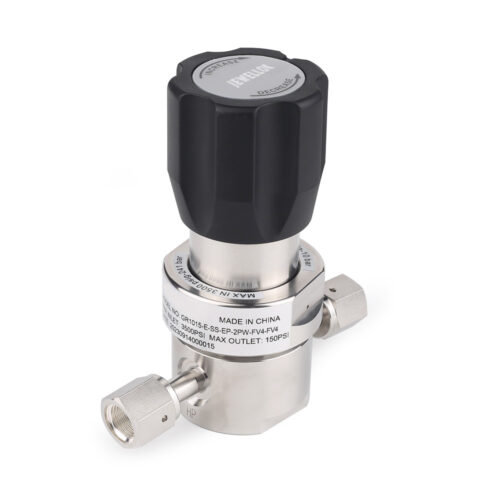
Premium Grade Ultra High Purity Gas Valve Solutions Sourced Directly from China for Critical Semiconductor and Advanced Photovoltaic Gas Distribution Lines
-
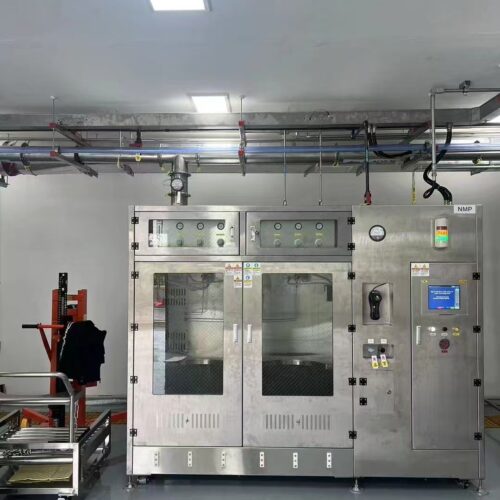
316L Electropolished Chemical Delivery System (CDS) for Contamination-Free Liquid Handling in EV Battery Manufacturing Plants
-
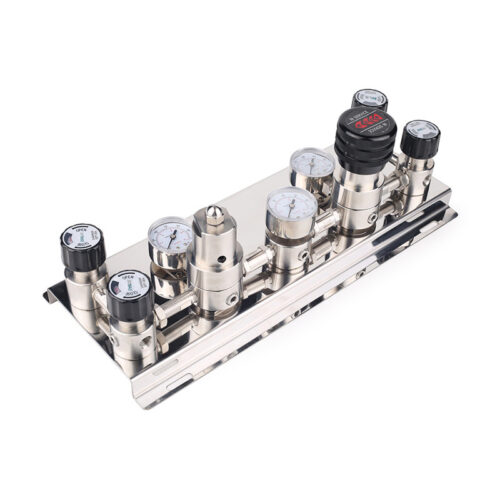
Stainless Steel High Pressure Specialty Gas Changeover Manifold For High Purity Oxygen Nitrogen Argon Helium Hydrogen Co2
-
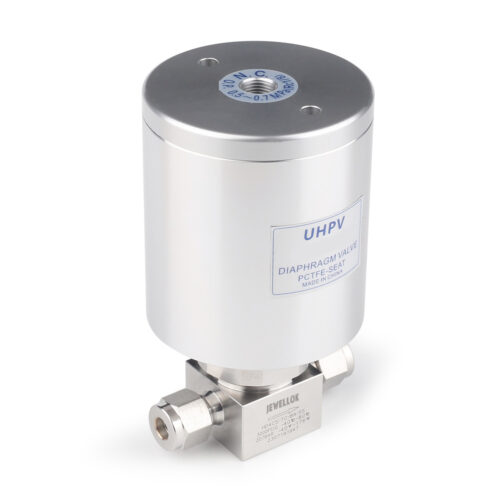
High Pressure High Temperature Pneumatic Ultrahigh Purity Stainless Steel Diaphragm Valves
-
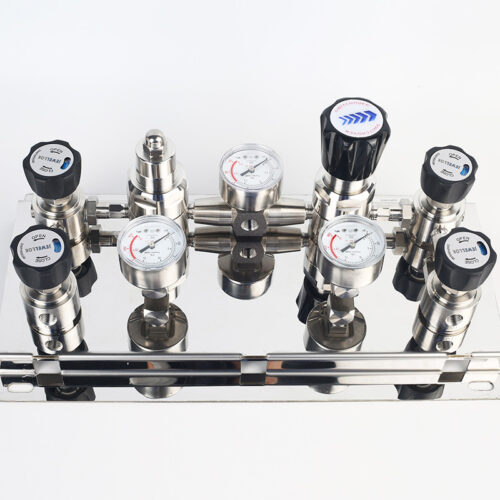
Semi Automatic Gas Changeover Manifold System Manual Changeover Manifold Panel Single Stage Automatic Switchover Board
-
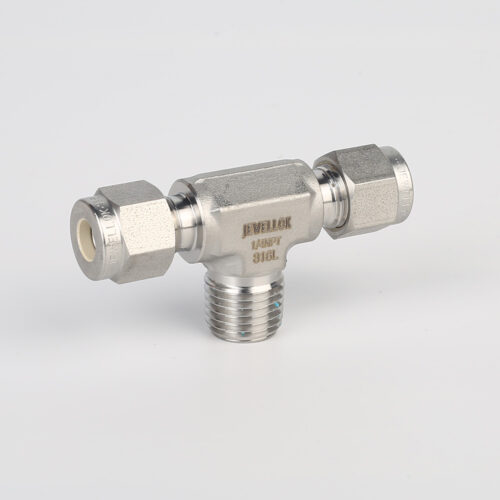
772L Male Branch Tee | Stainless Steel High-Purity Tube Fitting Male Branch Tee
-
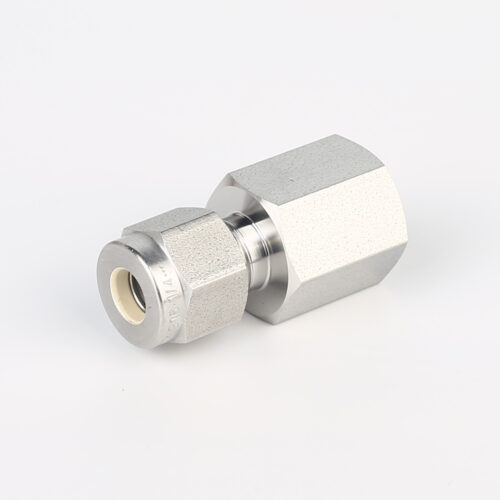
766L High Purity Female Connector UHP Fitting Female Connector
-
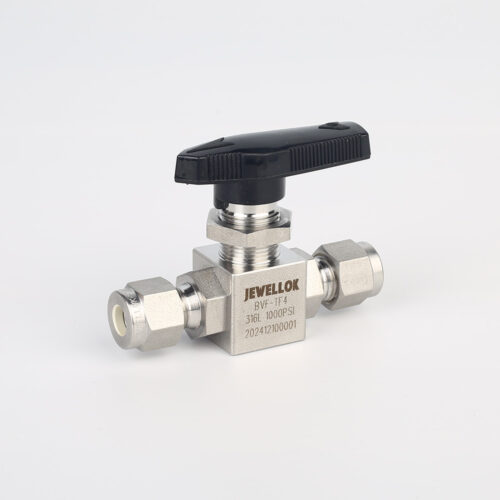
Stainless Steel High Purity High Temperature Pneumatic Actuated Ball Valves JBV2 Series