
Valves Manufacturer Tel: +86 13380377051
How Does the Two-Stage Nitrogen Regulator Work?
In industries ranging from food packaging and beverage dispensing to chemical processing and laser cutting, the precise, safe, and consistent delivery of inert gases like nitrogen is critical. At the heart of this controlled delivery system lies a crucial piece of equipment: the pressure regulator. While single-stage regulators are common for many applications, when stability and reliability are non-negotiable, the two-stage nitrogen regulator becomes the instrument of choice. But what sets it apart, and how does its internal mechanism achieve such superior performance? This article delves into the engineering, operation, and advantages of the two-stage regulator.
The Fundamental Role of a Regulator
First, it’s essential to understand the basic problem a regulator solves. Nitrogen is typically stored in high-pressure cylinders at pressures that can range from 2,200 to 6,000 psi (pounds per square inch). Most applications, however, require working pressures anywhere from 5 to 150 psi. A regulator’s primary job is to reduce this high, variable cylinder pressure to a lower, usable, and steady pressure, regardless of fluctuations in the inlet supply.
A single-stage regulator performs this reduction in one step. While effective for many tasks, it has a inherent limitation: as the cylinder empties, the inlet pressure drops, causing a gradual decline in the outlet pressure—a phenomenon known as “creep” or “droop.” This is where the two-stage design shines.
The Core Principle: Two Reductions in Series
A two-stage nitrogen regulator is, in essence, two single-stage regulators built into one compact housing. It performs the pressure reduction in two distinct, sequential stages:
- First Stage: Reduces the extremely high, variable cylinder pressure to a constant intermediate pressure.
- Second Stage: Takes this already moderated intermediate pressure and reduces it further to the precise, finely-tuned delivery (outlet) pressure set by the user.
This cascading system effectively isolates the second stage from the dramatic changes happening in the cylinder, resulting in exceptional output stability.
Anatomy and Operational Mechanics
Let’s break down the internal journey of nitrogen gas through the two-stage regulator, component by component.
- The First Stage: The Constant Pressure Guardian
- Inlet & High-Pressure Chamber: Gas enters from the cylinder into the first-stage high-pressure chamber.
- First-Stage Diaphragm & Spring: This stage is typically spring-loaded and preset at the factory. A large, sturdy spring applies a force to a diaphragm, which in turn is connected to a valve seat. The spring force is calibrated to maintain a specific intermediate pressure (commonly between 200-400 psi, depending on the model).
- Self-Compensating Operation: Here’s the genius of the first stage. Imagine the cylinder is full (e.g., 2,200 psi). The high pressure acts against the diaphragm, helping to close the valve seat and restrict flow, maintaining the set intermediate pressure. As the cylinder empties (e.g., to 500 psi), the force against the diaphragm decreases. The now-stronger relative force of the spring pushes the diaphragm to open the valve seat slightly wider. This automatic adjustment allows more gas through from a lower source pressure to maintain the same intermediate pressure.
- Result: Whether the cylinder is full or nearly empty, the gas exiting the first stage and entering the intermediate chamber is at a nearly constant pressure.
- The Second Stage: The Precision Tuner
- Intermediate Chamber: This chamber holds gas at the now-stable first-stage output pressure.
- Second-Stage Diaphragm, Spring, and Adjusting Knob: This stage is user-adjustable. Turning the external knob compresses or relaxes a control spring, which presses on a second (often more sensitive) diaphragm.
- Demand-Based Valve Mechanism: The diaphragm is linked to a second valve seat. When an outlet valve (like a beer tap or a cutting torch) is opened downstream, pressure in the low-pressure chamber momentarily drops. The control spring pushes the diaphragm down, opening the valve seat to allow more gas from the intermediate chamber to flow in, restoring the set pressure. When the downstream valve closes, pressure builds, pushes the diaphragm up, and closes the valve seat.
- Result: The user sets the exact delivery pressure needed for the application. The second-stage mechanism responds instantly to downstream demand, providing precise control and flow.
The Critical Advantage: Stability Under Changing Conditions
To visualize the superiority of the two-stage design, consider the graph of outlet pressure versus cylinder pressure.
- Single-Stage Regulator: The graph shows a clear, descending curve. As cylinder pressure falls from full to empty, the outlet pressure drops significantly. This “droop” can affect process quality, beverage carbonation, or cutting precision.
- Two-Stage Regulator: The graph shows an almost flat, horizontal line. The outlet pressure remains virtually constant from a full cylinder down to a very low inlet pressure. The first stage’s compensation absorbs the supply-side variance, providing a rock-solid foundation for the second stage to work from.
Key Advantages Summarized:
- Constant Delivery Pressure: Eliminates droop, ensuring consistent performance.
- Improved Safety: Provides a more reliable and predictable gas supply, reducing risks associated with pressure surges or drops.
- Enhanced Accuracy: Critical for sensitive applications like chromatography, research, and high-quality beverage dispensing.
- Automatic Compensation: Requires less user intervention and adjustment over the life of the cylinder.
Comparison: Two-Stage vs. Single-Stage Regulators
| Feature | Two-Stage Regulator | Single-Stage Regulator |
| Pressure Stability | Excellent; minimal droop. | Good initially, but droops as cylinder empties. |
| Construction | More complex, two mechanisms in one body. | Simpler, one reduction mechanism. |
| Cost | Higher initial investment. | More economical. |
| Weight/Size | Typically larger and heavier. | More compact and lightweight. |
| Ideal For | Critical applications, long processes, high-purity systems, beverage draft systems. | Shorter tasks, less critical applications, point-of-use where supply pressure is stable. |
Common Applications of Two-Stage Nitrogen Regulators
The stability of two-stage regulators makes them indispensable in:
- Food & Beverage Industry: Draft beer systems (where constant pressure is vital for proper carbonation and pour), wine preservation, and nitrogen-infused beverages like cold brew coffee (“nitro”).
- Laboratory & Analytical Settings: Gas chromatography (GC), sample preparation, and environments where even minor pressure fluctuations can ruin experiments or calibrations.
- Lasers & Cutting: Nitrogen is often used as an assist gas in laser cutting to produce clean, oxidation-free edges. Pressure consistency is key to cut quality.
- Electronics Manufacturing: In soldering and circuit board production, where inert atmospheres are needed.
- Aircraft & High-Purity Systems: Where reliability and safety are paramount.
Selection and Maintenance Tips
- Selecting a Regulator: Choose materials compatible with your gas purity (e.g., brass for standard, stainless steel for high-purity or corrosive applications). Ensure the inlet connection (CGA fitting) matches your cylinder and the outlet connection suits your hose or system. Verify the pressure ranges (inlet, intermediate, and outlet) meet your needs.
- Safe Operation: Always open the cylinder valve slowly. Before connecting, “crack” the cylinder valve momentarily to clear debris. Use a regulator only for its intended gas (N2).
- Maintenance: Periodically check for leaks using a leak detection solution. Have regulators inspected and serviced by qualified personnel annually or as per manufacturer guidelines. Never use oil or grease on regulators, as this can cause violent reactions with high-pressure oxygen (a critical reminder even when using nitrogen, as equipment can be misconnected).
Conclusion
The two-stage nitrogen regulator is a masterpiece of practical pneumatics. By dividing the formidable task of pressure reduction into two isolated steps—first creating a stable intermediate pressure, then allowing for fine-tuned user control—it delivers an unmatched level of consistency and reliability. Its more complex internal dance of springs, diaphragms, and valves is what provides that perfectly flat line on the pressure graph, translating directly to consistent product quality, reproducible scientific results, and safe industrial processes. While not needed for every task, in applications where pressure stability is synonymous with success, the two-stage regulator is not just a tool; it is the foundational engine of precision.
For more about how does the two-stage nitrogen regulator work, you can pay a visit to Jewellok at https://www.jewellok.com/ for more info.
-
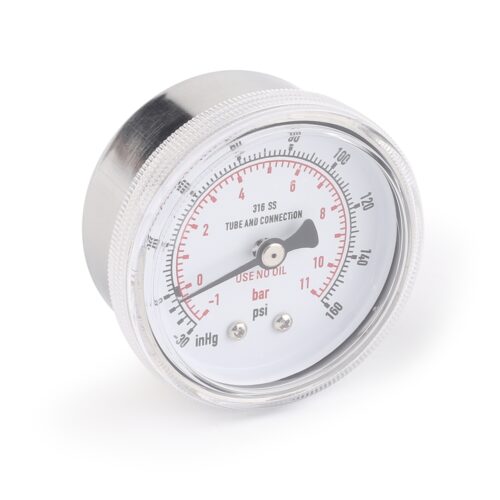
Ultra High Purity Pressure Gauge For Laboratory And Semiconductor JR Series
-
768L Stainless Steel Male Tube Butt Weld Connector | Clean Weld Fittings And Ultra-High Purity Fittings
-
FT-BOX JW-FTB-C Valve Manifold Panels And Boxes With High Purity Configurable Systems
-
Ultra-High Purity Chemical Delivery Module (CDM) and Valve Manifold Box Integration Improving Semiconductor Yield
-
Semi Automatic Gas Cabinet Gas Panels High Purity Gas Delivery Systems JW-200-GC
-
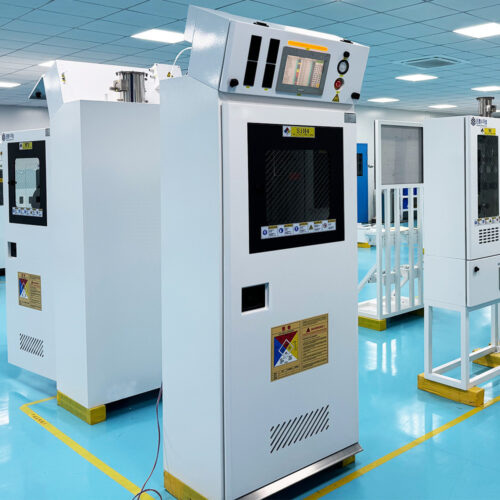
Ultra High Purity Trimethylaluminum TMA Gas Cabinet Liquid Delivering Cabinet Used For Specialty Gas Delivery System In Semiconductor
-
VMB Valve Manifold Panels And Boxes High Purity Configurable Systems JW-200-VMB & JW-100-VMB
-
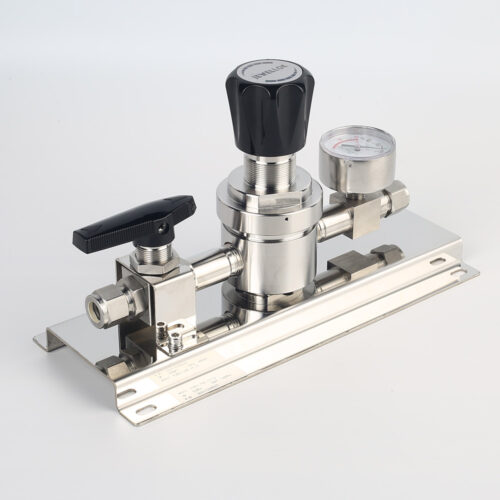
High Purity And Industria Gas Stick Assemblies Precise Pressure Control Gas Systems JSR-1ETG-BV Series