
Valves Manufacturer Tel: +86 13380377051
Mastering the Hydride: Ultra-High Vacuum Regulators for PH3 in Semiconductor Manufacturing and MOCVD
Abstract
The precision delivery of Phosphine (PH3) is one of the most demanding challenges in gas panel design. As a highly toxic, pyrophoric, and chemically reactive hydride, PH3 Ultra-High Purity (UHP) pressure reducing regulators that go far beyond standard industrial hardware. This article examines the specific metallurgical, diaphragm, and surface engineering requirements necessary to safely and reliably deliver PH3 for MOCVD and ion implantation processes.
1. The PH3 Challenge
In the landscape of specialty gases used in semiconductor fabrication, Phosphine (PH3) occupies a uniquely dangerous position. Used primarily for n-type doping of silicon and as a phosphorus precursor in InP and GaInP MOCVD, PH3 is essential. However, its properties—pyrophoricity at certain concentrations, extreme toxicity (LC50 of 11 ppm), and thermodynamic instability—render it incompatible with standard gas handling equipment.
At the heart of any PH3 delivery system lies the ultra-high purity pressure reducing regulator. Unlike inert gas regulators, a PH3 regulator cannot be viewed as a simple mechanical valve; it must be engineered as a contamination barrier, a safety fuse, and a chemical reactor—all while maintaining sub-micron particle counts and sub-ppb moisture levels.
2. The Mechanism of UHP Pressure Reduction
A UHP regulator operates on the first law of thermodynamics and the Joule-Thomson effect. High-pressure source gas (typically 1000–2000 psig in a cylinder) enters the regulator and expands across a variable orifice. This expansion reduces pressure but also induces cooling. For PH3, which has a boiling point of -87.7°C, excessive cooling does not cause liquefaction under normal operation, but it can accelerate the formation of diphosphine (P2H4), a spontaneous flammable liquid.
The UHP regulator maintains outlet pressure (typically 10–50 psig for MOCVD or 50–150 psig for ion implant) via a feedback mechanism. A dome-loaded or spring-loaded diaphragm senses downstream pressure and throttles the poppet accordingly. However, for PH3, the “throttling” action must be perfectly laminar. Turbulence within the regulator body creates localized shear stress that can dislodge particles or, worse, generate adiabatic compression hotspots capable of igniting pyrophoric deposits.
3. Material Science: Beyond 316L Stainless Steel
While 316L stainless steel electropolished to a 5 Ra (micro-inch) finish is the industry standard for many UHP gases, PH3 requires additional metallurgical scrutiny.
3.1 Nickel and Iron Reactivity
PH3 begins to catalytically decompose on active metal surfaces at temperatures as low as 50°C. While the bulk gas temperature is ambient, the adiabatic heating at the seat interface can approach this threshold. Iron and nickel act as catalysts for the decomposition reaction: 2PH3 → 2P + 3H2. The resultant elemental phosphorus deposits as a red/brown film. This film increases seat friction, alters cracking pressure, and eventually causes regulator creep (failure to seal).
To mitigate this, high-performance PH3 regulators utilize Hastelloy C-22 bodies. Hastelloy provides superior resistance to pitting and stress corrosion cracking, but more importantly, its reduced nickel content (compared to 316L) and high molybdenum content passivate the surface, significantly reducing the catalytic decomposition rate of PH3.
3.2 Elastomer Elimination
No standard elastomeric O-rings (Viton, Buna-N, Kalrez) should contact PH3 in a high-purity environment. PH3 is a reducing agent that can leach fluorine from fluoroelastomers and sulfur from some curing agents, creating particulate contamination. Modern PH3 regulators utilize PCTFE (Kel-F) or PEEK seats and seals. These engineering thermoplastics offer cold flow resistance, chemical inertness, and zero outgassing, provided they are properly machined and stress-relieved.
4. Diaphragm Technology: The Pressure Boundary
The diaphragm is the most critical component of a PH3 regulator. It serves two purposes: actuation and containment.
4.1 Spring vs. Dome Loading
For high-purity PH3, dome-loaded regulators are generally preferred over spring-loaded designs. In a dome-loaded regulator, high-purity nitrogen or argon is used on the “dome” side of the diaphragm to set the outlet pressure. This eliminates the “spring curve” or droop inherent in mechanical springs, providing a flat delivery pressure regardless of inlet decay. More importantly, it eliminates the interstitial space between spring coils where moisture or particles could become trapped and later released.
4.2 Metal Diaphragm Integrity
The diaphragm must be a multi-layer nickel-chromium or stainless steel membrane. Single-stage PH3 regulators often utilize a 4-ply or 6-ply diaphragm stack. This is not merely for strength; if a pinhole leak develops in one layer due to metal fatigue or phosphorus attack, the subsequent layers maintain the pressure boundary, preventing a catastrophic release of PH3 into the cleanroom environment. The diaphragms are seam-welded by an automated orbital process, ensuring that the wetted area is hermetically sealed from the atmospheric side.
5. Surface Finish and Passivation
For PH3, surface finish is not just about particle retention; it is about reactivity.
5.1 Electropolishing
Standard mechanical polishing leaves a “smearing” of the metal surface. Electropolishing removes this amorphous layer, revealing a clean, chromium-rich surface. The industry standard for PH3 is a 5 Ra (0.13 µm) or better electropolished finish.
5.2 The Oxygen Passivation Process
Following electropolishing, the regulator must undergo a specific passivation process for toxic hydrides. Unlike the nitric acid passivation used for stainless steel (which creates a chromium oxide layer), PH3 service often requires a siliconization or inert metallic coating on the wetted surfaces. Alternatively, a controlled thermal oxidation in an oxygen environment at elevated temperatures creates a dense, stable oxide layer. This oxide layer prevents the bare metal from stripping hydrogen from the PH3 molecule, thus preventing decomposition.
6. Particle and Moisture Control
The Semiconductor Equipment and Materials International (SEMI) guidelines dictate specific performance metrics for UHP regulators. For advanced nodes, the PH3 stream must contain less than 10 particles > 0.1 µm per cubic foot.
6.1 Dead Volume Elimination
Traditional regulator designs feature cavities, threads, and dead legs where gas becomes stagnant. In PH3 service, a stagnant pocket of gas will decompose over time, depositing phosphorus. Modern PH3 regulators feature a “low internal volume” design. The body is machined from a single forging with minimal internal contours. The diaphragm seals directly against the body face, eliminating the gasket cavity found in older designs.
6.2 Purge Efficiency
PH3 is heavy (density ~1.4 times that of air). It stratifies and settles in low points. A PH3 regulator must be designed for “sweep purging” rather than “pressure purging.” The inlet and outlet ports should be diametrically opposed and at the highest point of the internal volume to ensure that nitrogen purge gas sweeps the heavy PH3 downward and out, preventing pooling.
7. Safety Engineering: Containment and Venting
Given the toxicity of PH3, a standard vented bonnet is insufficient.
7.1 Dual Containment
High-spec PH3 regulators feature a secondary containment bonnet. If the primary diaphragm ruptures, the gas is captured within the bonnet rather than venting into the gas cabinet. This bonnet is typically connected to a facility scrubber or toxic gas monitoring system via 1/4-inch stainless steel tubing.
7.2 Remote Control and Interlocks
Manual PH3 regulators are becoming obsolete in fabs. Current designs utilize air-actu or motorized operators. In the event of a seismic event, fire alarm, or gas detection alarm, the system can automatically isolate the PH3 cylinder by pneumatically closing the regulator inlet valve, stopping the flow without requiring human intervention in the hazardous area.
8. Application Specifics: MOCVD vs. Ion Implant
While the core technology is similar, the use case for PH3 varies drastically between processes.
8.1 MOCVD Requirements
In MOCVD (Metal-Organic Chemical Vapor Deposition), PH3 is used as a Group V precursor, flowing continuously for hours at relatively high flow rates (1–20 slm) but low pressures (20–100 Torr at the injector). The regulator here must provide absolute pressure control rather than gauge pressure. It must maintain a stable outlet pressure against the vacuum pull of the MOCVD reactor. Furthermore, MOCVD processes often involve switching between PH3 and ammonia or arsine; cross-contamination is a risk, necessitating regulators with specific purging ports to evacuate the gas module between process steps.
8.2 Ion Implant Requirements
Ion implanters utilize PH3 in the gaseous source for plasma doping. Here, flow rates are lower, but the source pressure stability is paramount. The imploder extracts ions via high voltage; fluctuations in gas density at the source cause beam current instability. PH3 regulators for ion implant require exceptionally low hysteresis and minimal supply pressure effect (SPE). A 1000 psi drop in inlet pressure should result in less than 0.5 psi change in outlet pressure.
9. Installation and Maintenance Protocols
Installing a PH3 ultra-high purity pressure reducing regulator is a high-risk activity.
9.1 Orbital Welding
Compression fittings (VCJ-type) are often used for changeover convenience, but for permanent installation, orbital welded connections are superior. A welded connection removes the potential leak path at the gasket seal. When welding a PH3 regulator into a line, the component must be purged with inert gas (backfilled) to prevent oxidation of the internal surfaces.
9.2 Helium Leak Checking
Following installation, the system is not tested with PH3. Instead, a helium leak detector is used to verify external integrity (typically < 1 x 10^-9 atm-cc/sec) and seat integrity. The regulator seat seal is tested by pressurizing the inlet to maximum rated pressure and monitoring the decay on the outlet side.
9.3 Service Life
PH3 regulators have a finite lifespan due to the slow accumulation of phosphorus residue. Fabs often operate on a “pull-and-replace” schedule rather than attempting field repair. Repairing a PH3 regulator is hazardous; the disassembled components often contain pyrophoric phosphorus residues that ignite upon exposure to air. Specialized hydro-oxidation cleaning processes are required to neutralize these residues before maintenance.
10. Future Trends
As the semiconductor industry moves toward wide-bandgap semiconductors (GaN on SiC) and advanced 3D architectures, the demand for PH3 purity increases. We are seeing the emergence of digital regulators equipped with embedded pressure transducers and flow monitoring. These “smart” regulators can predict diaphragm fatigue and seat wear via algorithm analysis of pressure decay signatures.
Additionally, surface coating technology is advancing. The application of amorphous silicon or diamond-like carbon (DLC) coatings via CVD on the internal surfaces of regulators is showing promise in completely eliminating the catalytic decomposition of PH3, promising a future where regulator drift due to phosphorus buildup is entirely eliminated.
Conclusion
The PH3 ultra-high purity pressure reducing regulator is a marvel of precision mechanical engineering and materials science. It is the final checkpoint between a hazardous gas source and a multi-million dollar epitaxy tool. By combining Hastelloy construction, zero-dead-volume design, electropolished surfaces, and multi-layer diaphragm safety, these devices enable the safe and ultra-pure delivery of one of the semiconductor industry’s most dangerous yet indispensable gases. As process nodes shrink and device geometries become more sensitive, the evolution of the humble regulator will continue to be critical to the yield and safety of the semiconductor manufacturing line.
For more about mastering the hydride: ultra-high vacuum regulators for PH3 in semiconductor manufacturing and MOCVD, you can pay a visit to Jewellok at https://www.jewellok.com/ for more info.
-

High Purity Bulk Specialty Gas Pressure Control And Filtration Bulk Gas Skid Systems JW-300-BSGS
-
Buy Cleanroom Certified Ultra High Purity Gas Valve Equipment Designed For Advanced Solar Lines
-
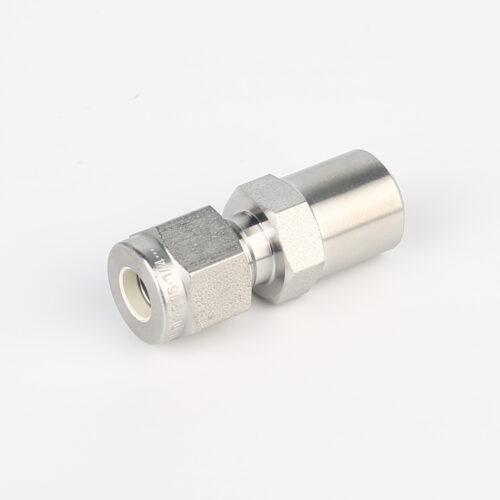
768LN Stainless Steel Male Pipe Tube Butt Weld Connector And Tube Fittings Supplier
-
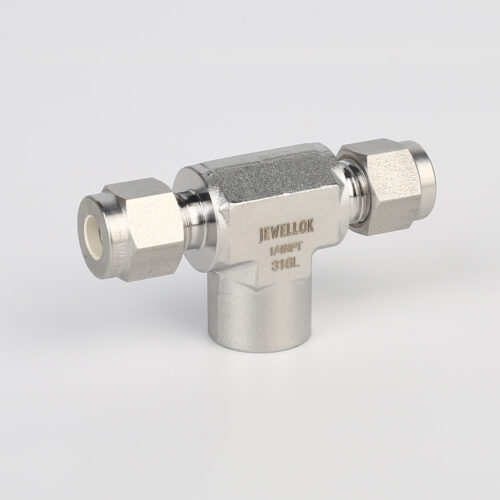
772 LF Female Branch Tee | Stainless Steel Tube Fitting Female Branch Tee 1/2 in. Tube OD x 1/2 in. Tube OD x 3/8 in. Female NPT
-
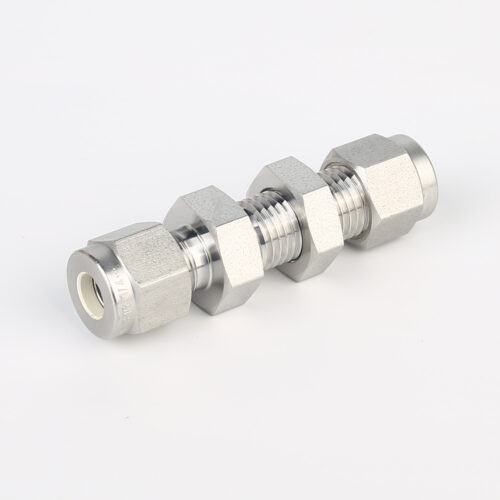
774L Stainless Steel UHP Fittings Butt Weld Bulkhead Union For High Flow Special Gas Fluid
-
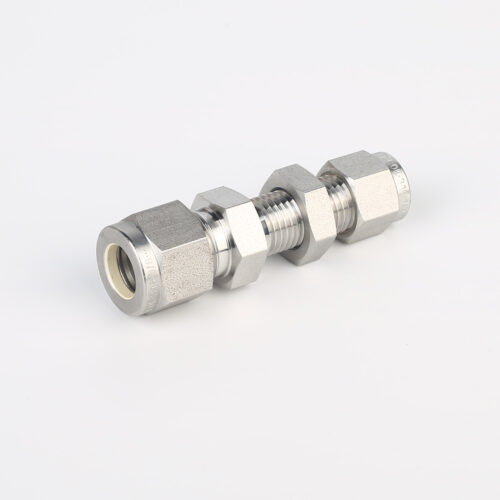
775L Bulkhead Reducing Union | Stainless Steel High Purity Double Ferrule Bulkhead Reducing Unions
-
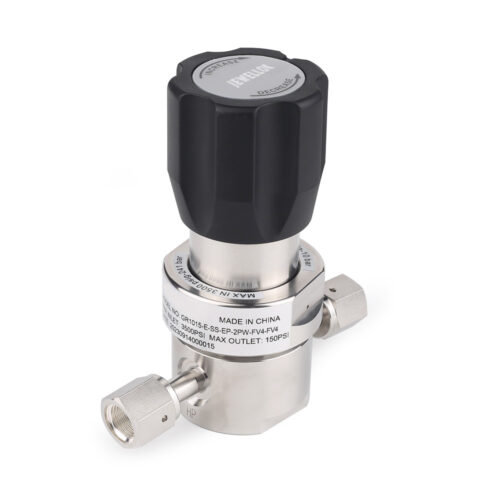
JR1000 Series UHP Ultra High Purity Single Stage Pressure Reducing Regulator And Low To Intermediate Flow
-
Integrated Gas System (IGS) Modular Integrated Gas Systems (TMS) Integrated Gas Supply System For Semiconductor And Laboratory