
Valves Manufacturer Tel: +86 13380377051
Back Pressure Regulator Outlet Pressure: How It Works & What You Need to Know
In the intricate world of fluid control systems—spanning industries from oil and gas to pharmaceuticals and biotechnology—maintaining precise pressure is not just a requirement but a cornerstone of safety, efficiency, and product quality. While pressure-reducing regulators are widely understood, their often-overlooked counterpart, the Back Pressure Regulator (BPR), plays an equally critical role. At the heart of its function is the control of outlet pressure, a concept that can be counterintuitive but is fundamental to system integrity. This article delves into the mechanics of how a back pressure regulator manages outlet pressure, explores its vital applications, and outlines key considerations for selection and operation.
Understanding the Fundamental Role: It’s All About the Outlet
First, let’s dispel the primary point of confusion. Unlike a pressure-reducing regulator, which controls downstream (outlet) pressure by taking a higher inlet pressure and lowering it, a back pressure regulator controls upstream (inlet) pressure by imposing a variable restriction on the flow leaving a system.
In simpler terms: A BPR is a sentinel at the exit gate. Its sole purpose is to maintain a desired, set pressure at its own inlet port (which is connected to your process vessel, pipeline, or reactor) by modulating the flow resistance downstream. The pressure at its outlet port is, by design, lower than or equal to this set inlet pressure and is determined by downstream conditions. This is the key conceptual leap: The controlled variable is the regulator’s inlet pressure; the outlet pressure is a consequence.
The Core Working Principle: Sensing, Balancing, and Modulating
A typical spring-loaded back pressure regulator operates on a straightforward force-balance mechanism. Its main components include:
- Inlet Port: Connected to the protected upstream system.
- Outlet Port: Connected to the lower-pressure destination (e.g., a flare, drain, or low-pressure collection line).
- Sensing Element: A diaphragm or piston that directly feels the pressure from the inlet side.
- Spring: Provides the adjustable setpoint force. Compressing the spring increases the set pressure.
- Sealing Seat & Plug: The orifice that opens and closes to restrict flow.
Here’s the step-by-step cycle of operation:
- At Rest/Closed: When upstream pressure is below the spring’s setpoint, the spring force pushes the plug against the seat, sealing the valve shut. No flow occurs.
- Pressure Rise & Opening: As pressure in the upstream system builds (from a pump, compressor, or chemical reaction), it acts on the sensing diaphragm. When this upstream force exceeds the force of the adjustment spring, the diaphragm/piston lifts. This movement pulls the plug away from the seat, creating an opening.
- Flow & Modulation: Fluid begins to flow from the high-pressure inlet, through the opened orifice, to the lower-pressure outlet. This flow relieves the upstream pressure.
- Re-balancing & Closing: As upstream pressure drops due to this venting, the spring force begins to overcome the reduced pressure force on the diaphragm. The plug moves back toward the seat, restricting the flow area.
- Steady-State Control: The valve dynamically modulates—opening wider, closing partially, or “chattering” minutely—to maintain the upstream pressure at a precise equilibrium with the spring set force. In this balanced state, the upstream pressure is held constant at the set pressure.
What, then, is the Outlet Pressure?
During this controlling flow, the outlet pressure (P_outlet) is simply the pressure in the downstream header or pipe. For the BPR to function, P_outlet must be lower than the set inlet pressure (P_set). The difference between P_set and P_outlet is the pressure drop (ΔP = P_set – P_outlet) across the valve when it is open and flowing. This ΔP is the driving force for flow. If downstream pressure were to rise above the setpoint, the valve would close completely.
Key Applications: Why Controlling “Back Pressure” is Essential
The ability to maintain a constant upstream pressure makes BPRs indispensable in numerous scenarios:
- Chemical & Batch Reactors: To maintain a precise, safe pressure inside a reactor during a gas-evolving reaction or while adding reagents. The BPR vents excess pressure while ensuring the reaction proceeds at the optimal pressure level.
- Chromatography & Filtration Systems: In HPLC or downstream processing, BPRs are placed after the separation column or filter to provide a consistent, bubble-free backpressure. This prevents outgassing of solvents and ensures stable pump operation and accurate results.
- Fluid Packaging & Filling: Maintains constant pressure on a product reservoir (like a beer keg or a syrup tank) to ensure a consistent fill rate and prevent foaming or uneven dispensing.
- Gas Sampling & Analysis: Provides a constant pressure feed to sensitive analytical instruments (like mass spectrometers or gas chromatographs), ensuring sample integrity and accuracy regardless of source pressure fluctuations.
- Pump Protection (Dead-heading): Installed on the discharge side of a positive displacement pump (like a syringe or peristaltic pump), a BPR protects the pump and piping from overpressure if a downstream valve is accidentally closed. It acts as a controlled relief path.
- System Purge & Blanketing: Maintains a slight positive pressure of inert gas (like N₂) in a tank or system to prevent air ingress, contamination, or oxidation.
- Pilot-Operated & High-Capacity Scenarios: For large flow applications (e.g., refinery flare headers, gas gathering lines), pilot-operated BPRs use process pressure to amplify the controlling force, allowing for precise control of high pressures and flows with a compact main valve.
Critical Factors for Selection and Performance
Understanding outlet pressure is central to selecting and sizing a BPR correctly. Here’s what you need to know:
- Set Pressure vs. Outlet Pressure Range:
The set pressureis your primary specification. You must also know the expected range of downstream outlet pressures. The BPR must be selected to control reliably across the minimum and maximum possible P_outlet. A valve sized for a very low P_outlet may chatter or become unstable if P_outlet rises too high, reducing the available ΔP. - Pressure Drop (ΔP) and Capacity:
The flow capacity of a BPR is directly related to the ΔP across it. Manufacturers provide flow coefficient (Cv or Kv) values. Sizing is crucial:An oversized valve will operate near its seat, leading to hunting, chatter, and poor control. An undersized valve won’t pass the required flow to relieve the upstream pressure, causing the system to over-pressurize. Always calculate the required Cv for your maximum flow rate at the minimum expected ΔP (i.e., when P_outlet is at its highest). - Relieving vs. Controlling Action:
It’s vital to distinguish a BPR from a Pressure Relief Valve (PRV) or Safety Relief Valve (SRV).
- BPR: A continuous process control device. It modulates to maintain precise upstream pressure during normal operation. It begins opening at the set pressure and is typically fully open at a pressure a few percent above setpoint (e.g., 10% overpressure).
- PRV/SRV: A safety device. It remains firmly closed until system pressure reaches a preset overpressure limit, then it pops fully open to prevent catastrophe. It is not used for continuous modulation.
- Material Compatibility & Seals:
The wetted materials (body, seat, seal, diaphragm) must be compatible with the process fluid (gas or liquid), its temperature, and its corrosiveness. Elastomer seals (Viton, EPDM, Kalrez) are common, but for high purity or aggressive chemicals, all-metal seals or PTFE may be required. - Stability and Characteristics:
Look for valves designed for stable modulating control. Features like guided balanced plugs, linear flow characteristics, and low-friction packings enhance control precision and minimize hysteresis.
Troubleshooting Common Issues Related to Outlet Pressure
- Failure to Maintain Set Pressure (Droop): If upstream pressure consistently rises above setpoint, the valve may be undersized (can’t pass enough flow) or downstream outlet pressure (P_outlet) may have increased unexpectedly, reducing the driving ΔP. Check for downstream blockages.
- Valve Chatter or Instability: This is often a sign of an oversized valve. With too high a Cv, a small lift creates a large flow, causing rapid cycling. It can also occur if the ΔP is too low. Consider a smaller trim or a valve with a different flow characteristic.
- Leakage at Closed Position: Contamination damaging the seat/seal, wear from excessive cycling, or a P_outlet that is too close to (or exceeds) the set pressure, preventing the spring from fully closing the valve.
- Slow Response: Can be caused by a volume of gas between the process and the sensing diaphragm (in a remote sense configuration), a clogged sense line, or an excessively soft spring for the application.
Conclusion
The back pressure regulator is a master of indirect control. By strategically manipulating flow resistance and therefore the pressure at its outlet, it performs the essential duty of maintaining a stable, precise pressure in the system that feeds it. Its “outlet pressure” is not the variable it directly commands, but the boundary condition that defines its operating window.
When selecting and applying a BPR, success hinges on a clear understanding of this relationship. You must define not only the required upstream set pressure but also the full expected range of downstream outlet pressures. Proper sizing, material selection, and an appreciation for its modulating control nature—as distinct from a simple relief valve—are paramount.
In the symphony of a process control system, if pumps and compressors are the muscles and control valves the fine motor skills, the back pressure regulator is the steadfast guardian of the stage, ensuring the environment remains perfectly tuned for the performance to proceed safely and efficiently. By demystifying its operation, engineers and technicians can leverage this versatile tool to enhance system reliability, safety, and product quality across countless industrial landscapes.
For more about back pressure regulator outlet pressure: how it works & what you need to know, you can pay a visit to Jewellok at https://www.jewellok.com/ for more info.
-
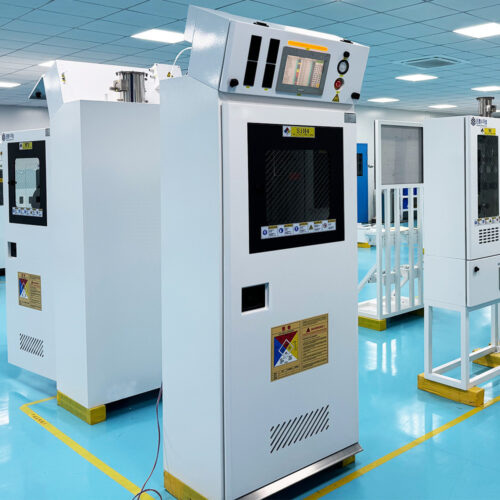
High Purity Bulk Specialty Gas Pressure Control And Filtration Bulk Gas Skid Systems JW-300-BSGS
-
BSGS Large Flow Specialty Gas Supply Cabinet 3 Cylinder Gas Storage Cabinet Fully Automated PLC Control Bulk Specialty Gas Systems (BSGS) Gas Cabinets
-
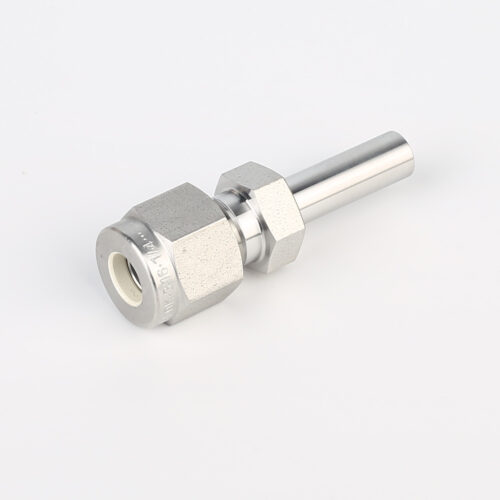
767LT Reducer Pressure Reducing Valve Adjustment High purity Pressure Reducing Union Fittings And Tubing
-
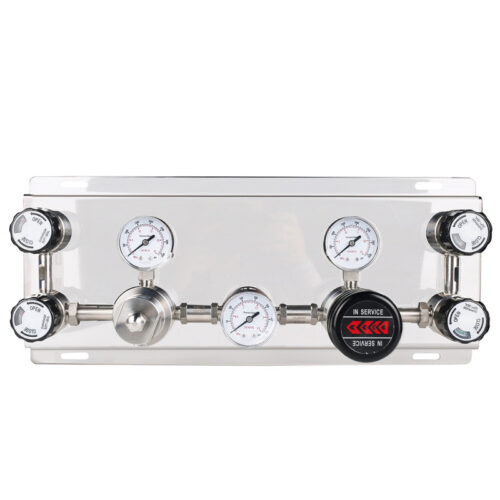
Semi Automatic And Automatic Switching Speicialty Gas Changeover Manifold Panel With Semiconductor Valve Manifold Box Gas Pressure Regulators
-
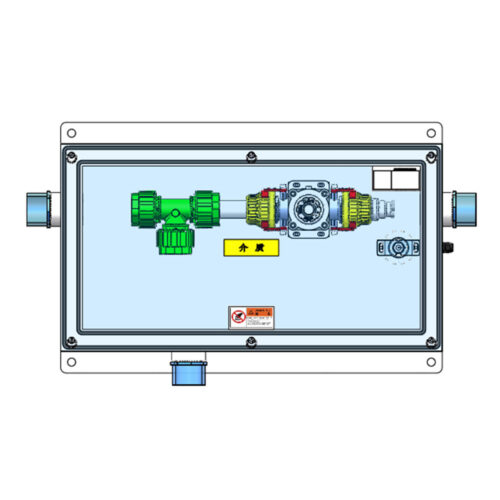
T-BOX JW-TB-C Special Gas Delivery System Gas Valve Manifold Boxes
-
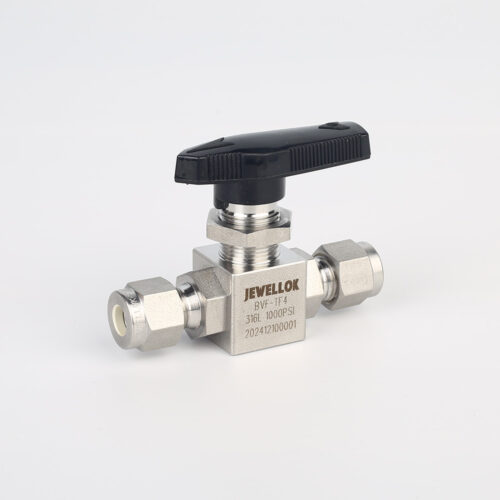
Stainless Steel High Purity High Temperature Pneumatic Actuated Ball Valves JBV2 Series
-
Stainless Steel Ultra High Purity Mini Butt Weld Mini Tee Reducer MTRW Series Fittings
-
High Purity Gas Cylinder Semi Automatic Changeover Manifold Regulator Panel 3000psig Stainless Steel Gas Control Panel 1/8 Npt With Gauge