
Valves Manufacturer Tel: +86 13380377051
How Does a UHP 316L Stainless Steel Bellows Valve Work?
In the demanding worlds of semiconductor fabrication, pharmaceutical processing, advanced analytical instrumentation, and high-purity chemical handling, the integrity of fluid delivery systems is paramount. At the heart of these Ultra-High Purity (UHP) and corrosive service systems lies a critical component: the bellows valve. Specifically, valves constructed from 316L stainless steel with a bellows seal represent the gold standard for reliability and containment. This article provides a comprehensive technical examination of how a UHP 316L stainless steel bellows valve functions, exploring its design principles, operational mechanics, material science rationale, and key advantages over conventional valve designs.
Introduction: The Need for Absolute Integrity
Standard industrial valves rely on dynamic stem seals, such as gland packing or O-rings, to prevent process fluid from escaping along the moving valve stem. While effective for many applications, these seals are potential failure points. They can degrade, wear, and—most critically for UHP systems—introduce minute amounts of contamination via permeation or allow fugitive emissions of hazardous or valuable process gases and liquids.
A bellows valve eliminates this external leakage path entirely by employing a hermetically sealed, flexible metallic component—the bellows. When constructed from 316L stainless steel, the valve achieves exceptional corrosion resistance, mechanical strength, and cleanliness, making it indispensable for applications demanding leak-tightness measured in helium leak rates of <1 x 10⁻⁹ atm·cc/sec and particulate control.
Core Components and Design Philosophy
A UHP 316L stainless steel bellows valve is an engineered assembly of several key components, each playing a vital role in its function:
- Valve Body & Bonnet (316L Stainless Steel): Form the primary pressure boundary. UHP designs feature electropolished internal surfaces, minimized dead volume, and crevice-free welding (often autogenous orbital welds) to prevent entrapment and promote cleanability.
- Seat & Disc (or Plug): The closure mechanism. For isolation (on/off) service, this is typically a conical or flat disc that mates with a matching seat. Materials are often 316L, but may be hardened, coated, or use different alloys for wear resistance. The quality of this seal determines the valve’s internal leakage rate.
- Stem: The rigid shaft that transmits actuator force to the disc.
- The Bellows Assembly (The Critical Element): This is a longitudinally welded, multi-ply (often 2-3 layers), flexible metallic conduit made from 316L stainless steel foil. It is sealed at one end to the valve bonnet and at the other end to the valve stem. It forms a hermetic, flexible barrier between the stem and the bonnet, isolating the process fluid from the atmosphere.
- Secondary (or Backup) Stem Seal: Located above the bellows, this is typically a spring-loaded PTFE or graphite seal. Its primary role is to protect the exterior of the bellows from atmospheric corrosion and contamination, and to provide a seal in the unlikely event of bellows failure.
- Actuator: Manual (handwheel), pneumatic, or electric. It provides the torque or thrust required to operate the valve.
Design Philosophy: The core tenet is dual containment. The primary dynamic seal is the metal-to-metal seal of the disc and seat. The primary stem seal is the hermetic bellows. The secondary stem seal acts as a final safety barrier. This layered approach ensures integrity.
The Working Principle: A Step-by-Step Analysis
The operation of a bellows valve can be dissected into three primary phases: Opening, Open State, and Closing.
- The Closed and Sealed State
In the closed position, the disc is pressed firmly against the seat by the stem force (from the actuator via the stem). This creates a tight metal-to-metal seal, blocking fluid flow. Critically, the bellows is in its maximum compressed state. The convolutions (the “folds” of the bellows) are tightly nested together. The process fluid fills the valve body cavity and is in contact with the exterior of the bellows assembly. The interior of the bellows and the area above it are typically at atmospheric pressure or may be purged with an inert gas.
- The Act of Opening (Stem Rising)
- The actuator begins to rotate the stem (for rising stem valves, which are most common for bellows designs).
- As the stem starts to rise, it pulls the disc away from the seat. Flow begins to pass once sufficient clearance is achieved.
- Simultaneously, because the top of the bellows is fixed to the stem, the rising stem pulls the bellows upward.
- This pulling force causes the tightly nested bellows convolutions to elongate. Each convolution flexes open, increasing the overall length of the bellows assembly. The bellows acts as a precision axial spring and seal. The flexibility is achieved through the elastic deformation of the thin 316L foils within their designed stress limits.
- During this entire motion, the hermetic seal between the process fluid and the external environment is maintained exclusively by the flexing metal walls of the bellows. There is no sliding stem seal to wear or generate particles.
- The Fully Open State
The stem has reached its maximum travel. The disc is fully retracted from the flow path, offering minimal resistance. The bellows is in its maximum extended state. The convolutions are now partially stretched, but designed to remain within their elastic limit to avoid permanent deformation (yielding). The fluid now flows freely, contacting only the wetted parts: the 316L body, seat, disc, and the exterior of the extended bellows.
- The Act of Closing (Stem Lowering)
The process reverses:
- The actuator drives the stem downward.
- The stem pushes the disc towards the seat, eventually shutting off flow.
- The bellows is progressively compressed as the stem descends, with the convolutions neatly nesting back together.
- Final sealing force is applied at the disc/seat interface, and the bellows returns to its fully compressed, safe state.
Key Insight: The bellows translates the rotary or linear motion of the actuator into a purely axial, linear motion of the stem while maintaining a static, hermetic seal at its fixed ends. The dynamic flexing is contained within the bellows wall.
The Role of 316L Stainless Steel in UHP Service
The choice of material is not incidental. 316L stainless steel is specified for its unique properties:
- Low Carbon Content (“L” Grade): Carbon content is kept below 0.03%. This is crucial to prevent sensitization—the precipitation of chromium carbides at grain boundaries during welding—which depletes local chromium and creates zones susceptible to corrosion. In UHP systems, even microscopic corrosion is unacceptable.
- Corrosion Resistance: The addition of molybdenum (2-3%) significantly enhances resistance to pitting and crevice corrosion, especially from chlorides and acidic media common in chemical processes.
- Cleanability and Surface Finish: 316L can be electropolished to a mirror-like finish (often achieving Ra < 10 µinches). This smooth surface minimizes particle adhesion, reduces surface area for outgassing, and improves cleanability with standard passivation procedures (e.g., nitric acid or citric acid).
- Mechanical Properties for Bellows: The thin foils (often 0.1-0.2mm per ply) must have excellent ductility for deep drawing into convolutions, high fatigue strength to withstand millions of cycles, and consistent metallurgical properties for reliable welding.
Critical Engineering Considerations
5.1. Bellows Design and Fatigue Life
The bellows is the life-limiting component. Its design is governed by:
- Stroke Length: The total axial travel. This directly dictates the required number of convolutions and their geometry.
- Cycle Life: Specified by the manufacturer (e.g., 10,000, 50,000, or 100,000 cycles). Life is calculated based on stress amplitudes during flexing. Bellows valves are not designed for frequent throttling; they are isolation valves. Excessive cycling drastically reduces life.
- Pressure Capabilities: The bellows must withstand both internal pressure (if the interior is pressurized) and, more critically, external pressure from the process fluid without squirming or buckling. Multi-ply designs increase pressure ratings.
- Spring Rate: The bellows acts as a spring, resisting compression/extension. This spring force must be factored into the required actuator torque.
5.2. Thermal Management
Temperature changes cause expansion/contraction of the stem and body. The bellows assembly must accommodate these differential movements without being over-stressed. In high-temperature applications, bellows cooling fins or extended bonnets are sometimes used.
5.3. Failure Modes and Safeguards
- Bellows Fatigue Failure: The most common failure mode after extended cycling. A leak through the bellows wall will allow process fluid into the bonnet area. This is why the secondary stem seal is essential—it contains this leak, allowing for safe detection (via a vent port or sensor) and scheduled maintenance before a catastrophic external release occurs.
- Seat Leakage: Wear or damage to the disc/seat interface. Addressed by using hardened materials or renewable seats.
Advantages and Applications
Advantages over Packed Valves:
- Zero Fugitive Emissions: Hermetic sealing eliminates stem leakage.
- Ultra-High Purity: No organics from packing to contaminate the process; cleanable 316L surfaces.
- Low Maintenance: No need for periodic packing adjustment or replacement.
- Suitability for Hazardous/Vacuum Service: Essential for toxic, flammable, or expensive media and high-vacuum systems.
Primary Applications:
- Semiconductor Manufacturing: Gas delivery systems (dopants, etch gases, CVD precursors).
- Pharmaceutical & Biotech: Sterile process lines, clean-in-place (CIP) systems, and fermentation.
- Analytical & Laboratory: Instrument gas supply, sample lines.
- Nuclear and Aerospace: Critical leak-tight services.
- General High-Purity Chemical Processing.
Selection and Specification Guidelines
When specifying a UHP 316L bellows valve, engineers must define:
- Fluid Media & Compatibility: Confirm 316L suitability.
- Pressure/Temperature Ratings: Ensure they cover process extremes.
- End Connections: VCJ/CVDF face seal fittings, butt-weld ends, or ISO/KF flanges for UHP systems.
- Leakage Rates: Specify both external (bellows/seat, typically helium leak tested) and internal (seat leakage, per standards like ANSI/FCI 70-2).
- Cycle Life Requirement: Match to expected operational frequency.
- Surface Finish: Specify electropolish level and cleanliness standards (e.g., SEMI standards).
Conclusion
The UHP 316L stainless steel bellows valve is a masterpiece of precision engineering that solves a fundamental problem in critical fluid handling: achieving absolute dynamic sealing. By replacing a sliding seal with a hermetically sealed, flexing metal conduit, it provides unparalleled integrity. Its operation, centered on the controlled elastic deformation of a 316L bellows, offers a robust and reliable solution. The combination of 316L’s material excellence—corrosion resistance, cleanability, and weldability—with the intelligent mechanical design of the bellows, makes this valve type an enabling technology for industries where purity, safety, and reliability are non-negotiable. Understanding its working principle is essential for the proper specification, application, and maintenance of these vital components in advanced technological processes.
For more about how does a UHP 316L stainless steel bellows valve work, you can pay a visit to Jewellok at https://www.specialtygasregulator.com/product-category/ultra-high-purity-gas-regulators/ for more info.
-
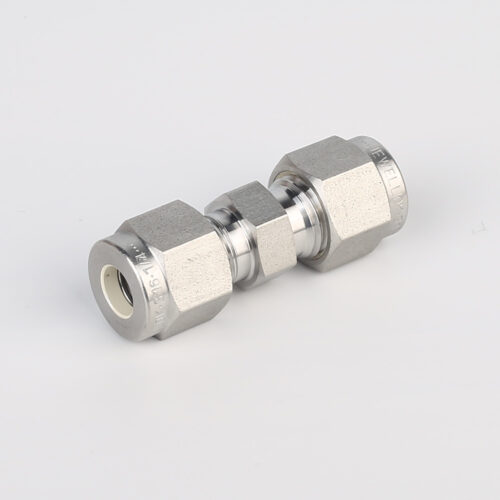
762L Stainless Steel High Purity Union High-Purity Gas System Fittings
-
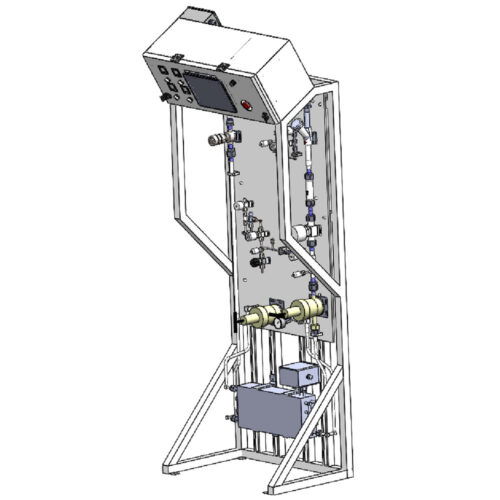
Fully Automated Gas Cabinet Gas Rack Gas Delivery Systems JW-300-GR
-
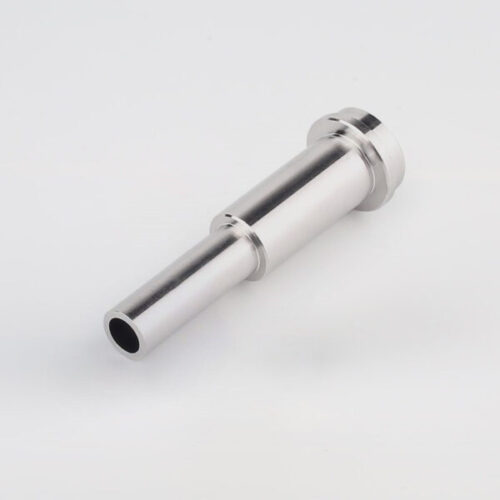
Long Gland LG Series For Ultra High Purity Gas And Chemical Delivery Systems
-
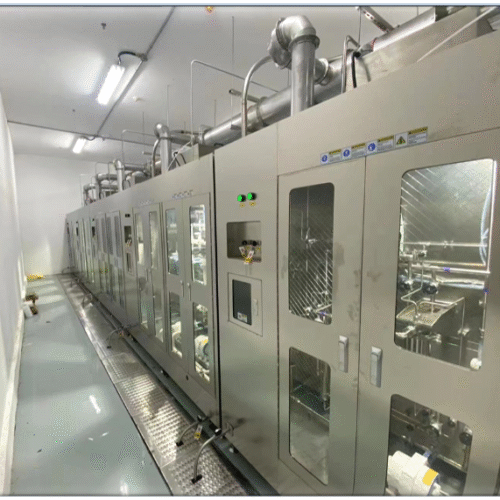
Ultra-High Purity Bulk Liquid Chemical Delivery System (BCDS) for Maintaining Parts-Per-Trillion Purity in Manufacturing
-
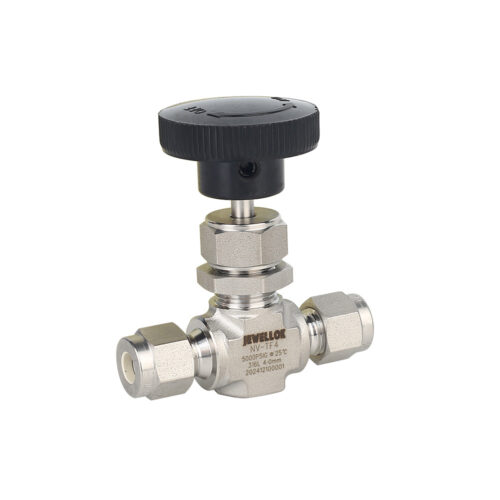
High Purity High Pressure Stainless Steel Needle Valve Natural Gas Flow Control Valve JNV Series
-
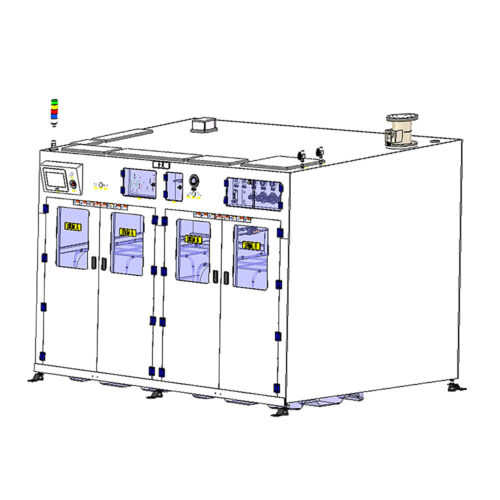
Scrubber Gas Cabinet Scrubber Tail Gas Treatment Cabinet Vent Gas Scrubber System Heat-Filter Burn Box Gas Scrubber/Abatement System
-
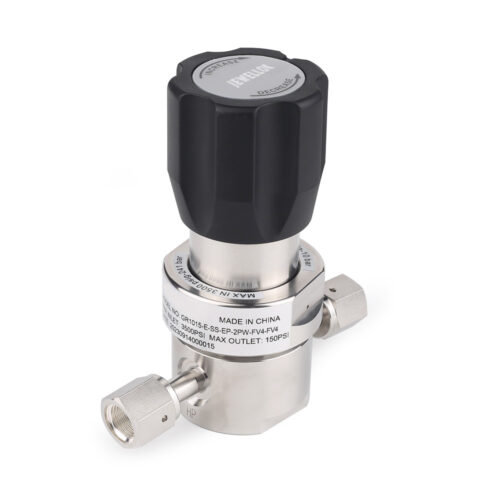
JR1000 Series UHP Ultra High Purity Single Stage Pressure Reducing Regulator And Low To Intermediate Flow
-
High Purity Chemical Dispense System & Packing System For Semiconductors JW-200L-CDM & JW-1000L-CDM