
Valves Manufacturer Tel: +86 13380377051
How to Choose the Krypton Gas Ultra High Purity (UHP) Regulator
The handling of specialty gases like krypton (Kr) demands precision, safety, and an unwavering commitment to preserving gas integrity. Krypton, a noble gas with critical applications in lighting, insulation, laser technology, and scientific research, is often required at ultra-high purity levels. The regulator serves as the crucial control point between the high-pressure cylinder and the sensitive downstream process. Selecting an inappropriate regulator can introduce contamination, cause pressure fluctuations, or even create safety hazards. This technical article provides a comprehensive framework for selecting a krypton gas Ultra High Purity regulator, focusing on materials of construction, design features, performance specifications, and safe handling protocols.
- The Critical Role of the Regulator in Kr Applications
Krypton’s value lies in its specific properties: high density, low thermal conductivity, and its role in generating specific spectral lines. In applications such as:
- High-Performance Lighting: Filling halogen, fluorescent, and high-intensity discharge lamps for improved efficiency and color rendering.
- Window Insulation: Used in double- or triple-paned windows for superior thermal insulation.
- Lasers: Kr is a key component in excimer lasers (e.g., KrF lasers for semiconductor lithography).
- Scientific Research: As a calibration standard or in particle physics experiments.
Any impurity—be it moisture (H₂O), oxygen (O₂), hydrocarbons (THC), or particulates—can degrade performance, poison catalysts, contaminate vacuum systems, or skew experimental results. The regulator is the first line of defense. It must not only reduce pressure reliably but also act as a barrier against contamination from the atmosphere and, critically, from itself.
- Foundational Selection Criteria: Materials of Construction
The internal wetted materials of the regulator are paramount. They must be inert, non-porous, and resistant to outgassing.
- Body and Diaphragm:
- Stainless Steel 316L (VIM/VAR): This is the gold standard. 316L offers excellent corrosion resistance. The “L” denotes low carbon, preventing carbide precipitation and corrosion at welded joints. Vacuum Induction Melting (VIM) followed by Vacuum Arc Remelting (VAR) purifies the metal, reducing impurities and enhancing consistency. Avoid brass or aluminum regulators for UHP krypton.
- Sealing and Seat Materials:
- Elastomers: Standard Buna-N or Viton® are unacceptable for krypton gas ultra high purity (UHP) regulator service. They are porous and can outgas water vapor and hydrocarbons.
- Metal Diaphragms: A piston-style or all-metal diaphragm regulator is ideal. It uses a stainless-steel or Hastelloy® corrugated diaphragm to separate the process gas from the spring chamber, eliminating elastomer permeation entirely.
- Secondary Seals: If elastomers are used (e.g., for static seals), they must be UHP-grade, such as Kalrez® Perfluoroelastomer or Teflon® (PTFE/PFA), which have extremely low outgassing and permeation rates.
- Surface Finish:
- Electropolishing: Internal surfaces should be electropolished to a smooth finish (typically < 15 Ra µin). This minimizes surface area, reduces adsorption/desorption sites for contaminants, and improves cleanability.
- Valve Seat: A non-rotating stem design with a Kel-F (PCTFE) or Ultem® seat is preferred for fine control and minimal wear debris generation compared to metal-on-metal seats.
- Regulator Design and Type
- Single vs. Two-Stage:
- Two-Stage Regulators: Provide superior pressure stability (“droop” control). The first stage reduces cylinder pressure to an intermediate setting, and the second stage delivers the final, precise outlet pressure. This design minimizes the effect of falling cylinder pressure on outlet pressure. For critical, sensitive applications with krypton, a two-stage UHP regulator is strongly recommended.
- Single-Stage Regulators: More economical but exhibit greater droop. May be suitable for less critical applications where pressure can be monitored and adjusted.
- Diaphragm vs. Piston:
- As noted, all-metal diaphragm designs are superior for UHP. Piston designs can introduce friction and require lubrication, which is a contamination source.
- Inlet and Outlet Connections:
- Inlet: Must match the krypton cylinder valve outlet (e.g., CGA 580 for non-flammable gases in the US). Ensure the correct thread type (e.g., female) and material (316SS).
- Outlet: Standard is typically ¼” or ⅜” VCJ® or VCO® metal gasket face seal fittings. These provide a zero-clearance, helium-leak-tight seal superior to NPT threads, which can generate particles and are prone to leakage. Swagelok® type tube fittings are also common but require proper ferrules.
- Key Performance Specifications
- Inlet Pressure Rating: Must exceed the krypton cylinder pressure. Full krypton cylinders are typically at ~2200 psi (150 bar). Choose a regulator rated for at least 3000 psi.
- Outlet Pressure Range: Select a range suitable for your process. For low-pressure applications (e.g., some research setups), a 0-50 psi range offers better control resolution than a 0-500 psi regulator.
- Flow Capacity (Cv): The regulator must deliver the required flow without excessive pressure drop or freezing. Check the manufacturer’s Cv value and flow curves. Undersizing leads to poor performance; oversizing can make fine control difficult.
- Leak Integrity:
- External Leak Rate: Should be better than 1 x 10⁻⁹ atm cc/sec He (tested per helium mass spectrometry).
- Internal Leak Rate (Creep): Measures leakage from the high-pressure side to the low-pressure side when the seat is closed. Critical for safety; should be negligible on a well-maintained UHP regulator.
- Cleanliness and Certification:
- Regulators should be cleaned and packaged in a certified cleanroom (Class 100 or better).
- They must undergo specific cleaning procedures: ASTM G93 solvent cleaning, followed by a high-temperature bake-out (often > 100°C under vacuum) to drive off volatiles.
- Request documentation: Certificates of Conformance for materials and Cleanliness Reports (e.g., particle count per MIL-STD-1246 or equivalent, and moisture/hydrocarbon levels measured by Residual Gas Analysis – RGA).
- Safe Handling and Installation Practices
A perfect regulator can be contaminated by poor handling.
- Purging: Before connecting to a UHP system, the regulator itself must be purged. Use the “Evacuation and Purge” method if possible: evacuate the regulator (inlet and outlet) with a clean vacuum pump, then backfill with dry, inert gas (e.g., argon or nitrogen of equivalent purity). Repeat several times. Never use the process krypton for extensive purging—it is costly.
- Connection Technique:
- Always use clean, dedicated UHP tools.
- For VCJ fittings, use new metal gaskets (nickel or stainless steel) for each connection. Never reuse gaskets.
- Tighten fittings to the manufacturer’s specified torque using a torque wrench to avoid damage and ensure a proper seal.
- Start-Up Procedure:
-
- Ensure the regulator outlet valve is closed.
- Slowly open the cylinder valve to pressurize the regulator inlet. Listen for leaks.
- Adjust the regulator control knob counter-clockwise to its minimum setting (zero spring load).
- Slowly adjust the knob to the desired outlet pressure.
- Slowly open the outlet valve to feed the system.
- Shut-Down Procedure:
-
- Close the cylinder valve.
- Vent the gas from the regulator and downstream system through an approved vent line.
- Release the spring tension by turning the control knob fully counter-clockwise.
- Additional Considerations
- Heated Regulators: If high flow rates are required, adiabatic cooling (Joule-Thomson effect) can cause ice formation, blocking orifices. A heated regulator with integrated heating elements maintains a constant temperature, preventing freeze-ups.
- Pressure Gauges: Specify stainless steel, glycerin-free UHP gauges. Glycerin fill can be a contamination source if the diaphragm ruptures. Digital pressure transducers may offer higher accuracy and cleaner interfaces.
- Venting: If the regulator has a vent, ensure it is piped to an exhaust system. For UHP service, a closed vent (not open to atmosphere) with a particulate filter is best to prevent back-diffusion of contaminants.
- Supplier Qualification: Source regulators from reputable specialty gas equipment manufacturers with proven expertise in UHP technology. They should provide full traceability and technical support.
- Conclusion
Choosing a krypton gas UHP regulator is not merely picking a part number. It is a systematic risk mitigation exercise. Follow this decision hierarchy:
- Define the Need: Determine the required purity level (e.g., 5.0 vs. 6.0 grade krypton), pressure, and flow for your specific application.
- Eliminate Contaminants at Source: Specify 316L VIM/VAR stainless steel, electropolished internals, and an all-metal diaphragm design.
- Ensure Stability and Control: Opt for a two-stage regulator with a non-rotating stem for precise, stable pressure delivery.
- Verify Performance and Cleanliness: Demand certified leak rates and documented cleanliness levels (RGA, particle count).
- Implement Safe Handling: Enforce strict procedures for purging, connection, and operation to preserve the integrity established by the hardware.
Investing in the correct Ultra High Purity regulator is an investment in process reliability, product quality, and safety. By meticulously evaluating materials, design, and protocols, engineers and scientists can ensure that the valuable and often costly krypton gas delivers its full potential without compromise. The regulator, though a small component, becomes the definitive guardian of purity at the point of use.
For more about how to choose the krypton gas ultra high purity (UHP) regulator, you can pay a visit to Jewellok at https://www.jewellok.com/ for more info.
-
Ultra High Purity Stainless Steel Compressed Gas Changeover Manifold Panel System For Integrated Gas Supply System
-
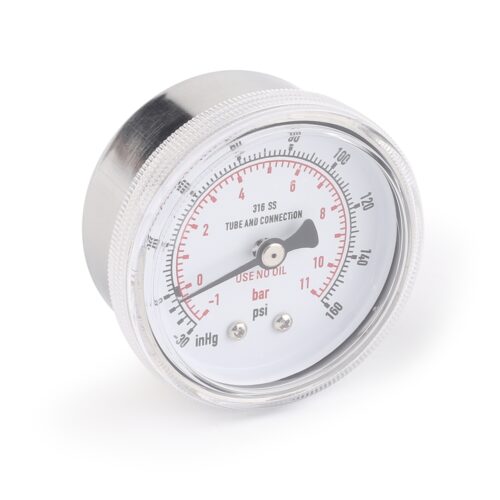
Ultra High Purity Pressure Gauge For Laboratory And Semiconductor JR Series
-
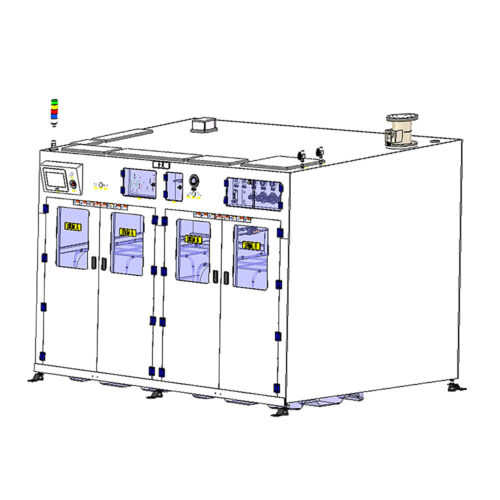
High Purity Chemical Dispense System & Packing System For Semiconductors JW-200L-CDM & JW-1000L-CDM
-
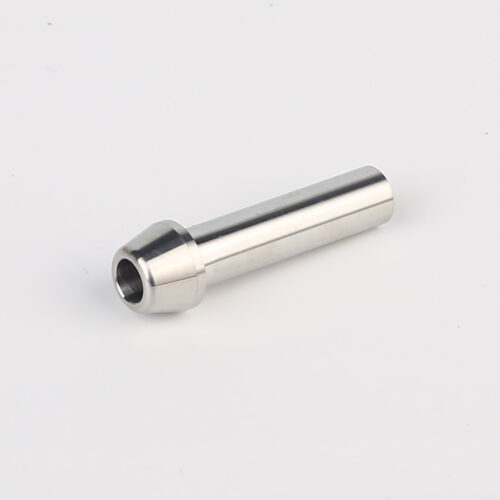
767LP Port Connector Ultra High Purity VCJ Metal Gasket Face Seal Tube Fittings
-
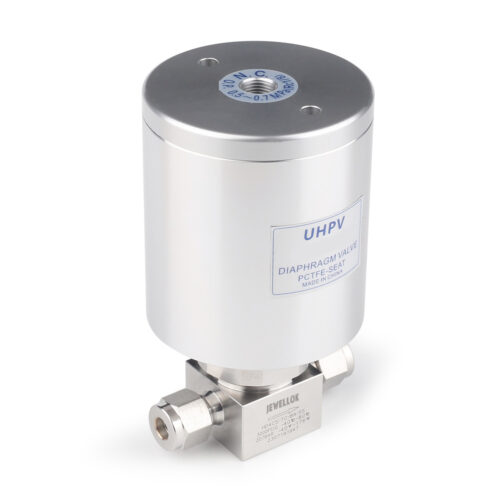
High Pressure High Temperature Pneumatic Ultrahigh Purity Stainless Steel Diaphragm Valves
-

Ultra-High Purity CDS and CDM Chemical Delivery and Dilution for Semiconductor Manufacturing
-
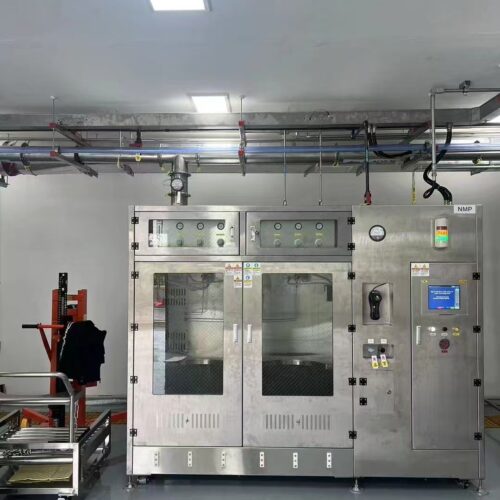
316L Electropolished Chemical Delivery System (CDS) for Contamination-Free Liquid Handling in EV Battery Manufacturing Plants
-
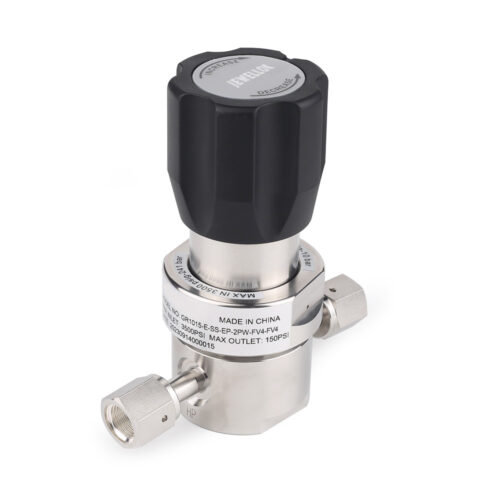
Specialty Gas Valves Ultra High Purity Gas Valves Ultra High Purity Gas Cylinder Valves UHP Cylinder Valve Ultra High Purity Gas Regulator