
Valves Manufacturer Tel: +86 13380377051
The Inner Workings of a 316L VIM-VAR Stainless Steel Pressure Regulator
In the intricate world of fluid and gas control, where precision, reliability, and purity are non-negotiable, the pressure regulator stands as a fundamental sentinel. It is the device tasked with taming a volatile, high-pressure supply into a stable, usable stream. While the basic principle of regulation is centuries old, its application in modern high-tech industries—semiconductor fabrication, pharmaceutical processing, advanced aerospace, and corrosive chemical handling—demands an extraordinary level of performance and material integrity. This is where the 316L VIM-VAR Stainless Steel Pressure Regulator transcends from a simple valve to a masterpiece of engineering. This article delves into the sophisticated mechanics of how such a regulator works, with a particular focus on why the esoteric 316L VIM-VAR material is not just a choice, but a necessity for the most demanding applications.
The Foundation – Why 316L VIM-VAR stainless steel pressure regulator?
Before understanding the mechanism, one must appreciate the material that forms its core. The designation “316L VIM-VAR” is a concatenation of alloy composition and advanced metallurgy.
- 316L: This is a low-carbon variant of the classic 316 austenitic stainless steel. Its alloying portfolio—chromium (16-18%), nickel (10-14%), and molybdenum (2-3%)—grants it excellent general corrosion resistance. The molybdenum is key, providing superior resistance to pitting and crevice corrosion in chloride-laden environments. The low carbon content (‘L’ denotes 0.03% max) is critical; it prevents sensitization (the formation of chromium carbides at grain boundaries during welding or high-temperature service), which can lead to intergranular corrosion. This makes 316L inherently weldable and stable.
- VIM-VAR (Vacuum Induction Melting + Vacuum Arc Remelting): This is where the material transitions from “good” to “ultra-high purity.” Standard 316L is melted in air, allowing for the inclusion of oxides, nitrides, and other non-metallic impurities.
- VIM: The initial melt occurs under a high vacuum in an induction furnace. This removes gaseous impurities (oxygen, nitrogen, hydrogen) and volatile trace metals.
- VAR: The ingot from VIM is then remelted under vacuum using an electric arc. This process further refines the structure, promoting a uniform, directional solidification that minimizes segregation, closes shrinkage porosity, and creates an exceptionally homogeneous, fine-grained ingot with near-zero non-metallic inclusions.
The result is a material with:
- Ultra-High Purity: Essential for preventing contamination of high-purity gases (e.g., silane in semiconductors, bulk gases in pharmaceuticals).
- Superior Mechanical Properties: Enhanced ductility, fatigue strength, and fracture toughness, critical for high-pressure cyclic service.
- Exceptional Corrosion Resistance: Maximum resistance to aggressive media like hydrochloric acid, seawater, and chloride solutions, thanks to the flawless microstructure.
- Consistent Performance: Predictable behavior across the entire component, vital for regulator stability and lifespan.
In a pressure regulator, this material is typically used for all wetted parts—the body, seat, diaphragm, and springs—creating a system that is inert, clean, and exceptionally durable.
The Core Mechanical Principle – The Balancing Act
At its heart, a pressure regulator is an automatic control valve that operates on a simple force balance principle. It is a closed-loop mechanical system designed to maintain a set output pressure (P2) despite fluctuations in the inlet supply pressure (P1) or downstream demand.
The core functional components are:
- Sensing Element: A flexible diaphragm (or in some designs, a piston).
- Loading Element: A spring that applies force to the diaphragm.
- Restricting Element: A poppet-and-seat valve that modulates flow.
- Reference Force Chamber: The volume on top of the diaphragm where the output pressure is referenced.
Step-by-Step Operational Breakdown
Let’s trace the journey of gas through the regulator and the corresponding mechanical actions.
- The “At-Rest” State (No Flow, Upstream Pressure Present)
The adjusting spring is turned to its minimum force, holding the main spring relaxed. The diaphragm is in a neutral position, and the poppet is forced against its seat by the poppet spring, creating a tight seal. The regulator is closed; no gas flows. - Setting the Desired Outlet Pressure
The user turns the adjustment knob, compressing the adjusting spring. This spring pushes down on the diaphragm plate. The diaphragm, flexing downward, transfers this force through the stemto push the poppetoff its seat. This opens an orifice. High-pressure gas from the inlet (P1) now flows through this orifice into the low-pressure chamber and the outlet port (P2). - Achieving Balance – The Regulation Moment
As gas flows to the outlet, it also fills the reference chamberabove the diaphragm (connected via an internal passage or the outlet port itself). The pressure in this chamber (P2) now acts on the top surface of the diaphragm, creating an upward force(F_diaphragm = P2 * Diaphragm Area).
This upward force opposes the downward force of the adjusting spring (F_spring). The system seeks equilibrium:
- If P2 is too low: The spring force dominates, pushing the diaphragm down, opening the poppet further to allow more flow, which increases P2.
- If P2 is too high: The pressure force on the diaphragm dominates, pushing it upward, allowing the poppet spring to close the poppet slightly, reducing flow and decreasing P2.
The regulator continuously and automatically makes these micro-adjustments, maintaining a dynamic equilibrium where:
F_spring ≈ P2 * A_diaphragm
Since the diaphragm area (A) is fixed, the outlet pressure P2 is directly proportional to the spring force. The adjustment knob effectively calibrates the spring force to the desired P2.
- Responding to Demand Changes (Downstream Flow Variations)
- Increase in Downstream Demand (e.g., a valve opens): P2 momentarily drops as gas rushes out. This reduces the upward force on the diaphragm, allowing the spring to push down, opening the poppet wider to allow more flow and restore P2 to its set point.
- Decrease in Downstream Demand (e.g., a valve closes): P2 momentarily rises. The increased pressure on the diaphragm pushes it up, closing the poppet, reducing flow, and bringing P2 back down.
- Responding to Supply Changes (Upstream Pressure Variations)
- Drooping Characteristic: In this simple single-stage design, if P1 rises significantly, it can force more flow through the orifice for a given poppet position, causing a slight increase in P2 (“droop”). A high-quality regulator with a sensitive diaphragm and well-designed flow path minimizes this effect.
The Critical Role of 316L VIM-VAR in Component Function
Here is where material science meets mechanical function. Each component’s material is paramount.
- Diaphragm:Often the thinnest wetted part, it must flex millions of times without fatigue failure or micro-cracking. VIM-VAR 316Lprovides the ultimate fatigue resistance and ductility. Any impurity could act as a stress concentrator and initiation point for a crack, leading to catastrophic failure and leakage into the spring chamber.
- Poppet and Seat:This is the sealing interface, subject to wear, impact, and potential galling (cold-welding). The hardness and surface finish are critical. VIM-VAR 316Lcan be machined to a mirror finish and is often hardened or paired with a softer material (like PCTFE) for a tight, leak-free seal. Its homogeneity prevents localized wear.
- Body and Internal Passages:These must withstand high inlet pressures (P1) and resist cracking or corrosion from aggressive media. The high toughness and uniform corrosion resistance of VIM-VAR 316Lensure long-term integrity. In ultra-high purity applications, the ultra-smooth, inclusion-free surface prevents particle generation and adsorption/desorption of moisture.
- Springs:Even the springs are often made from this material. In corrosive environments, standard spring steel would fail. 316L VIM-VARsprings maintain their elastic modulus and force characteristics without corroding, ensuring the fundamental force balance remains accurate over time.
Advanced Considerations and Configurations
The basic design can be enhanced:
- Two-Stage Regulation: For applications requiring extremely stable output despite large inlet fluctuations, two single-stage regulators are stacked in series. The first stage handles the bulk of the P1 variation, providing a rough intermediate pressure to the second stage, which performs fine regulation. All wetted parts in a critical two-stage regulator would benefit from VIM-VAR construction.
- Dome-Loaded vs. Spring-Loaded: In dome-loaded regulators, a controlled gas pressure (from a separate source) replaces the adjusting spring. This allows for remote control and often better accuracy. The dome itself is a pressure vessel where material integrity is again key.
- Filter Integral to Design: Many high-end regulators have a sintered 316L metal filter at the inlet to protect the sensitive seat from particulate damage—a perfect companion to the clean VIM-VAR flow path.
Applications – Where Such Precision is Mandatory
A regulator made with 316L VIM-VAR is not for standard industrial air. It is a specialized tool for the most stringent demands:
- Semiconductor Manufacturing: Controlling ultra-high purity (UHP) etch gases, dopants, and CVD precursors. Any metallic contamination or particle generation can destroy a multi-million-dollar wafer batch.
- Pharmaceutical & Biotechnology: Regulating gases for fermentation, chromatography, or as process reactants in sterile environments. Material must be clean, sterilizable (via SIP/CIP), and non-reactive.
- Corrosive Chemical Processing: Handling HCl, Cl₂, Br₂, or acidic solvents where standard stainless steels would rapidly degrade.
- High-Purity Analytical Instrumentation: Supplying carrier and detector gases for GC-MS or ICP-MS, where baseline stability and purity are directly linked to data accuracy.
- Marine & Offshore: In saltwater environments where pitting corrosion is a constant threat.
- High-Pressure/High-Cycle Aerospace Applications: Where reliability under extreme conditions and weight savings from high-strength materials are critical.
Conclusion
A 316L VIM-VAR Stainless Steel Pressure Regulator is more than the sum of its parts. It represents the pinnacle of applied engineering, where an advanced material is meticulously crafted into a precisely tuned mechanical system. The VIM-VAR process ensures the material’s internal architecture is as flawless as possible, granting it the toughness, purity, and corrosion resistance to perform in environments that would swiftly defeat lesser alloys. The regulator mechanism itself—a elegant dance of spring force, diaphragm flex, and poppet modulation—leverages these material properties to achieve a singular goal: unwavering control.
When a technician turns the adjustment knob on such a device, they are not just setting a pressure. They are engaging a sophisticated system designed to deliver flawless, consistent performance at the very edge of what is technically possible. It is a testament to the fact that in high-tech industry, true reliability and precision are built from the inside out, beginning at the atomic level of the material itself.
For more about the inner workings of a 316L VIM-VAR stainless steel pressure regulator, you can pay a visit to Jewellok at https://www.jewellok.com/ for more info.
-
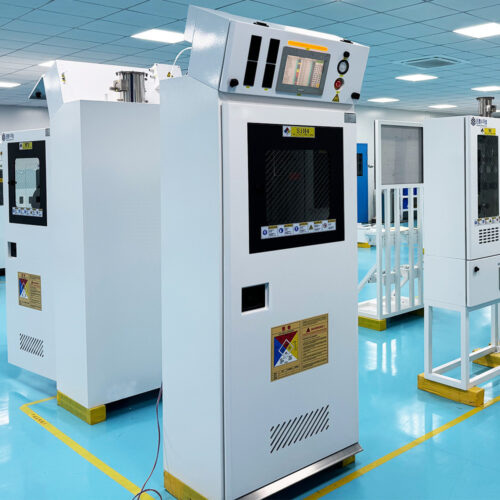
Bulk Specialty Gas Systems (BSGS) Gas Cabinets And Scrubber Tail Gas Treatment Cabinets For High Purity Bulk Specialty Gas Delivery
-
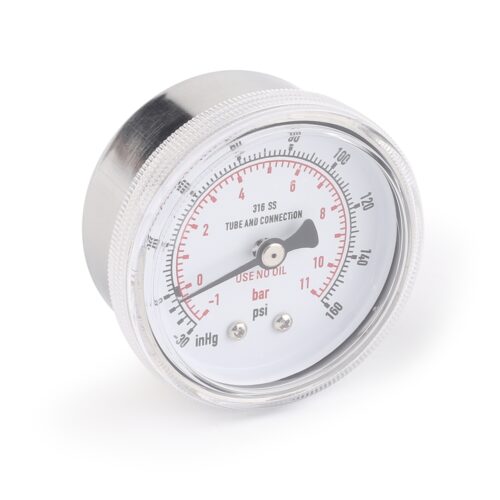
Ultra High Purity Pressure Gauge For Laboratory And Semiconductor JR Series
-
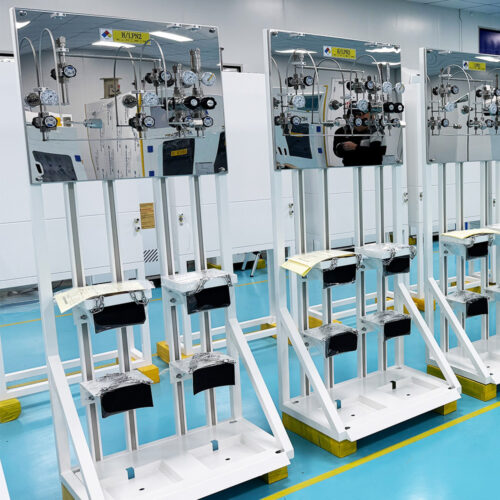
Manual Gas Rack High Purity Gas Delivery Systems JW-100-GR
-
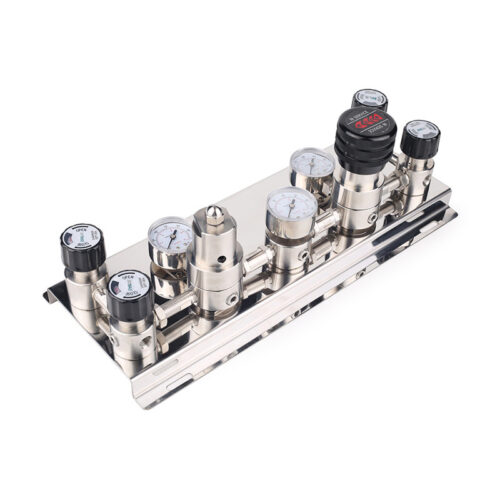
Stainless Steel High Pressure Specialty Gas Changeover Manifold For High Purity Oxygen Nitrogen Argon Helium Hydrogen Co2
-
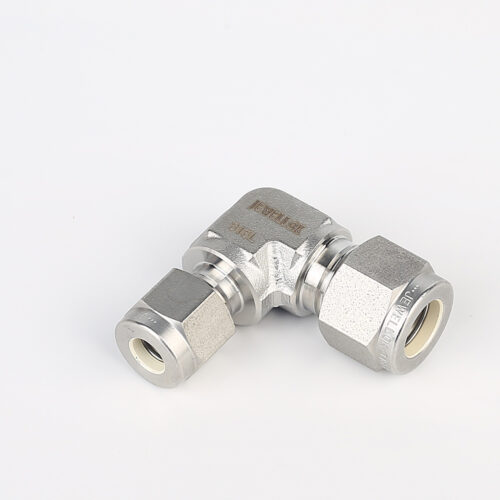
765LR Reducing Tee | Stainless Steel 316 High Purity Butt Weld Fittings Metal Face Seal For Welding Pipe Fitting Reducing Tee
-
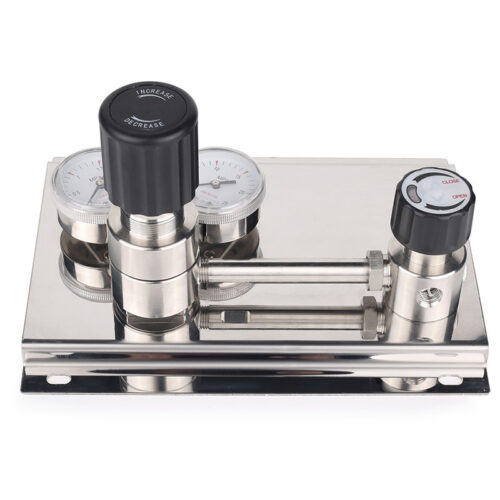
Stainless Steel Fully Automatic Gas Switchover Manifold System Automatic Gas Cylinder Switchover Co2 Cylinder Auto Changeover Controller
-
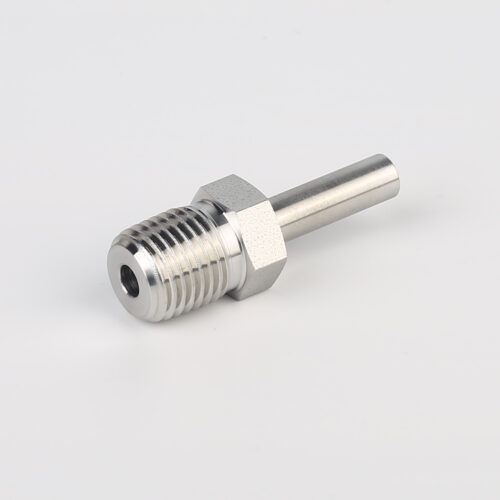
739 High Purity LMR Male Adapter Tube To Pipe Fittings And Adapters
-
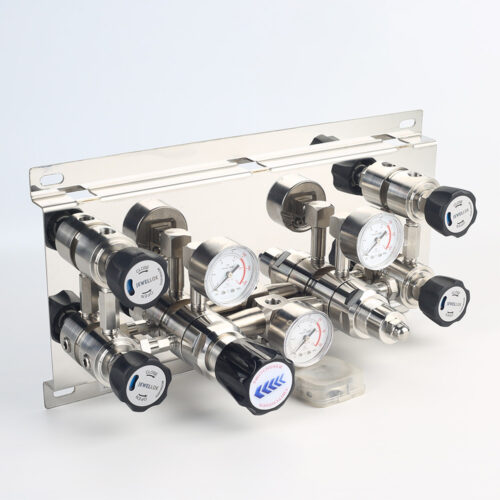
Pressure Control Panels For High Purity Gas Control System JSP-3AE Series From Pressure Control Panels Suppliers And Manufacturer