
Valves Manufacturer Tel: +86 13380377051
Top 5 Considerations When Choosing an Argon Gas Ultra High Purity Pressure Regulator
Argon, an inert noble gas, is a workhorse in industries where an uncontaminated, non-reactive atmosphere is required. Its UHP grade (typically 99.999% pure or better) is essential for processes where even part-per-billion (ppb) levels of contaminants like oxygen, moisture (H₂O), or hydrocarbons can compromise product yield, analytical accuracy, or research validity. The regulator’s role is to reduce the high pressure from the cylinder or bulk supply to a stable, usable working pressure without adding impurities or causing fluctuations.
Unlike standard industrial regulators, Argon gas UHP pressure regulators are engineered to be extensions of the clean gas system itself. Their design philosophy prioritizes the preservation of gas purity over cost or general robustness. The selection process, therefore, must be a meticulous exercise in matching the regulator’s capabilities to the application’s absolute requirements. The following five considerations form a systematic framework for this selection.
- Materials of Construction and Surface Finish
The internal materials that contact the gas stream are the first and most fundamental line of defense against contamination. In argon gas ultra high purity pressure regulator service, materials must be chosen for their inertness, low outgassing potential, and mechanical suitability.
- Primary Body and Internal Components: 316L Stainless Steel is the industry standard. The “L” denotes low carbon content, which prevents carbide precipitation at weld zones and enhances corrosion resistance. For the most demanding applications or where chloride-induced stress corrosion cracking is a concern, 316L Electropolished (EP) or even higher grades like 316L VAR (Vacuum Arc Remelted) may be specified. VAR steel has exceptionally low non-metallic inclusion content, further reducing potential sites for outgassing or particle generation. For certain analytical applications involving trace sulfur or other specific compounds, Monel (a nickel-copper alloy) may be preferred for its unique inertness.
- Elastomers and Soft-Seat Materials: The choice here is critical, as polymers are typically the greatest source of potential contamination through permeation, outgassing, and decomposition. Perfluoroelastomers (FFKM, e.g., Kalrez®, Chemraz®) are the gold standard for UHP argon. They offer exceptional inertness, very low permeability to gases and moisture, and high temperature tolerance. Polytetrafluoroethylene (PTFE) is also highly inert and often used as a diaphragm material or in valve seats, though its mechanical properties differ from elastomers. Metal Diaphragms (typically 316L) eliminate elastomeric permeation entirely and are used in the most stringent applications (e.g., for carrier gases in some gas chromatographs).
- Surface Finish: A smooth internal surface minimizes the surface area where moisture and particles can adhere and reduces turbulence that can cause pressure fluctuations. The interior gas path should be Electropolished (EP) to a surface roughness of ≤ 15 micro-inches Ra (0.38 µm Ra) or better. Electropolishing not only creates a mirror-like finish but also passivates the stainless steel, forming a robust chromium oxide layer that resists corrosion and further minimizes outgassing.
- Design and Sealing Mechanism
The regulator’s architecture dictates how well it can maintain purity and control pressure.
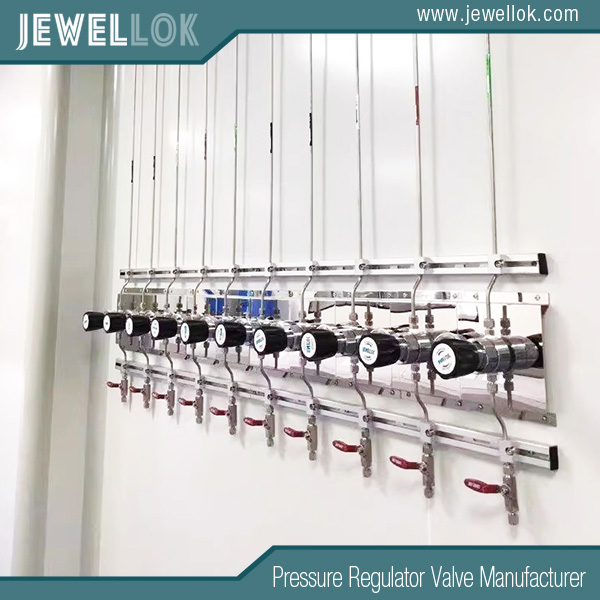
- Diaphragm vs. Piston Design: Diaphragm regulators use a flexible membrane to sense outlet pressure and control the inlet valve. They are generally preferred for UHP applications because the diaphragm acts as a barrier, preventing process gas from contacting the spring chamber (which can be a source of contaminants). Piston regulators use a sliding piston and O-ring seal; while robust for high-flow industrial use, the dynamic O-ring seal can be a source of friction, wear particles, and potential permeation, making them less suitable for the most critical UHP tasks.
- Sealing Technology: Face-Seal (or “Diaphragm-Seal”) designs are superior for UHP service. In this configuration, the regulator’s outlet valve is a metal (or PTFE) seat that seals against a flat, machined surface on the diaphragm assembly. This design has minimal dead volume and presents a clean, streamlined flow path. Poppet-style valves, common in cheaper regulators, have more internal voids and crevices where gas can stagnate and contaminants can accumulate during cylinder changes.
- Purge and Vent Configurations: A true UHP regulator will feature independent purge and vent ports. The purge port (often on the inlet side) allows the user to evacuate or purge the regulator body before connecting to the gas source, eliminating atmospheric contamination. The vent port (on the low-pressure side or spring chamber) should be present and ideally fitted with a particulate filter. This allows any gases that permeate through the diaphragm (from the spring chamber) to be safely vented away, rather than back into the gas stream. For argon, which is denser than air, downward-venting designs are a safety plus.
- Performance Specifications
Beyond purity, the regulator must perform its primary function—pressure control—with exceptional precision.
- Inlet Pressure (P1) Rating: Must comfortably exceed the maximum supply pressure. For high-pressure argon cylinders, this is typically 3000 psi (206 bar) or 2015 psi (139 bar) for smaller cylinders. Ensure the regulator is rated accordingly.
- Outlet Pressure (P2) Range & Control: The regulator must deliver the required working pressure. For many instrument applications, a 0-100 psi (0-7 bar) range is common. Control Stability is key. Look for specifications on Creep (the slow rise in outlet pressure when the inlet valve is closed) and Lock-Up (the pressure overshoot when the regulator is shut off). For UHP regulators, creep should be negligible. Supply Pressure Effect (SPE) or “droop” measures how much the outlet pressure changes as the inlet pressure drops from full to empty. A low SPE (< 0.1 psi per 100 psi inlet drop) is vital for consistent process performance over the life of the cylinder.
- Flow Capacity (Cv): The regulator must be sized to deliver the required gas flow without excessive pressure drop or freezing. Undersizing leads to poor control; oversizing can make the regulator overly sensitive at low flows. Calculate your system’s maximum demand and select a regulator with a Cv value that meets it with margin, but is not excessively large.
- Leak Integrity: External leaks are a safety hazard; internal leaks (across the diaphragm or valve seat) are a purity concern. Manufacturers specify leak rates, often using helium mass spectrometry. A superior UHP regulator will have an external leak rate of < 1 x 10⁻⁹ atm cc/sec He and an internal leak rate that is similarly stringent.
- System Compatibility and Safety
The regulator does not operate in isolation; it must integrate seamlessly and safely.
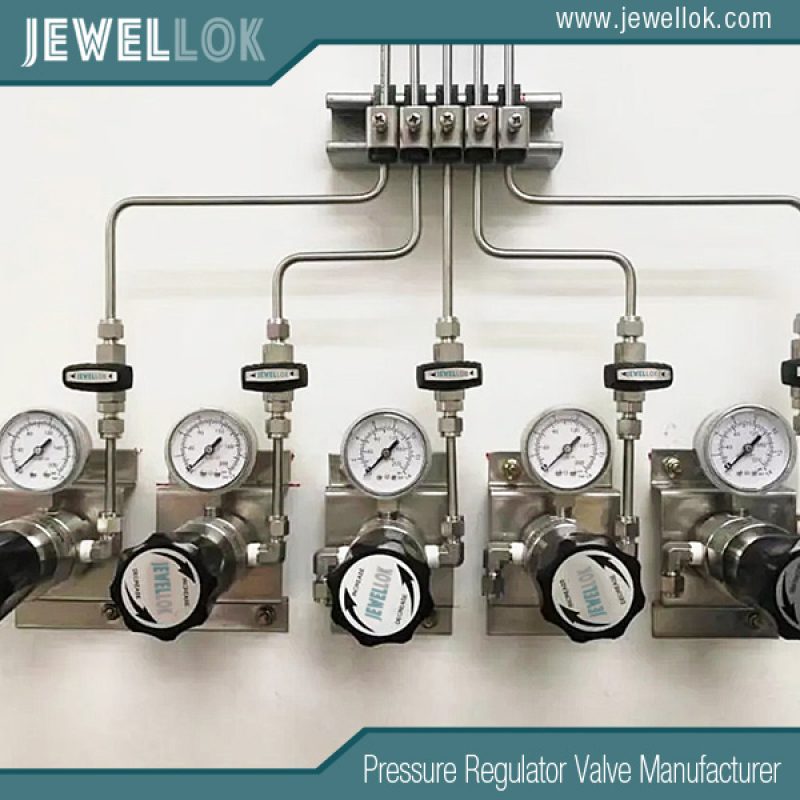
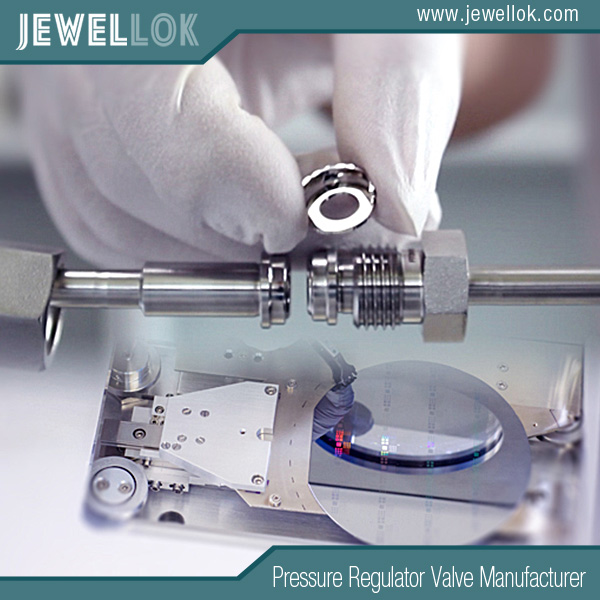
- Connections: Inlet and outlet connections must match your gas supply and downstream piping. CGA 580 is the standard Compressed Gas Association fitting for UHP argon cylinders. Outlets are typically ⅛-inch or ¼-inch VCR® (metal gasket face seal) or Swagelok® (compression tube fitting). These mechanical grip fittings provide leak-tight, clean connections superior to tapered pipe (NPT) threads, which can generate metal particles and are harder to seal reliably. Ensure the regulator’s materials are compatible with any downstream tubing (also typically 316L EP).
- Pressure Gauges: While convenient, gauges with bourdon tubes can be a contamination source due to their large internal volume and potential for residual manufacturing oils. For the purest systems, consider gaugeless regulators or specify gauges with UHP-compatible internals (316L EP, PTFE diaphragms). Always ensure gauges have a burst disk or pressure relief on the back for safety.
- Safety Features: Verify the presence of a high-pressure relief valve on the inlet side. Some UHP regulators integrate a built-in check valve on the outlet to prevent backflow during cylinder changes. For handling high-pressure gas, a robust stem/knob design that prevents unintentional adjustment and a sturdy panel-mounting option are significant operational advantages.
- Certification and Cleanliness Protocols
The manufacturer’s processes and documentation are your guarantee that the regulator meets its stated claims.
- Cleanliness Level: The regulator should be cleaned, assembled, and packaged in a controlled environment. Request documentation specifying the cleaning standard, such as SEMI C1/AGA G4.0 or an in-house protocol. This documentation should state maximum allowable levels of non-volatile residues (NVR), particulate matter (by size and count), and moisture. Cleaning might involve ultrasonic baths, high-purity solvent rinses, and oven baking.
- Bake-Out and Purge: Prior to shipment, the regulator should undergo a high-temperature bake-out under vacuum or purged with an inert gas to drive off volatile hydrocarbons and adsorbed moisture from internal surfaces.
- Certification and Traceability: The regulator should ship with a Certificate of Conformance (CoC) that lists its unique serial number, materials of construction, surface finishes, leak test results, and cleanliness data. Full material traceability (mill certificates for metals) is essential for regulated industries like pharmaceuticals (cGMP) and aerospace.
- Packaging: It must arrive clean. Look for double-bagging: an inner bag that is heat-sealed and often made of a low-outgassing plastic like fluoropolymer, and an outer protective bag. The packaging should be clearly labeled to indicate it is clean and for UHP service.
Conclusion
Selecting an argon gas UHP pressure regulator is a technical decision with direct consequences for process success, product quality, and operational safety. It cannot be an afterthought or a decision based solely on price. By systematically evaluating Materials and Finish, Design, Performance, Compatibility, and Certification, engineers and procurement specialists can make an informed choice that protects their investment in both gas and process.
The optimal regulator acts as an invisible, flawless component—faithfully delivering precisely controlled, contamination-free argon. In the high-stakes environments where UHP argon is essential, the right regulator is not just an accessory; it is a foundational pillar of reliability and purity. Prioritizing these five considerations ensures this pillar is solid, safeguarding the integrity of your most sensitive applications from the gas cylinder to the point of use.
For more about top 5 considerations when choosing an argon gas ultra high purity pressure regulator, you can pay a visit to Jewellok at https://www.jewellok.com/ for more info.
-
VMB Valve Manifold Panels And Boxes High Purity Configurable Systems JW-200-VMB & JW-100-VMB
-
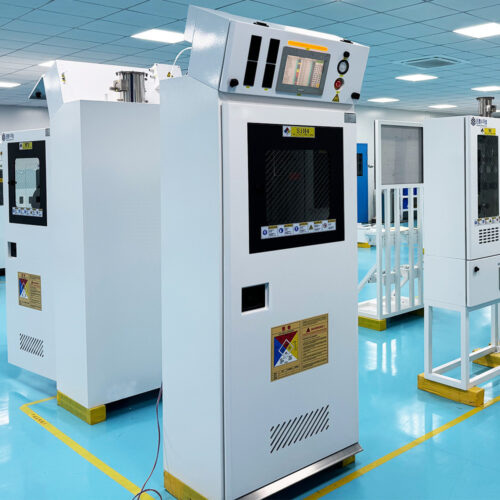
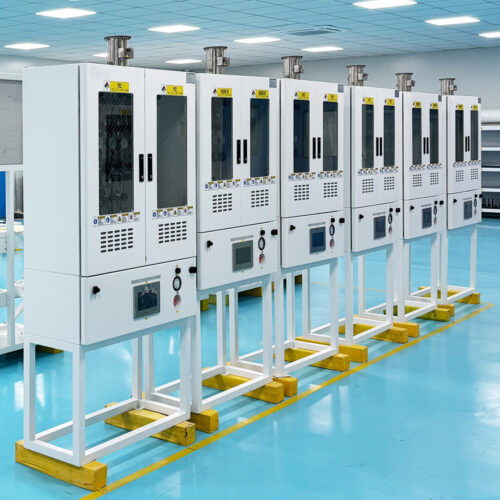
Bulk Specialty Gas Systems (BSGS) Gas Cabinets And Scrubber Tail Gas Treatment Cabinets For High Purity Bulk Specialty Gas Delivery
-
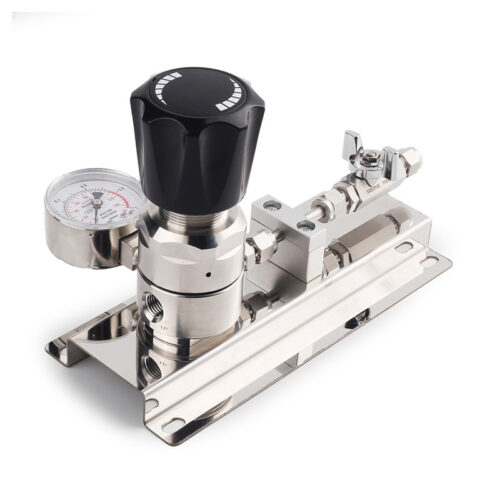
Ultra High Purity Stainless Steel Compressed Gas Changeover Manifold Panel System For Integrated Gas Supply System
-
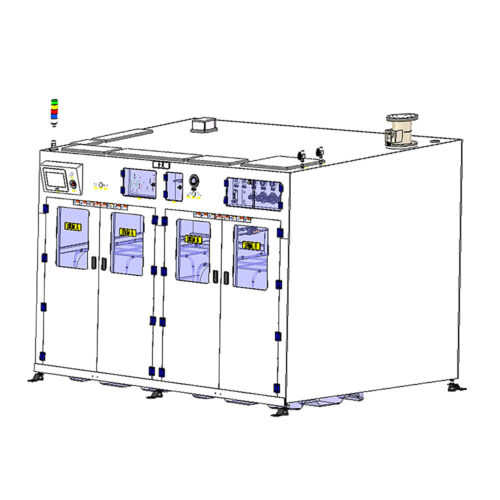
High Purity Chemical Dispense System & Packing System For Semiconductors JW-200L-CDM & JW-1000L-CDM
-
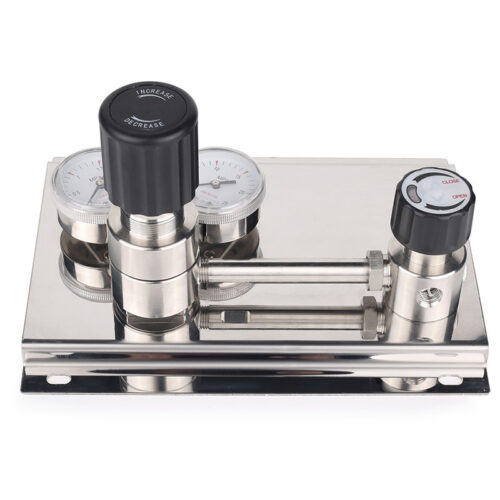
Stainless Steel Fully Automatic Gas Switchover Manifold System Automatic Gas Cylinder Switchover Co2 Cylinder Auto Changeover Controller
-
VMB Valve Manifold Box And Panel Gas Cabinet, BSGS Gas Cabinets, TMA Gas Cabinets, Scrubber Tail Gas Treatment Cabinets
-
7121L Plug High Purity Plug Fitting And Blanking Plug
-
765LR Reducing Tee | Stainless Steel 316 High Purity Butt Weld Fittings Metal Face Seal For Welding Pipe Fitting Reducing Tee