
Valves Manufacturer Tel: +86 13380377051
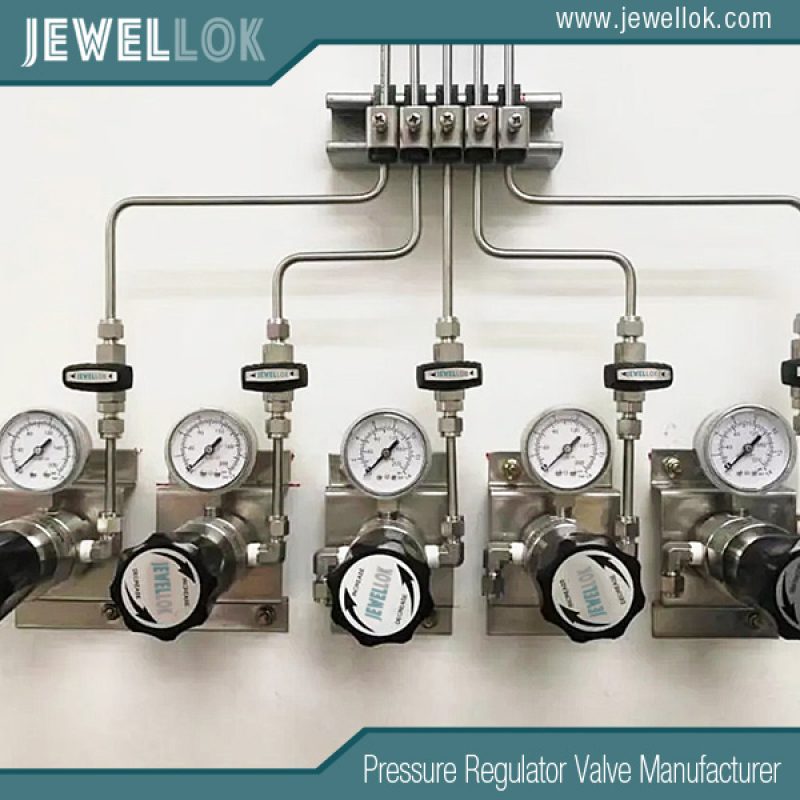
How Ultra-High Purity Stainless Steel Tubing Powers Critical Industries
In the hidden arteries of semiconductor fabs, biopharmaceutical plants, and advanced research facilities, a silent revolution in materials engineering ensures the integrity of processes that define modern technology. Ultra-high purity (UHP) stainless steel tubing represents not merely a conduit for fluids and gases, but a sophisticated engineered system that maintains chemical inertness, prevents contamination, and enables precision at scales previously unimaginable. Unlike conventional stainless steel tubing used in industrial applications, UHP tubing functions through a combination of specialized metallurgy, surface science, and manufacturing excellence that transforms ordinary alloy into a contamination-resistant platform for the world’s most sensitive processes. This article explores the technical mechanisms through which UHP stainless steel tubing operates, examining its material composition, manufacturing processes, surface characteristics, and functional behaviors that collectively enable it to serve as the circulatory system for industries where purity is paramount.
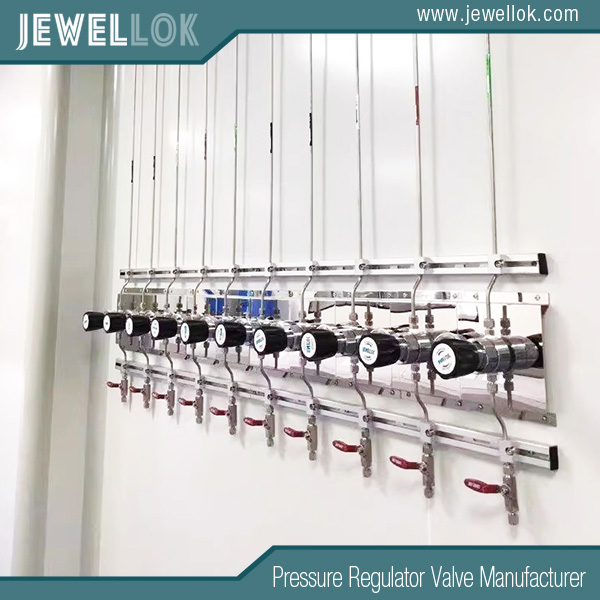
Defining Ultra-High Purity: Beyond Conventional Stainless Steel
Material Composition and Alloy Selection
At its foundation, UHP stainless steel tubing begins with carefully controlled metallurgy. While conventional 304 or 316 stainless steels contain iron, chromium, nickel, and minor alloying elements, UHP grades employ stricter compositional controls with particular attention to reducing impurities that could migrate into process fluids. The most common alloys for UHP applications are 316L (low carbon) and 316L-VAR (vacuum arc remelted), with the latter undergoing additional refining to reduce inclusions and homogenize the microstructure.
The “low carbon” designation (typically <0.03%) is critical because it minimizes the formation of chromium carbides at grain boundaries during welding or heat treatment, which could lead to localized corrosion and particle generation. Molybdenum (2-3%) enhances corrosion resistance to chlorides and other aggressive chemicals used in semiconductor and pharmaceutical processes. Silicon and manganese levels are carefully controlled, as these elements can form non-metallic inclusions that might dislodge during service. Perhaps most importantly, the sulfur content is minimized (often to <0.001%) as sulfur inclusions are particularly prone to creating initiation sites for corrosion and particle shedding.
The Vacuum Arc Remelting Process
For the most demanding applications, stainless steel for UHP tubing undergoes Vacuum Arc Remelting (VAR) or sometimes even double VAR processing. In this secondary refining process, an electrode of conventionally melted alloy is progressively remelted under high vacuum. The vacuum environment allows volatile impurities with high vapor pressures (such as lead, bismuth, and certain gases) to evaporate from the molten metal. Additionally, non-metallic inclusions float to the surface of the molten pool where they can be separated. The directional solidification from bottom to top creates a more homogeneous ingot with fewer defects and improved grain structure. This refined metallurgical foundation is what enables UHP tubing to maintain its integrity and purity throughout fabrication and service.
Manufacturing Excellence: From Raw Material to Precision Conduit
Seamless Tube Production
UHP tubing is almost exclusively manufactured using a seamless process, as welded tubes inherently contain a heat-affected zone and potential weld defects that could compromise purity. The predominant method is rotary piercing of solid bars (Mannesmann process), where a heated billet is pierced by a mandrel while being rotated between angled rolls. This creates a hollow shell that is subsequently elongated and reduced to final dimensions through cold pilgering or drawing processes.
Cold working not only achieves precise dimensional tolerances (typically ±0.001″ for diameter and ±0.002″ for wall thickness) but also induces work hardening that increases mechanical strength. Intermediate solution annealing (heating to approximately 1050°C followed by rapid cooling) recrystallizes the grain structure and relieves stresses without allowing excessive grain growth that could reduce mechanical properties. The final grain size is carefully controlled, as finer grains generally provide better surface finish after polishing but must be balanced against potential increased grain boundary area that could trap contaminants.
Surface Finishing: The Heart of UHP Performance
The interior surface of UHP tubing is where its functionality is most critically defined. Two primary finishing methods create the characteristic smooth, passive surfaces:
- Mechanical Polishing: Abrasive materials suspended in lubricants are pumped through the tubing or applied with specialized tools. The process progresses through successively finer abrasives, from silicon carbide to aluminum oxide to diamond pastes in the sub-micron range. This mechanical abrasion creates a plastically deformed surface layer with some embedded particles, which is why it’s often followed by electropolishing.
- Electropolishing: This electrochemical process removes material from surface peaks more rapidly than valleys, producing an exceptionally smooth, contamination-free surface. The tubing serves as the anode in an electrolyte bath (typically mixtures of sulfuric and phosphoric acids). A controlled DC current removes surface material while preferentially dissolving microscopic protrusions, inclusions, and the work-hardened layer from mechanical processing. Electropolishing achieves three critical outcomes:
- Reduced Surface Roughness: Achieves Ra (average roughness) values below 0.25 µm, with premium grades reaching below 0.13 µm.
- Removal of Embedded Particles: The electrochemical dissolution liberates abrasive particles embedded during mechanical polishing.
- Enhanced Passive Layer: Creates a more uniform, chromium-rich oxide layer with superior corrosion resistance.
Passivation: The Self-Protecting Mechanism
Following polishing, UHP tubing undergoes passivation—a chemical treatment (usually with nitric acid or citric acid solutions) that removes free iron particles and enhances the natural chromium oxide layer. This “passive” layer, typically 1-3 nm thick, is what makes stainless steel “stainless.” In UHP grades, this layer is more uniform and continuous due to the absence of inclusions and surface defects that could disrupt its formation. The passive layer is not static; it’s a dynamic interface that reforms when damaged, provided sufficient oxygen is available and the underlying alloy contains adequate chromium. This self-healing capacity is fundamental to the tubing’s long-term performance.
How UHP Tubing Maintains Purity During Service
- Minimizing Particle Generation and Adhesion
The ultra-smooth interior surfaces of UHP tubing serve multiple functions in maintaining purity. First, reduced surface roughness (typically measured as Ra, Rmax, or Rz) minimizes the surface area available for particle adhesion. In fluid dynamics terms, smoother surfaces create less turbulent flow at the boundary layer, reducing the shear forces that might dislodge particles. The electropolishing process also rounds off microscopic peaks and eliminates crevices where particles could accumulate.
Second, the absence of inclusions and defects in the base material prevents the generation of new particles during service. When process fluids flow through tubing, they create micro-vibrations and pressure fluctuations that could dislodge weakly bonded particles from surface imperfections. The homogeneous microstructure of VAR-processed material, combined with the defect-free surface from electropolishing, essentially eliminates this particle generation mechanism.
- Corrosion Resistance Mechanisms
UHP tubing must resist corrosion from diverse chemicals: ultrapure water (which is surprisingly aggressive due to its hungry solvation potential), hydrochloric acid, ammonia, hydrogen peroxide, and various solvent mixtures. The enhanced corrosion resistance operates through several mechanisms:
- Homogeneous Microstructure: The absence of inclusions and compositional variations prevents galvanic cells from forming within the material. In conventional stainless steels, sulfide inclusions can create local anodes that initiate pitting corrosion.
- Uniform Passive Layer: The continuous, chromium-rich oxide layer (Cr₂O₃) acts as a barrier to ion transport. This layer is amphoteric—resisting both acids and bases—and maintains stability across a wide pH range (approximately 4-10).
- Repassivation Capacity: If the passive layer is locally damaged (by abrasion, cavitation, or chemical reduction), the high chromium content at the surface readily reforms the oxide when exposed to oxygen, either from the fluid or during system purges.
For particularly aggressive environments, some UHP tubing receives special surface treatments or uses higher alloys like 904L or 6% molybdenum super austenitic grades, though these present manufacturing challenges for achieving UHP surfaces.
- Outgassing and Permeation Control
In vacuum and high-purity gas applications, UHP tubing must minimize outgassing (release of adsorbed gases from surfaces) and permeation (diffusion of gases through the tube wall). The electropolished surface not only has fewer adsorption sites but also facilitates more efficient cleaning and drying. For extreme applications, some UHP tubing receives a final clean and bake-out under vacuum to desorb surface gases before shipping.
Permeation, particularly of hydrogen through thin-walled tubing, can be a concern for some high-purity applications. While all metals are somewhat permeable to small gas molecules, the dense, defect-free microstructure of UHP tubing minimizes this pathway. For critical applications, electropolished copper or aluminum tubing might be specified for certain gases due to their lower permeability, though they lack the broad chemical compatibility of stainless steel.
Specialized Fabrication and Installation Considerations
- Orbital Welding: Maintaining Integrity at Joints
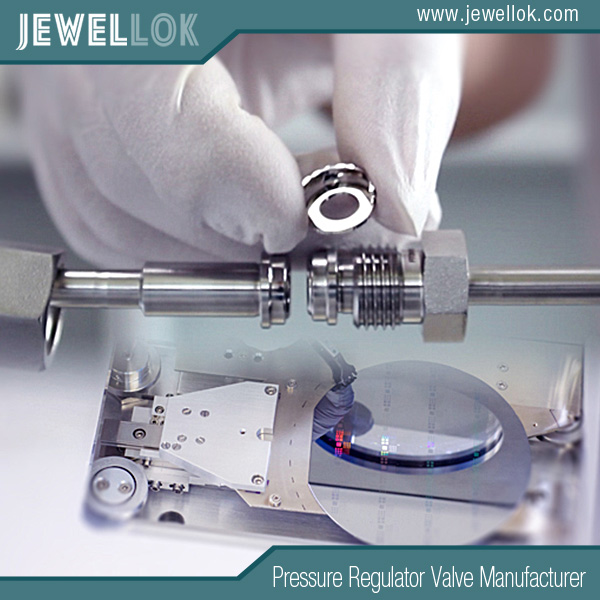
The weakest points in any tubing system are the connections between sections. For UHP applications, orbital welding has become the standard joining method. In this automated process, a tungsten electrode rotates around the tube joint while a precisely controlled current creates the weld. The entire process occurs in an inert gas atmosphere (argon or argon/hydrogen mixtures) with the interior of the tube also purged to prevent oxidation of the inner surface.
Properly executed orbital welds achieve full penetration without excessive reinforcement (which could create turbulence) or undercut (which could trap contaminants). The heat input is carefully controlled to minimize the heat-affected zone where chromium carbides could precipitate in conventional stainless steels. For UHP grades with their low carbon content, this is less critical, but controlled heating still maintains the mechanical properties and microstructure.
- Cleaning, Testing, and Validation Protocols
Before being placed into service, UHP tubing systems undergo rigorous cleaning and testing:
- Cleaning Processes: Multi-step cleaning typically involves alkaline degreasing, acid passivation, and rinsing with water of progressively higher purity (finally with 18.2 MΩ·cm deionized water). The smooth, crevice-free surfaces facilitate complete rinsing and drying.
- Particle Testing: Either by liquid particle counting of flush solutions or, for gas systems, by aerosol particle counting of nitrogen blown through the tubing.
- Surface Analysis: Scanning electron microscopy (SEM) with energy-dispersive X-ray spectroscopy (EDS) can verify surface composition and detect any residual contaminants.
- Hydraulic and Pressure Testing: Ensures mechanical integrity without introducing contaminants.
These validation protocols ensure that the tubing system performs as an integrated whole, not just as individual components.
Applications: Where UHP Tubing Enables Technological Frontiers
- Semiconductor Fabrication
In semiconductor manufacturing, UHP tubing distributes process gases and chemicals to fabrication tools. A single wafer might undergo hundreds of processing steps, each requiring different gases with part-per-billion impurity levels. Any contamination—particles, moisture, or metallic ions—can destroy the nanoscale features on modern chips. UHP tubing maintains the purity from source to point-of-use filters, with specific alloys selected for particular chemicals: 316L for most applications, but specialty alloys like 904L for wet process chemicals.
- Pharmaceutical and Biotech Industries
Here, UHP tubing appears in purified water systems (WFI—Water for Injection), clean steam lines, and process fluid transfer for biologic drug manufacturing. Unlike semiconductors where inorganic particles are the primary concern, pharmaceutical applications must also prevent microbial adhesion and biofilm formation. The smooth, electropolished surfaces of UHP tubing provide fewer niches for microbial colonization and allow more effective cleaning and sterilization through CIP (Clean-in-Place) and SIP (Steam-in-Place) procedures.
- Analytical and Research Applications
From liquid chromatography systems to particle physics experiments, research facilities employ UHP tubing where sample integrity or analytical sensitivity is paramount. In mass spectrometry sample introduction systems, for example, even nanogram levels of metal ions leaching from tubing could create interfering signals or catalyze sample decomposition.
Future Directions and Advanced Developments
The evolution of UHP tubing continues with several emerging trends:
- Alternative Materials: While stainless steel dominates, there is growing use of nickel alloys (like Hastelloy C-22) for extremely aggressive chemicals, and even titanium or tantalum for specific applications, though these present manufacturing challenges for achieving comparable surface finishes.
- Surface Modifications: Techniques like plasma electrolytic polishing offer potential improvements over conventional electropolishing. Some manufacturers are experimenting with surface coatings (like silicon-doped diamond-like carbon) to further reduce adhesion and permeation.
- Additive Manufacturing: While still developmental, 3D-printed UHP components with integrated functionality (like manifolds with built-in sensors) could reduce connections and potential contamination points.
- Advanced Monitoring: Integration of real-time particle counters, moisture analyzers, and corrosion monitors directly into tubing systems enables predictive maintenance and ensures continuous purity validation.
Conclusion
Ultra-high purity stainless steel tubing operates not as a passive pipe but as an integrated contamination-control system. Its functionality emerges from the synergy of refined metallurgy, precision manufacturing, and surface engineering that together create a conduit that actively resists particle generation, prevents corrosion, and maintains fluid integrity from source to destination. From the vacuum arc remelting that purifies the alloy at atomic scales to the electropolishing that creates molecularly smooth surfaces, every aspect of UHP tubing is optimized for purity preservation.
As technological processes push toward smaller scales and higher sensitivities—whether in semiconductor nodes approaching atomic dimensions or biopharmaceuticals targeting individual cellular pathways—the demand for UHP tubing will only intensify. Its continued evolution represents a critical enabling technology, quietly ensuring that the fluids and gases that power our most advanced industries arrive not just efficiently, but immaculately pure. In the invisible infrastructure of modern technology, UHP stainless steel tubing stands as a testament to how materials engineering, when executed with extraordinary precision, enables achievements that once seemed beyond reach.
For more about how ultra-high purity stainless steel tubing powers critical industries, you can pay a visit to Jewellok at https://www.jewellok.com/ for more info.
-
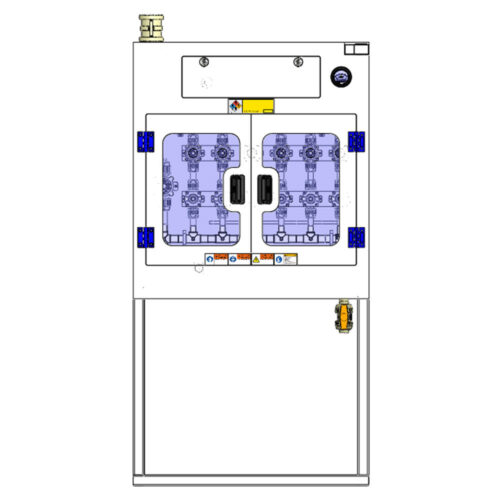
High Purity Configurable Systems VMB Valve Manifold Box JW-200-VMB-C & JW-100-VMB-C
-
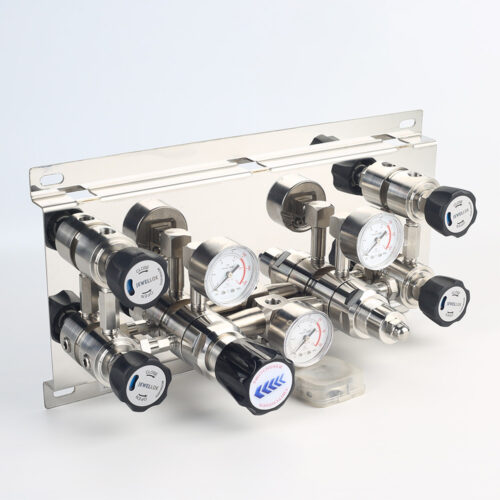
Pressure Control Panels For High Purity Gas Control System JSP-3AE Series From Pressure Control Panels Suppliers And Manufacturer
-
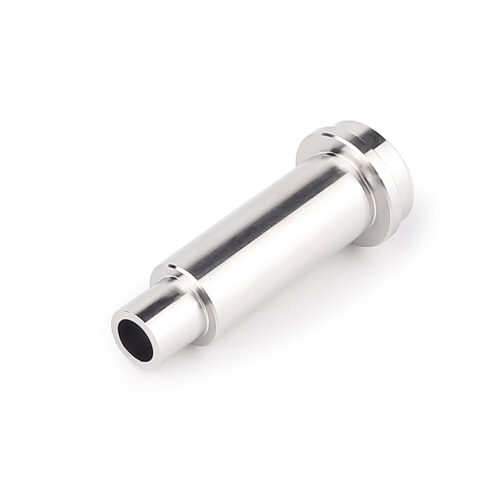
UHP Metal Gasket Face Seal Fittings Vacuum Coupling Metal Face Seal Join Long Gland And Short Gland
-
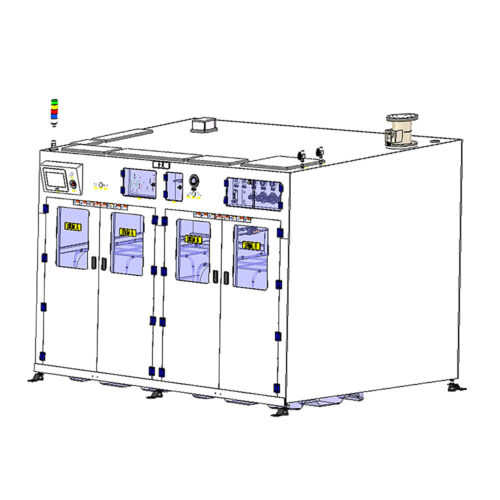
Scrubber Gas Cabinet Scrubber Tail Gas Treatment Cabinet Vent Gas Scrubber System Heat-Filter Burn Box Gas Scrubber/Abatement System
-
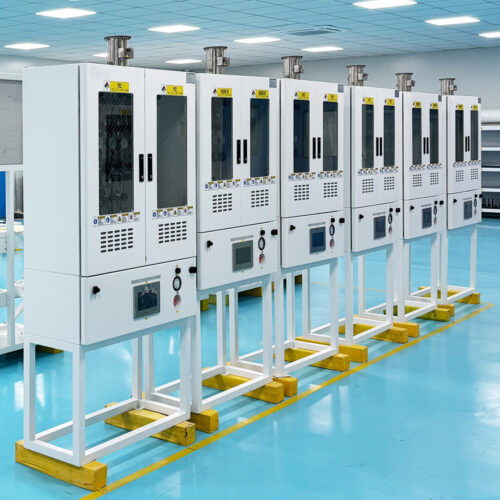
Ultra-High Purity Chemical Delivery Module (CDM) and Valve Manifold Box Integration Improving Semiconductor Yield
-
Long Gland LG Series For Ultra High Purity Gas And Chemical Delivery Systems
-
Specialty Gas Valves Ultra High Purity Gas Valves Ultra High Purity Gas Cylinder Valves UHP Cylinder Valve Ultra High Purity Gas Regulator
-

Custom Chemical Delivery System (CDS) Engineering for Hazardous Etchants and Volatile Organic Solvent Distribution Systems