
Valves Manufacturer Tel: +86 13380377051

Industrial Exhaust Gas Scrubbing Systems: Principles, Design, and Applications
1. Introduction
In an era defined by rapid industrialization and escalating environmental awareness, the management of airborne pollutants has become a critical operational and regulatory priority for manufacturing facilities worldwide. Industrial processes, from chemical synthesis and metal finishing to pharmaceutical production and food processing, invariably generate off-gases containing hazardous contaminants. These pollutants—ranging from acid gases and volatile organic compounds (VOCs) to particulate matter and noxious odors—pose significant risks to human health, ecological balance, and corporate compliance.
To mitigate these risks, industries have long relied on a cornerstone of air pollution control technology: the industrial exhaust gas scrubbing system, commonly known as a wet scrubber. This technology is not a singular device but a sophisticated, integrated system designed to bring a contaminated gas stream into intimate contact with a scrubbing liquid, typically water or a chemical solution. Through this contact, the pollutants are absorbed, neutralized, or chemically converted, allowing for the release of a cleaned gas stream to the atmosphere.
This article provides a comprehensive technical overview of industrial-grade wet scrubbing systems. We will explore the fundamental operating principles, delve into the various system configurations, discuss critical design considerations and material selection, and examine the diverse industrial applications that depend on this vital technology.
2. The Core Principle of Gas Absorption
At its heart, a wet scrubbing system operates on the principle of mass transfer. The goal is to transfer a gaseous pollutant from the air stream into a liquid solvent. This process is governed primarily by two key physical and chemical concepts:
-
Solubility: The effectiveness of a scrubber depends heavily on the solubility of the target pollutant in the chosen scrubbing liquid. Highly soluble gases like hydrogen chloride (HCl) or ammonia (NH₃) are readily absorbed into water. For less soluble gases, such as sulfur dioxide (SO₂) or chlorine (Cl₂), a chemical reaction is required to “enhance” the absorption. This leads to the second key principle.
-
Chemical Neutralization: By adding a reactive chemical reagent to the scrubbing liquid, pollutants can be neutralized upon contact, forming harmless salts. This maintains a high concentration gradient between the gas and liquid phases, which is the driving force for absorption. For instance, a caustic solution (sodium hydroxide, NaOH) is used to neutralize acid gases, while an acidic solution (sulfuric acid, H₂SO₄) can be used to absorb alkaline gases like ammonia.
The fundamental mass transfer dynamic is often described by Two-Film Theory, which posits that gas and liquid films exist at the interface between the two phases. The pollutant must diffuse through the gas film and then through the liquid film to be fully absorbed. The efficiency of this process is what differentiates a well-designed scrubber from an ineffective one.
3. Major Types of Wet Scrubbing Systems
Industrial exhaust gas scrubbing systems are engineered in various configurations, each optimized for specific gas characteristics, pollutant types, and space constraints. The three most common types are packed bed scrubbers, venturi scrubbers, and spray towers.
3.1 Packed Bed Scrubbers (Countercurrent Flow)
The packed bed scrubber is the workhorse of the chemical and fume scrubbing industry, renowned for its high efficiency in removing gaseous pollutants.
Design and Operation: A vertical cylindrical column is filled with a bed of specially designed packing material (e.g., Pall rings, saddle rings, or structured grid packing). The contaminated gas enters near the bottom of the column and flows upward. Simultaneously, the scrubbing liquid is sprayed from the top of the packing bed and flows downward, wetting the packing material. This countercurrent flow creates a large, continuously renewed surface area for gas-liquid contact. As the gas rises through the tortuous paths of the packed bed, pollutants are absorbed into the descending liquid film. The cleaned gas then passes through a mist eliminator at the top to remove any entrained liquid droplets before being discharged.
Advantages:
-
High Efficiency: Excellent for absorption and chemical reaction processes.
-
Moderate Pressure Drop: Compared to Venturi scrubbers, the energy consumption is relatively lower.
-
Scalability: Can be designed for a very wide range of gas flow rates.
Limitations: Not suitable for gas streams with high particulate loading, as solids can clog the packing material.
3.2 Venturi Scrubbers
When the primary pollutant is particulate matter, or when simultaneous particle and gas removal is required, the Venturi scrubber is often the technology of choice.
Design and Operation: The system features a duct of decreasing cross-section (the convergent section), a narrow throat, and a divergent section. Scrubbing liquid is injected either before the throat or directly into it. As the gas stream accelerates to high velocity (often 60-120 m/s) through the throat, it atomizes the injected liquid into an immense number of tiny droplets. The extreme turbulence and high relative velocity between the gas and the droplets cause particles to collide and agglomerate with the droplets. In the divergent section, the gas slows down, and the now-laden droplets are easily removed by a downstream cyclonic separator or mist eliminator.
Advantages:
-
High Particulate Collection Efficiency: Capable of capturing sub-micron particles.
-
Gas Absorption Capability: Can provide simultaneous gas and particulate removal.
-
Handling Sticky Particles: The wet design prevents material build-up on walls.
Limitations: Very high pressure drop leads to significant energy consumption and operating costs.
3.3 Spray Towers
This is the simplest form of wet scrubber, primarily used for pre-conditioning gas streams or for absorbing highly soluble gases.
Design and Operation: A simple empty chamber where banks of spray nozzles atomize scrubbing liquid into the path of the flowing gas stream. The gas-liquid contact occurs within the spray zone. While simple and low in cost, the contact surface area and contact time are limited compared to packed beds.
Advantages: Very low pressure drop, simple construction, low maintenance, and capable of handling high particulate loads without clogging.
Limitations: Lower removal efficiency for gaseous pollutants, requiring tall towers or multiple stages.
4. Critical System Components and Materials
Beyond the scrubber vessel itself, a complete system comprises several critical components:
-
Mist Eliminators: Located at the gas outlet, these are crucial for removing entrained liquid droplets from the cleaned gas stream. They can be of the chevron blade type (for horizontal flow) or mesh pad type (for vertical flow). Inefficient mist elimination can lead to “stack rain,” visible plume, and loss of scrubbing reagent.
-
Pumping and Recycle System: A recirculation pump delivers scrubbing liquid from an integral or external sump to the spray headers. The liquid is typically recirculated until its chemical capacity is exhausted, at which point it is bled off to treatment and replaced with fresh chemical and make-up water (blowdown).
-
Instrumentation and Controls: Modern systems are highly automated. pH probes monitor the acidity/alkalinity of the sump liquid and control the feed of fresh chemical reagent. Differential pressure transmitters across the packing bed or Venturi throat indicate flow conditions or potential clogging. Liquid level controllers manage the sump level, and gas flow rate is monitored to ensure proper system loading.
Material Selection is perhaps the most critical engineering decision. The highly corrosive nature of many acid gases demands materials that can withstand chemical attack for decades.
-
Thermoplastics (PP, PVC, PVDF): Polypropylene (PP) and PVC are common, cost-effective choices for many acid gas applications below 80°C. PVDF offers superior chemical and thermal resistance for more aggressive environments.
-
Fiber-Reinforced Plastic (FRP): FRP is a staple of the scrubber industry. It offers an excellent strength-to-weight ratio and can be formulated with specific resin systems (e.g., vinyl ester, polyester) to resist a wide range of corrosives at elevated temperatures.
-
Stainless Steel (316L, Duplex): Used in high-temperature applications or where mechanical strength is paramount, though it can be susceptible to chloride-induced stress corrosion cracking in certain environments. Alloy C-276 is used for the most demanding, highly corrosive conditions.
5. Industrial Applications
The versatility of wet scrubbing systems makes them indispensable across a multitude of industries:
-
Chemical Processing: Control of acid fumes (HCl, H₂SO₄, HNO₃) from reactors, storage tanks, and loading operations. Removal of ammonia and amines.
-
Semiconductor Manufacturing: Exhaust gases from etching and CVD processes contain highly toxic and corrosive compounds that must be rigorously treated.
-
Metal Finishing & Plating: Capture of acid mists from chrome plating, anodizing, and pickling lines.
-
Pharmaceuticals: Control of solvent vapors (VOCs), acid gases, and potent odors from chemical synthesis and drying operations.
-
Fertilizer Production: Scrubbing of ammonia and fluorine compounds from granulation and reaction processes.
-
Wastewater Treatment: Odor control by scrubbing hydrogen sulfide (H₂S) and other malodorous compounds from headworks and sludge handling areas.
6. Conclusion
Industrial exhaust gas scrubbing systems are a proven, reliable, and highly effective technology for protecting both the environment and industrial workforces. By leveraging fundamental principles of mass transfer and chemical engineering, these systems convert hazardous airborne pollutants into manageable liquid or solid waste streams.
As environmental regulations become increasingly stringent and industrial processes grow more complex, the evolution of scrubber technology continues. Future trends point toward smarter systems with advanced process control (APC) that optimize chemical usage and energy consumption in real-time. The integration of Industry 4.0 principles allows for predictive maintenance, remote monitoring, and data-driven performance optimization. Furthermore, the development of novel, high-efficiency packing materials and hybrid systems that combine scrubbing with other technologies (like thermal oxidizers or carbon adsorbers) ensures that wet scrubbing will remain at the forefront of industrial air pollution control for the foreseeable future. Investing in a robust and well-engineered scrubbing system is not merely a regulatory necessity; it is a fundamental commitment to sustainable and responsible industrial operation.
For more about industrial exhaust gas scrubbing systems: principles, design, and applications, you can pay a visit to Jewellok at https://www.jewellok.com/ for more info.
-
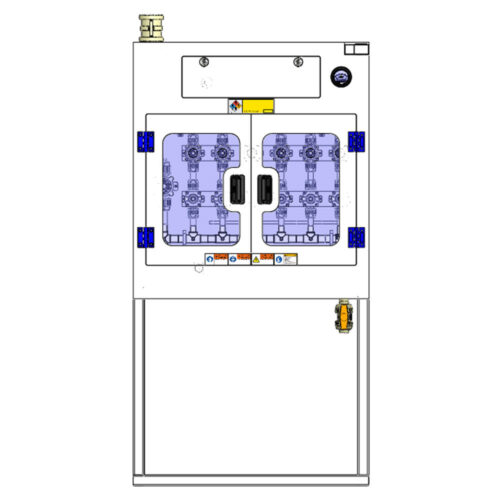
High Purity Configurable Systems VMB Valve Manifold Box JW-200-VMB-C & JW-100-VMB-C
-
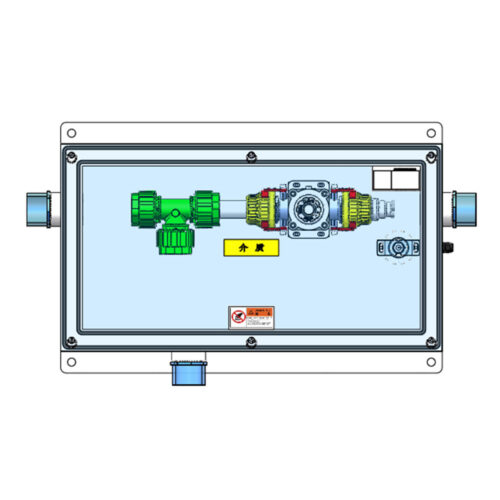
T-BOX JW-TB-C Special Gas Delivery System Gas Valve Manifold Boxes
-
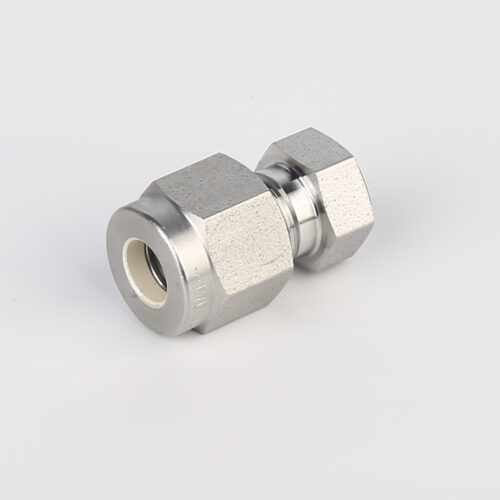
7108L Cylinder Cap Connectors For Ultra High Purity Gases
-
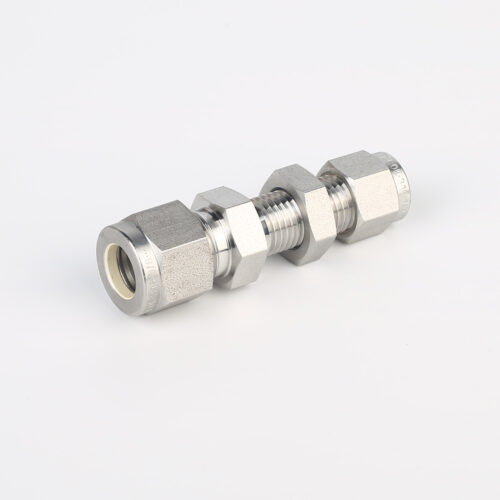
775L Bulkhead Reducing Union | Stainless Steel High Purity Double Ferrule Bulkhead Reducing Unions
-
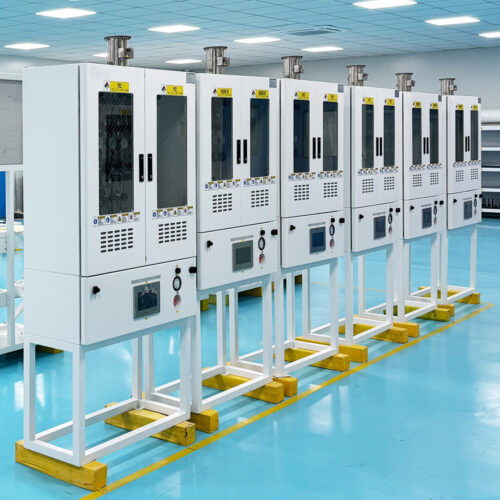
Ultra High Purity Gas Delivery Systems And Liquid Chemical Delivery Systems JW-300-LDS
-
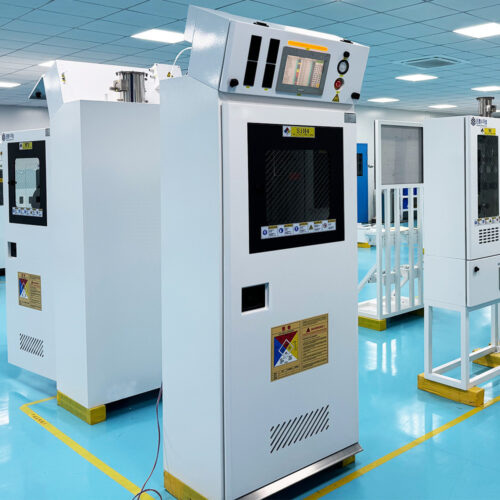
Integrated Gas System (IGS) Modular Integrated Gas Systems (TMS) Integrated Gas Supply System For Semiconductor And Laboratory
-
High Purity Stainless Steel Mini Tube Butt Weld Fittings For Semiconductor
-
767LP Port Connector Ultra High Purity VCR Metal Gasket Face Seal Tube Fittings