
Valves Manufacturer Tel: +86 13380377051
Understanding Metal Diaphragm vs. Elastomer in UHP Kr Regulators: A Critical Choice for Purity and Performance
The reliable and contamination-free delivery of ultra-high purity (UHP) gases, such as krypton (Kr), is a cornerstone of advanced manufacturing and research in semiconductors, photonics, and aerospace. At the heart of this delivery system lies the UHP Kr pressure regulator, a deceptively simple device whose internal components dictate the final gas quality. The choice between a metal diaphragm and an elastomeric (polymer) diaphragm is the single most critical design decision, directly impacting purity, stability, leak integrity, and long-term performance. This technical article delves into the engineering principles, material science, and application-specific trade-offs of these two technologies, providing a comprehensive guide for selecting the optimal regulator for UHP Kr service.
1.The UHP Kr Environment and Regulator Imperatives
Krypton, a noble gas prized for its unique spectral properties and inertness, finds essential applications in:
-
Semiconductor Lithography: KrF excimer lasers (248 nm) are workhorses in deep-ultraviolet photolithography for chip manufacturing.
-
High-Performance Insulation: Filling the gap in multi-pane windows and specialized aerospace components.
-
Lighting and Lasers: Used in high-efficiency lamps, high-power lasers, and as a proxy for plasma studies.
-
Scientific Research: As a tracer gas and in various spectroscopic applications.
In these fields, especially semiconductor fabrication, gas purity is non-negotiable. Impurities at part-per-billion (ppb) or even part-per-trillion (ppt) levels can cause defects, reduce yield, alter plasma chemistry, or degrade optical performance. A UHP Kr regulator must therefore act as a precision control device without becoming a source of contamination.
The primary function of a single-stage pressure regulator is to reduce a high, variable inlet pressure (e.g., from a cylinder at 2000+ psi) to a stable, lower outlet pressure. It achieves this through a balanced system comprising a pressure-sensing element (the diaphragm), a seating poppet, and a control spring. The diaphragm isolates the process gas from the spring chamber and translates downstream pressure changes into mechanical motion to modulate the poppet. It is this sealing and sensing element that becomes the focal point of the metal vs. elastomer debate.
2. The Metal Diaphragm: Engineered for Extreme Purity
Metal diaphragms in UHP Kr regulators are typically fabricated from high-grade, low-outgassing stainless steels (e.g., 316L, 316LV), Hastelloy C-276, or Monel. They are not simple sheets but are precisely engineered components, often convoluted (formed with concentric corrugations) to provide flexibility and a large effective area.
Key Advantages:
-
Ultra-Low Permeation: Metals are impermeable to gas molecules. This eliminates one of the most significant contamination paths: the permeation of atmospheric gases (O₂, N₂, H₂O, CO₂) into the gas stream, and the loss of expensive Kr out of the system. This is critical for maintaining specified purity from cylinder to point of use.
-
Minimal Particle Generation: Properly electropolished and cleaned metal surfaces are hard and smooth. They do not shed particles through mechanical cycling (flexing) like polymers can. Particle generation is a leading cause of defects in semiconductor processes.
-
Exceptional Cleanliness and Low Outgassing: Metal diaphragms can undergo aggressive cleaning processes (e.g., electro-polishing, ultrasonic cleaning, solvent rinsing) and be baked-out at high temperatures under vacuum to desorb water vapor and volatile contaminants. This results in exceptionally low total hydrocarbon (THC) and moisture outgassing rates.
-
Superior Chemical Inertia and Temperature Tolerance: High-grade stainless steels and nickel alloys are inherently inert to Kr and most other process gases. They can withstand extreme temperatures (cryogenic to over 150°C for bake-out) without degradation of mechanical properties.
-
Excellent Long-Term Stability and Hysteresis: Metal diaphragms exhibit minimal creep or stress relaxation over time. Their elastic deformation is highly predictable, leading to excellent repeatability and minimal hysteresis—meaning the outlet pressure is precisely the same whether approached from a higher or lower pressure.
Considerations:
-
Cost: Manufacturing precision metal diaphragms with consistent flexure characteristics is expensive.
-
Spring Rate & Sensitivity: Metals have a higher modulus of elasticity than polymers. To achieve the necessary sensitivity for precise pressure control, the diaphragm must be made very thin and meticulously corrugated, increasing manufacturing complexity.
-
Potential for Fatigue: While designed for millions of cycles, a metal diaphragm can theoretically fail via metal fatigue if subjected to excessive pressure spikes or corrosion.
3. The Elastomer Diaphragm: A Study in Compromise
Elastomer diaphragms are typically made from polymers like PTFE (Teflon), FKM (Viton), EPDM, or PTFE-coated elastomers. They offer flexibility and sealing advantages in standard industrial applications.
Key Advantages (in a non-UHP context):
-
High Sensitivity and Low Spring Rate: Elastomers are highly flexible, requiring less force to deflect. This can translate to very sensitive pressure control and the ability to use a lighter control spring, which can be beneficial for very low outlet pressure applications.
-
Sealing Simplicity: Their inherent conformability can provide excellent static seals against the regulator body with minimal clamping force.
-
Lower Initial Cost: Elastomer components are generally less expensive to manufacture than precision metal diaphragms.
Critical Drawbacks for UHP Kr Service:
-
Permeation: This is the primary disqualifier for most UHP applications. All polymers are permeable to some degree. For Kr systems, atmospheric moisture and oxygen can permeate inward, while Kr itself can permeate outward, leading to purity loss, product waste, and potential safety issues if Kr accumulates in an enclosed space.
-
Outgassing and Hydrocarbon Contribution: Elastomers continuously release (outgas) volatile components, including plasticizers, mold release agents, and low-molecular-weight polymer chains. These contribute hydrocarbons, water, and other contaminants to the gas stream. Even high-grade PTFE can outgas.
-
Particle Shedding: The repeated flexing of an elastomer can cause micro-fractures, leading to the generation of sub-micron particles. These particles can travel downstream, clogging filters or depositing on critical surfaces.
-
Limited Chemical and Temperature Compatibility: While PTFE is highly inert, many elastomers (like FKM) can swell or degrade when exposed to certain gases or high concentrations of Kr under pressure. They also have limited temperature ranges and cannot withstand the high-temperature bake-out cycles used for metal components.
-
Aging and Creep: Elastomers are subject to compression set, creep, and aging from ozone, temperature, and cyclic stress. This leads to drift in the set point pressure over time and reduced service life.
4. Head-to-Head Comparison Table
| Feature | Metal Diaphragm (316L, Hastelloy) | Elastomer Diaphragm (PTFE, FKM) |
|---|---|---|
| Gas Permeation | Impermeable. Critical for purity retention. | Permeable. Major source of atmospheric contamination and gas loss. |
| Particle Generation | Extremely Low. Hard, polished surface. | Moderate to High. Flexing can cause shedding. |
| Outgassing (H₂O, THC) | Ultra-Low after proper bake-out. | High. Inherent to polymer materials. |
| Chemical Inertness to Kr | Excellent. Fully inert. | Good to Excellent (PTFE). Variable for others. |
| Temperature Range | Very Wide (-200°C to 150°C+). Allows bake-out. | Narrow. Typically -20°C to 100°C. No bake-out possible. |
| Long-Term Stability | Excellent. Minimal creep or hysteresis. | Poor. Subject to compression set and aging. |
| Sensitivity / Spring Rate | Requires careful design for sensitivity. | Inherently high sensitivity and flexibility. |
| Cleanability | Excellent. Can be aggressively cleaned and baked. | Poor. Can trap contaminants and degrade. |
| Initial Cost | High. | Low. |
| Total Cost of Ownership | Low for UHP: long life, no gas loss, no yield impact. | Potentially High: frequent replacement, gas loss, risk of contamination. |
5. Application-Driven Selection Guidelines
The choice is rarely ambiguous when the application is well-defined:
Use a Metal Diaphragm Regulator for UHP Kr when:
-
Semiconductor Fabrication: For KrF excimer laser gas cabinets and delivery lines. Purity and particle control are paramount.
-
Research & Analytical Systems: Where experimental integrity depends on known, stable gas composition (e.g., GC carrier gas, calibration standards).
-
Long-Term, Critical Processes: In aerospace or photonics manufacturing where regulator reliability and stability over years is required.
-
Any System with Strict Purity Specs: Where the gas analysis at point-of-use must match the cylinder certificate.
An Elastomer Diaphragm Might be Considered for Kr when:
-
Non-Critical, Bulk Handling: For transferring Kr in non-purity-sensitive industrial settings (e.g., initial filling operations).
-
Prototype or Low-Budget Lab Systems: Where initial cost is the overriding concern and minor contamination is acceptable. This is strongly discouraged for any application labeled “UHP.”
-
Specific Low-Pressure Control Needs: In rare cases where extreme sensitivity at very low pressures (<5 psig) is the sole requirement and contamination is secondary.
6. Beyond the Diaphragm: Holistic UHP Regulator Design
Selecting the right diaphragm is necessary but not sufficient. A true UHP regulator for Kr integrates this choice into a holistic design:
-
All-Metal Sealing: Uses metal gaskets (e.g., VCJ®, ConFlat®) or welded connections instead of elastomer O-rings at all gas-wetted interfaces.
-
Electropolished Internal Surfaces: Reduces surface area, minimizes particle adhesion, and enhances cleanability.
-
Passivation: A nitric acid treatment to fortify the chromium oxide layer on stainless steel, improving corrosion resistance.
-
High-Flow or Purge Configurations: Some UHP regulators are designed for high purge flows to quickly clean the downstream system or feature dual diaphragms with an evacuated interspace for an added permeation barrier.
7. Conclusion
In the realm of ultra-high purity krypton regulator delivery, the regulator is a guardian of quality. The dichotomy between metal and elastomer diaphragms represents a fundamental trade-off between ultimate performance and initial cost savings.
For any application where gas purity, system integrity, and long-term reliability are defining factors—which is the very definition of UHP service—the metal diaphragm regulator is the unequivocal and only correct choice. Its impermeability, low outgassing, particle-free operation, and robust stability safeguard the investment in high-purity gas and protect the integrity of sensitive downstream processes.
While elastomer diaphragms have their place in general industrial gas control, their inherent material properties of permeation and outgassing make them intrinsically unsuitable for the stringent demands of UHP krypton systems. Specifiers and engineers must look beyond the initial price tag and consider the total cost of ownership, which includes gas loss, contamination-related yield loss, and maintenance. In UHP applications, the superior performance of a metal diaphragm regulator provides a rapid return on investment by ensuring that the gas delivered is as pure as the gas supplied, from the cylinder to the critical point of use.
For more about understanding metal diaphragm vs. elastomer in UHP Kr regulators: a critical choice for purity and performance, you can pay a visit to Jewellok at https://www.jewellok.com/ for more info.
-
316L Electropolished Chemical Delivery System (CDS) for Contamination-Free Liquid Handling in EV Battery Manufacturing Plants
-
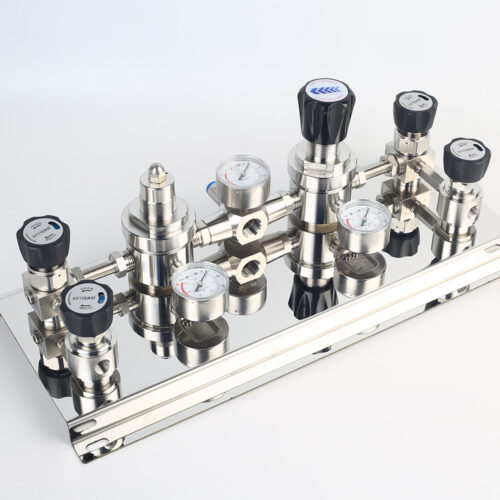
Stainless Steel Single Stage Semiconductor Grade Pressure Control Module Pressure Control Panels JSP-6A Series
-
Long Gland LG Series For Ultra High Purity Gas And Chemical Delivery Systems
-
FT-BOX JW-FTB-C Valve Manifold Panels And Boxes With High Purity Configurable Systems
-
High Purity Chemical Dispense System & Packing System For Semiconductors JW-200L-CDM & JW-1000L-CDM
-
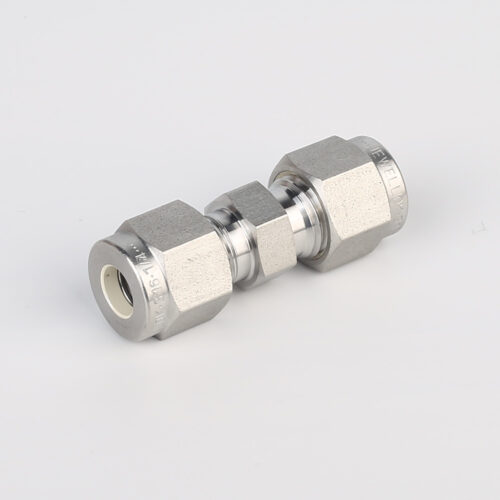
762L Stainless Steel High Purity Union High-Purity Gas System Fittings
-
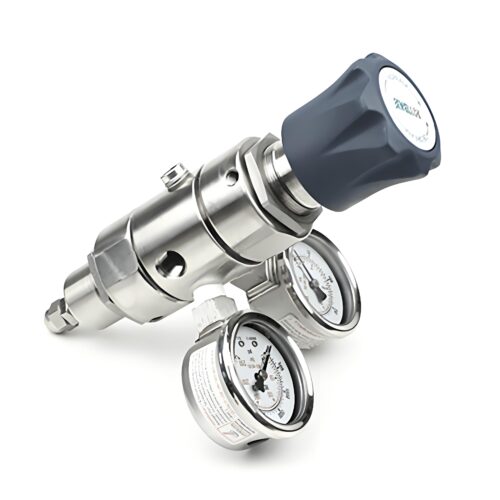
DPR1 Ultra High Purity Two Stage Dual Stage Pressure Reducing Regulator Semiconductor Grade Regulators
-

Liquid Chemical Delivery Module (CDM) Maintenance: Optimizing UHP Diaphragm Valves for Maximum System Process Uptime