




















バルブメーカー TEL: +86 13380377051
The Ordinary Floating Ball Valve VS the Double-Eccentric Ball Valve
Ball valves are indispensable components in fluid control systems across industries such as oil and gas, petrochemicals, water treatment, and power generation. They regulate, direct, or shut off the flow of liquids and gases with a spherical disc—the ball—that rotates to open or close the passage. Among the various designs, the ordinary floating ボールバルブ has been a staple due to its simplicity and reliability in low- to medium-pressure applications. However, as operational demands escalate, particularly in high-pressure, abrasive, or extreme temperature environments, limitations in torque requirements and sealing integrity become apparent.
Enter the double-eccentric ball valve, an advanced iteration that incorporates dual offsets in its design to address these shortcomings. This valve type, often featuring a C-shaped or segmented ball, represents a significant evolution from the conventional floating structure. By offsetting the stem and the ball’s rotation axis, it minimizes friction, reduces operational torque, and enhances sealing performance. This article delves into the specific technical improvements of the double-eccentric ball valve compared to the ordinary floating ball structure, focusing on torque reduction and sealing enhancements. Through detailed explanations, comparisons, and real-world implications, we explore how these innovations set a new standard for efficiency, durability, and reliability in valve technology.
The transition from floating to double-eccentric designs is driven by the need for valves that can handle increasingly challenging conditions without compromising performance. In floating ball valves, the ball “floats” between the seats, relying on line pressure to create a seal, which can lead to higher torque needs and potential leaks under varying pressures. In contrast, the double-eccentric design employs geometric offsets to decouple the ball from constant seat contact, yielding substantial benefits. Over the following sections, we will dissect these improvements, supported by engineering principles and comparative analyses.
Understanding the Ordinary Floating ボールバルブ
To appreciate the advancements in double-eccentric ball valves, it is essential to first understand the baseline: the ordinary floating ball valve. This design features a ball that is not fixed in place but instead floats between two sealing seats. When the valve is closed, upstream pressure pushes the ball against the downstream seat, creating a seal. The stem is attached to the top of the ball, allowing it to rotate 90 degrees for opening and closing.
The simplicity of this structure makes floating ball valves cost-effective and suitable for applications up to medium pressures (typically ANSI Class 600 or PN100) and smaller diameters (up to 8-10 inches). They offer low flow resistance due to the full-bore design and are easy to maintain. However, inherent drawbacks emerge in demanding scenarios.
Regarding opening and closing torque, floating ball valves require significant force, especially under high pressure. The ball’s contact with the seats creates friction throughout the operation. As pressure increases, the ball presses harder against the downstream seat, amplifying the torque needed to rotate it. This can necessitate larger actuators, increasing energy consumption and operational costs. In extreme cases, high torque can lead to stem deformation or actuator failure.
Sealing performance in floating ball valves relies on the material properties of the seats, often soft materials like PTFE for low temperatures (-10°C to 200°C). While effective in clean media, this design is vulnerable to wear from abrasives, particles, or thermal cycling. Constant contact between the ball and seats accelerates degradation, leading to leaks. Additionally, under vacuum or low-pressure conditions, sealing may be inadequate because the floating mechanism depends on positive pressure to energize the seal.
These limitations highlight the need for innovation, setting the stage for the double-eccentric ball valve’s targeted improvements.
Design Principles of the Double-Eccentric Ball Valve
The double-eccentric ball valve, also known as a double-offset ball valve, introduces two key offsets to overcome the floating design’s constraints. First, the stem is offset from the centerline of the ball, and second, the ball’s seating surface is offset from the stem’s axis of rotation. This dual eccentricity creates a cam-like action during operation, where the ball lifts away from the seat upon initial rotation, minimizing contact.
Often employing a C-shaped ball (a hemispherical or segmented obturator), this design differs from the full spherical ball in floating valves. The C-ball reduces weight and material use while maintaining full-bore flow characteristics. The valve body typically allows top-entry access for in-line maintenance, and components like the ball and stem are often coated for enhanced durability in abrasive services.
In operation, as the stem rotates, the double offset translates the ball in a combined rotational and translational motion—a dual-vector cam effect. This ensures the ball only contacts the seat in the final closing position, achieving a torque-seated seal. Unlike floating valves, where the ball is pressure-energized, the double-eccentric relies on mechanical torque for sealing, making it bi-directional and cavity-free.
This fundamental redesign addresses torque and sealing issues at their core, enabling the valve to perform in high-pressure (up to 200 bar), extreme temperature (-196°C to 815°C), and erosive environments where floating valves falter.
Specific Improvements in Reducing Opening and Closing Torque
One of the most pronounced advantages of the double-eccentric ball valve over the ordinary floating structure is the substantial reduction in opening and closing torque. In floating ball valves, torque can increase exponentially with pressure and size because the ball remains in constant frictional contact with the seats. Tests show that for a 6-inch floating valve at 1000 psi, torque might exceed 5000 Nm, necessitating oversized actuators.
In contrast, the double-eccentric design achieves friction-free operation for most of the rotation cycle. The offsets ensure that upon opening, the ball disengages from the seat within the first few degrees of movement, similar to a door swinging open without rubbing against the frame. This eliminates sliding friction, reducing torque by up to 50-70% compared to floating valves of similar size and pressure rating. For instance, in abrasive services, where floating valves experience rapid wear and torque spikes, the double-eccentric maintains consistent low torque throughout its lifespan.
Technically, this is facilitated by the cam effect: the first offset (stem from ball centerline) creates a lever arm that lifts the ball away, while the second offset (seating surface from rotation axis) optimizes the contact angle. This results in a lower breakaway torque—the initial force needed to start rotation—and reduced running torque during operation. In practical terms, smaller actuators can be used, lowering energy costs and enabling automation in remote or hazardous areas.
Furthermore, the absence of constant contact prevents torque buildup from debris accumulation, a common issue in floating valves where particles embed in seats, increasing friction. The double-eccentric’s design also incorporates bearings or low-friction coatings on the stem, further minimizing resistance. Comparative studies indicate that in high-pressure gas applications, double-eccentric valves require 30-40% less torque than floating counterparts, enhancing operational efficiency and reducing maintenance intervals.
These torque reductions not only improve usability but also extend component life, as lower forces decrease stress on stems, seats, and actuators.
Enhancements in Sealing Performance
Sealing performance is another area where the double-eccentric ball valve markedly outperforms the ordinary floating structure. Floating ball valves achieve sealing through pressure-assisted contact, but this is unidirectional and prone to failure under reverse flow, vacuum, or thermal expansion. Soft seats limit temperature ranges, and constant friction leads to wear, compromising seal integrity over time—leak rates can exceed 10^-3 cc/min after cycles in abrasive media.
The double-eccentric valve employs a torque-seated mechanism, where sealing is achieved by mechanical compression rather than solely line pressure. The cam action presses the ball against the seat only at closure, creating a tight, metal-to-metal or enhanced soft seal without ongoing contact. This bi-directional sealing capability ensures zero leakage (meeting API 598 or ISO 5208 Class A standards) across a broader pressure and temperature spectrum.
Specific improvements include resistance to abrasives: the lack of rubbing during operation prevents particle-induced damage, unlike floating valves where constant contact erodes seats. The C-ball design eliminates cavities, reducing the risk of media trapping and contamination. In high-temperature applications, metal-seated double-eccentric valves maintain tightness at differentials where floating soft seats deform.
Moreover, the offsets allow for progressive sealing—the ball cams into position, distributing force evenly and minimizing seat deformation. This results in longer service life, with cycle counts often exceeding 100,000 without leakage, compared to 10,000-20,000 for floating valves in similar conditions. Fire-safe designs are inherent, as the absence of soft materials prevents melting under heat.
In summary, these sealing enhancements make double-eccentric valves ideal for critical services, reducing downtime and environmental risks from leaks.
Additional Benefits and Applications
Beyond torque and sealing, double-eccentric ball valves offer weight savings (up to 30% lighter due to C-ball), full-bore flow for minimal pressure drop, and in-line maintainability. They excel in sectors like chemical processing, mining slurries, and high-pressure steam, where floating valves underperform.
Case studies, such as in reactor systems or oxygen services, demonstrate their reliability, with reduced operational costs and enhanced safety.
結論
The double-eccentric ball valve represents a paradigm shift from the ordinary floating ball structure, with targeted improvements in torque reduction through friction-free cam action and enhanced sealing via torque-seated, bi-directional mechanisms. These advancements not only address the limitations of floating designs but also enable broader applications in demanding environments. As industries prioritize efficiency and sustainability, adopting double-eccentric technology promises long-term value, underscoring its role as a superior solution in modern fluid control.
For more about the ordinary floating ball valve VS the double-eccentric ball valve, you can pay a visit to Jewellok at https://www.jewellok.com/ 詳細については、こちらをご覧ください。.
-
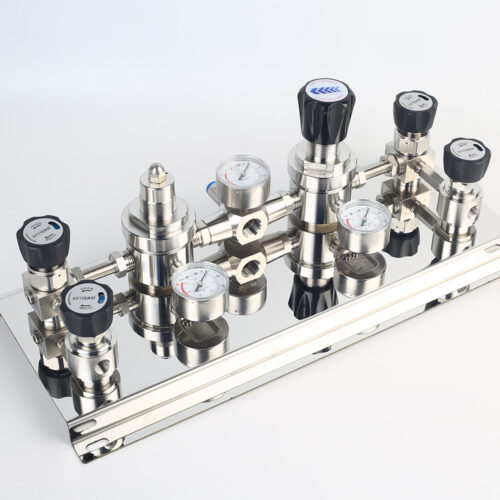
ステンレス鋼製単段半導体グレード圧力制御モジュール圧力制御パネル JSP-6Aシリーズ
-
ステンレス鋼製超高純度ミニ突合せ溶接ミニT字型レデューサー MTRWシリーズ継手
-
316Lステンレス鋼管突合せ溶接減径継手ユニオンレデューサーRWシリーズ超高純度プロセス
-
739 高純度LMRオスアダプターチューブ-パイプ継手およびアダプター
-
実験室の圧力制御用低圧高流量ライン圧力調整器および制御弁 JSR-4Lシリーズ
-
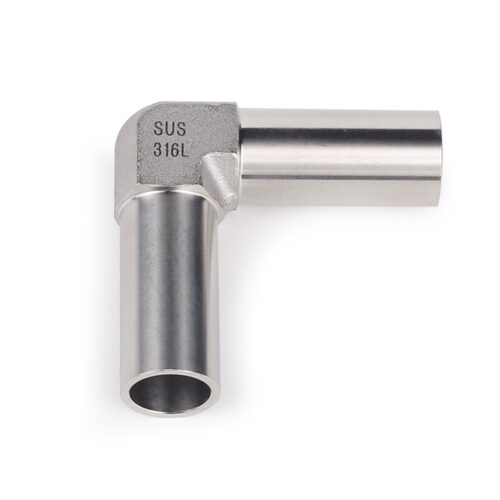
半導体向け高純度ステンレス鋼製ミニチューブ突合せ溶接継手
-
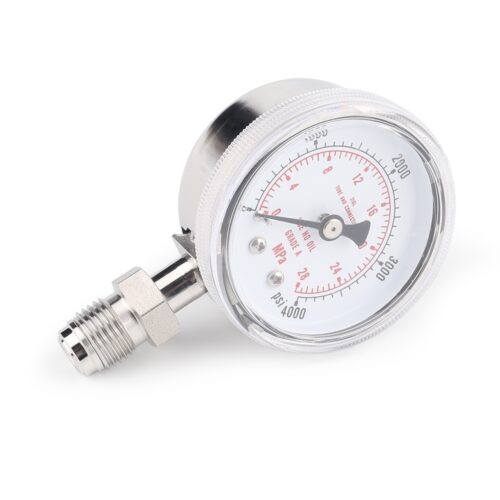
半導体ガス用超高純度酸素圧力計 JGシリーズ圧力計器(半導体製造用)
-
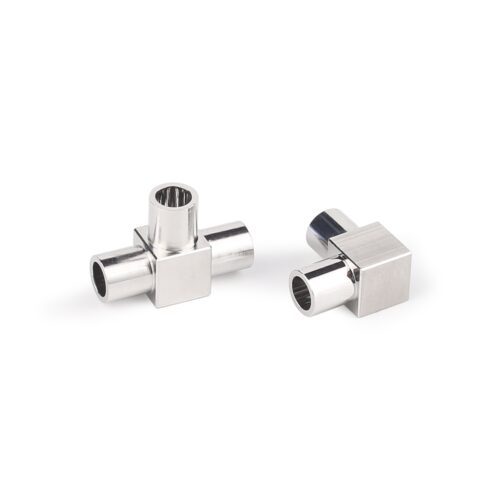
ステンレス鋼製ミニエルボ、ミニT字継手、ミニクロス継手、ミニトライボウ継手、超高純度ミニ突合せ溶接継手