
Valves Manufacturer Tel: +86 13380377051

Purchasing Industrial Exhaust Gas Scrubber Equipment: 5 Common Mistakes
In the landscape of industrial manufacturing, chemical processing, and wastewater treatment, air pollution control is not merely a regulatory hoop to jump through; it is a critical component of operational integrity, community relations, and environmental stewardship. At the heart of many emission control strategies lies the industrial exhaust gas scrubber. Whether it is a packed-bed tower neutralizing acid gases or a Venturi scrubber capturing particulate, this equipment represents a significant capital investment.
However, the procurement process for such specialized machinery is fraught with technical pitfalls. All too often, purchasing decisions are driven by the lowest upfront bid or an oversimplified view of the chemical process, leading to years of operational headaches, excessive downtime, and even regulatory non-compliance.
To ensure your investment yields a high return in performance and longevity, it is essential to avoid these five common mistakes when purchasing industrial exhaust gas scrubber equipment.

Mistake #1: Inadequate Characterization of the Effluent Stream
The most fundamental error in scrubber procurement occurs long before the request for proposal is sent out: failing to fully characterize the exhaust gas stream. A scrubber is a chemical processing unit; if you do not know the exact composition of the “feedstock” (the contaminated air), you cannot design a reliable reactor.
Many buyers simply list the primary pollutant—”We need to remove HCl.” However, exhaust streams are rarely that simple. A technical specification must account for:
-
Composition Variability: Is the pollutant load consistent, or does it spike during different batch cycles?
-
Temperature: High temperatures affect material selection (thermal stress on plastics) and the solubility of gases. A stream that is too hot can vaporize the scrubbing liquid, rendering the system useless.
-
Particulate Matter: If the stream contains dust or sticky particulates along with gases, a standard packed-bed tower will quickly clog. This requires a different configuration, such as a Venturi pre-scrubber or an open-spray design.
-
Moisture Content and Dew Point: If the gas is saturated with moisture and hits a cooler section of the ductwork or scrubber, corrosion can occur before the gas is even treated.
The Consequence: If the inlet conditions are misunderstood, the scrubber will be undersized, the chemical reagent consumption will be exorbitant, or the packing material will plug or dissolve. This leads to stack emissions that exceed permit limits and a system that fails its Acceptance Test.
The Solution: Invest in stack testing prior to design. If possible, conduct testing over a period that captures the full cycle of your operations, not just a snapshot of “ideal” running conditions.
Mistake #2: Mismatched Materials of Construction
Once the chemical composition of the stream is understood, the next technical hurdle is choosing the material that will stand between the pollutant and the atmosphere. The “blue metal box” approach to purchasing ignores the aggressive nature of the chemistry inside the vessel.
Historically, many scrubbers were built from stainless steel (316L or 304). However, in the presence of chlorides, sulfides, or fluctuating pH levels, stainless steel can be susceptible to chloride stress corrosion cracking. This has led to a shift toward engineered thermoplastics and fiber-reinforced plastics (FRP).
Common material mistakes include:
-
Underestimating Halogenated Compounds: If your process uses chlorine, fluorine, or bromine, standard FRP resins may degrade rapidly. You may require advanced vinylester resins with a chemical veil (such as “C-glass” or synthetic veils) to prevent “blooming” of glass fibers.
-
Ignoring External Environment: A scrubber installed in a coastal facility faces external salt-laden air, which can corrode external supports and flanges just as fast as the internal exhaust gases corrode the shell.
-
UV Degradation: FRP materials exposed to direct sunlight without a UV inhibitor in the resin gel coat will become brittle and chalky over time, losing structural integrity.
-
Thermal Cycling: Plastics have high coefficients of thermal expansion. A system designed for a constant 80°F (27°C) that actually experiences 150°F (65°C) during a process upset may buckle, crack at the flanges, or collapse.
The Consequence: Material failure leads to leaks, fugitive emissions, and catastrophic structural failure. A scrubber shell rotting from the inside out is a safety hazard and an unplanned capital expense that usually occurs just after the warranty expires.
The Solution: Provide the vendor with a full chemical analysis (including trace contaminants) and operating temperature ranges. Ask for a material selection guide that justifies why a specific resin, alloy, or plastic was chosen for your specific application.
Mistake #3: Neglecting the Hydraulic and Utility Integration
A exhaust gas scrubber does not operate in a vacuum; it is part of a system. A common mistake in purchasing is treating the scrubber vessel as an isolated unit, ignoring the “balance of plant” requirements. The most efficiently designed packed tower will fail if the fans, pumps, and drains are not properly integrated.
The “System” blind spots include:
-
Fan Placement (Push vs. Pull): Is the fan located before the scrubber (push-through) or after the scrubber (pull-through)? In a pull-through configuration, the fan is handling clean, saturated air. In a push-through, the fan is handling hot, corrosive, potentially particulate-laden air, which requires a different (and more expensive) fan construction. Buyers often forget to specify which configuration the system is designed for.
-
Pressure Drop Calculations: Some vendors underestimate the pressure drop to lower the quoted horsepower of the fan, making their bid look more energy-efficient. However, if the pressure drop is off by just 2 inches of water column, the fan will not move the required air volume (CFM), rendering the entire system ineffective.
-
Water Chemistry and Recycle: A scrubber recirculates the same water. Buyers often overlook the fact that the liquid becomes saturated with salts. If a bleed-off (blowdown) system is not designed to control Total Dissolved Solids (TDS), salts will crystallize and plug the packing or nozzles. Furthermore, the pH control system (acid/caustic dosing) must be sized correctly to handle the load; a tiny metering pump trying to neutralize a massive acid load will fail instantly.
-
Drainage and Freeze Protection: A scrubber produces liquid effluent. If the scrubber is located outdoors in a cold climate and the drain lines are not heat-traced or insulated, a frozen drain can cause the sump to overflow or the pump to run dry and destroy its seals.
The Consequence: Poor integration results in high energy bills, constant pump failures, and a system that cannot maintain the required static pressure to capture exhaust gases at the source.
The Solution: Require the vendor to provide a complete system P&ID (Piping and Instrumentation Diagram) that shows how the scrubber integrates with your existing ductwork, drains, and electrical panels. Ensure the fan curve is matched precisely to the system curve provided by the scrubber manufacturer.
Mistake #4: Overlooking Maintenance Access and Design for Service
In the pursuit of a compact footprint or a lower price, maintenance accessibility is often sacrificed. An industrial scrubber is a piece of equipment that requires regular inspection and upkeep. If you cannot get inside it, you cannot maintain it.
Common design flaws that become apparent after installation include:
-
Inaccessible Packing: Random packing needs to be inspected for channeling, plugging, and degradation. If the manways (access doors) are too small or positioned poorly, maintenance crews cannot remove the media for cleaning or replacement.
-
Mist Eliminator Neglect: The mist eliminator (chevron blades or mesh pad) is the final defense against droplets escaping the stack. If it is not equipped with a spray-wash system, or if the wash system nozzles are inaccessible, the eliminator will plug. Once plugged, pressure drop spikes, and liquid carryover (and thus pollution) occurs.
-
Pump and Instrument Placement: If the recirculation pump is tucked into a corner where it cannot be reached by a forklift for replacement, or if the pH probes are located in a turbulent section where they give erratic readings, your maintenance team will struggle to keep the system running.
The Consequence: A “maintenance nightmare” leads to deferred maintenance. Deferred maintenance leads to performance degradation. Eventually, the system fails a stack test, leading to fines or shutdowns.
The Solution: During the purchasing phase, review the General Arrangement drawings with your maintenance team. Ask the vendor: “How do we change the packing?” “How do we clean the mist eliminator?” “Can we remove the pump without disassembling the piping?” A slightly more expensive unit with hinged doors and slide-out trays is often cheaper over its lifecycle than a “budget” unit that requires a week of labor to service.
Mistake #5: Focusing Solely on First Cost (CapEx) Over Lifecycle Cost (OpEx)
This is the classic purchasing trap, but it is particularly damaging in the world of pollution control. While the initial Capital Expenditure (CapEx) is a tangible number on a purchase order, the Operational Expenditure (OpEx) is a recurring monthly cost that will quickly surpass the initial price tag.
A cheaper scrubber often achieves its low price through shortcuts that inflate operating costs:
-
High Pressure Drop: A cheaper, poorly designed internal structure creates high resistance. This requires a larger, higher-horsepower fan motor running 24/7. Over five years, the electricity cost for that motor may be double the cost of the scrubber itself.
-
Inefficient Mass Transfer: A scrubber with poor air/liquid contact will require higher liquid recirculation rates or higher chemical reagent usage to meet emission limits. If you are using expensive caustic soda or sulfuric acid to control pH, an inefficient scrubber can bleed your chemical budget dry.
-
High Water Usage: If the system lacks automated blowdown controls or a good mist eliminator, it may waste thousands of gallons of water annually.
-
Proprietary Parts: Some vendors use non-standard nozzles or custom-sized motors. When they break, you are locked into buying replacement parts from them at a premium.
The Consequence: The facility saves $20,000 on the purchase price but spends an extra $15,000 per year on electricity and chemicals. Within 18 months, the “cheap” option has become the expensive one.
The Solution: Perform a Total Cost of Ownership analysis. Compare vendors based not only on the quoted price but on estimated annual utility costs (electricity, water), chemical consumption, and estimated maintenance hours.
Conclusion
Purchasing an industrial exhaust gas scrubber is a complex engineering decision, not just a transactional procurement. By avoiding these five common mistakes—rushing the stream characterization, guessing on materials, ignoring system integration, sacrificing maintenance access, and fixating on first cost—you position your facility for long-term compliance and operational success.
The goal is not merely to buy a piece of equipment, but to implement a solution that provides reliable, efficient, and safe air pollution control for the lifespan of your facility. Take the time to validate your process data, challenge your vendors on their material selections, and look beyond the price tag to the true cost of ownership. Your balance sheet, your maintenance team, and the environment will thank you.
For more about purchasing industrial exhaust gas scrubber equipment: 5 common mistakes, you can pay a visit to Jewellok at https://www.jewellok.com/ for more info.
-
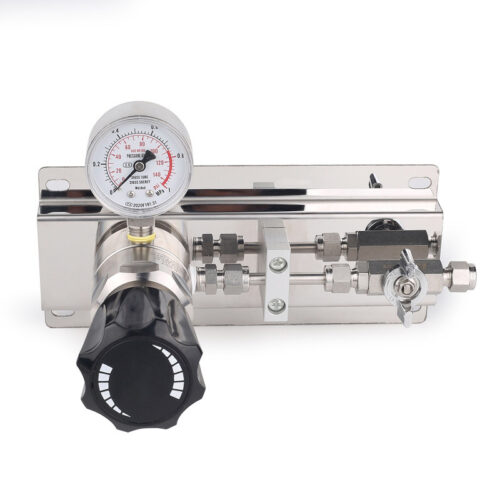
High Purity Gas Cylinder Semi Automatic Changeover Manifold Regulator Panel 3000psig Stainless Steel Gas Control Panel 1/8 Npt With Gauge
-
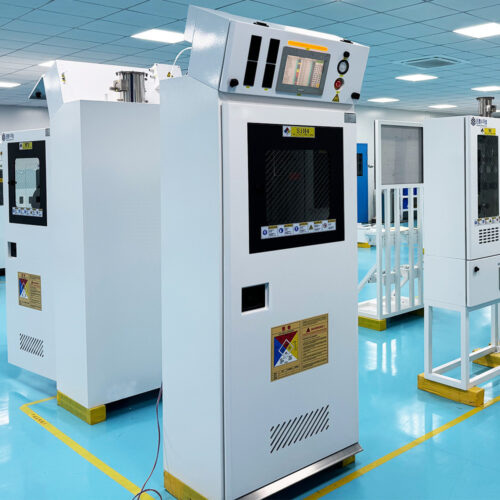
BSGS Large Flow Specialty Gas Supply Cabinet 3 Cylinder Gas Storage Cabinet Fully Automated PLC Control Bulk Specialty Gas Systems (BSGS) Gas Cabinets
-
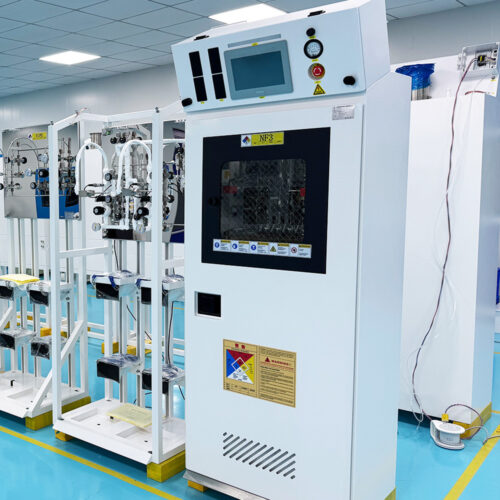
Semi Automatic Gas Cabinet Gas Panels High Purity Gas Delivery Systems JW-200-GC
-
High Pressure High-Purity Welded Check Valves And Low Cracking Pressure Check Valve JCV1 Series
-
UHP Metal Gasket Face Seal Fittings Vacuum Coupling Metal Face Seal Join Long Gland And Short Gland
-
739LF High Purity Female Adapter Tube To Pipe Fittings And Connectors
-
767LT Reducer Pressure Reducing Valve Adjustment High purity Pressure Reducing Union Fittings And Tubing
-
High Purity High Flow Pressure Control Regulators & Valves Gas Stick Assemblies JSR-2TG Series