
Valves Manufacturer Tel: +86 13380377051
How a Gauged Two-Stage Propane Gas Pressure Regulator Works
Propane gas, also known as liquefied petroleum gas (LPG), is a versatile and efficient fuel source widely used for heating homes, powering appliances, cooking, and even fueling vehicles in rural or off-grid settings. Stored in pressurized tanks, propane exists as a liquid under high pressure but vaporizes into a gas when released for use. However, the pressure inside a typical propane tank can range from 100 to 250 pounds per square inch (PSI), far too high for safe and effective operation of household appliances, which typically require a much lower pressure of around 11 inches of water column (in. w.c.), equivalent to about 0.4 PSI. This is where a propane gas pressure regulator comes into play—a critical safety device that reduces and stabilizes the gas pressure to ensure consistent flow and prevent hazards like leaks, explosions, or inefficient burning.
Among the various types of regulators, the gauged two-stage propane gas pressure regulator stands out for its reliability, especially in systems where consistent pressure is essential over long distances or in varying environmental conditions. Unlike single-stage regulators, which perform pressure reduction in one step, two-stage models divide the process into two phases, providing greater stability and efficiency. The “gauged” aspect refers to the inclusion of one or more pressure gauges, which allow users to monitor inlet, intermediate, or outlet pressures visually, aiding in maintenance and troubleshooting.
In this comprehensive article, we will delve into the intricacies of how a gauged two-stage propane gas pressure regulator functions. We’ll explore its components, the step-by-step working mechanism, the benefits it offers over simpler designs, and practical considerations for installation and safety. By understanding this device, users can appreciate its role in modern propane systems and ensure their setups operate safely and optimally. This explanation draws from established principles in gas regulation technology, emphasizing the balance of mechanical forces that make pressure control possible.
Propane systems are ubiquitous in residential, commercial, and industrial applications. For instance, in a typical home setup, a large propane tank outside the house supplies gas to furnaces, water heaters, stoves, and generators. Without proper regulation, the high tank pressure could damage appliances or cause dangerous over-pressurization. Regulators act as the gatekeepers, using simple yet ingenious mechanics involving springs, diaphragms, and valves to modulate flow. The two-stage design, in particular, addresses challenges like pressure droop (a drop in delivery pressure under high demand) and supply pressure effect (variations as the tank empties), making it ideal for larger or more demanding systems.
As we proceed, keep in mind that while propane is clean-burning and efficient, handling it requires adherence to safety standards like those outlined in NFPA 58 (the Liquefied Petroleum Gas Code). Always consult certified professionals for installation or repairs.
The Basics of Propane Gas Pressure
To grasp how a regulator works, it’s essential to understand propane’s behavior under pressure. Propane is stored as a liquid in tanks at pressures that vary with temperature—higher temperatures increase vapor pressure, potentially reaching 200 PSI or more in hot climates, while colder conditions lower it. When the tank valve is opened, the liquid propane boils off into vapor, which is then delivered through piping to appliances.
Pressure in gas systems is measured in PSI for high pressures and in. w.c. for low pressures, where 1 PSI equals approximately 27.7 in. w.c. Appliances like gas stoves or heaters are designed for low-pressure operation to ensure even flame control and prevent backflow or leaks. If high-pressure gas were fed directly, it could overwhelm valves, cause erratic burning, or even rupture components.
Regulators reduce this pressure using a principle based on force balance. Inside the regulator, a diaphragm senses the outlet pressure and adjusts a valve to maintain the desired level. If pressure rises too high, the diaphragm pushes against a spring, closing the valve slightly to restrict flow. Conversely, if pressure drops, the spring forces the valve open to allow more gas through. This feedback loop ensures stability.
In propane systems, regulators are classified by stages: single-stage for simple, short-run setups, and two-stage for more complex ones. The gauged version adds analog or digital gauges, typically showing the high-pressure inlet from the tank or the intermediate pressure after the first stage, helping users detect issues like low tank levels or blockages early.
Single-Stage vs. Two-Stage Regulators
Before diving into the two-stage model, let’s contrast it with the single-stage regulator to highlight its advantages. A single-stage regulator performs the entire pressure reduction in one unit, typically mounted directly at the tank or near the appliance. It reduces tank pressure (up to 250 PSI) directly to appliance pressure (11 in. w.c.) using a single diaphragm-spring-valve assembly. While cost-effective and simple, single-stage regulators are prone to inconsistencies. As the tank pressure fluctuates with temperature or depletion, the outlet pressure can vary, leading to “droop” under high flow or “supply pressure effect” as the tank empties. In cold weather, moisture in the gas can freeze inside the regulator, causing blockages.
Two-stage regulators mitigate these issues by splitting the reduction process. The first stage, a high-pressure regulator, lowers the tank pressure to an intermediate level, usually 5-10 PSI. This stabilized pressure is then fed to the second stage, a low-pressure regulator, which further reduces it to the final 11 in. w.c. The separation allows each stage to handle specific variations: the first stage absorbs tank pressure changes, while the second maintains precise delivery despite demand fluctuations or pipe length.
The addition of gauges in a gauged two-stage regulator enhances monitoring. Common configurations include a high-pressure gauge on the first stage to show tank pressure (useful for estimating fill levels) and sometimes an intermediate gauge between stages. This setup is particularly valuable in remote installations where frequent checks are impractical. Two-stage systems are recommended for larger homes, RVs, or commercial setups with multiple appliances, as they support longer piping runs without significant pressure loss.
Anatomy of a Gauged Two-Stage Regulator
A gauged two-stage propane regulator is a compact yet sophisticated device, often housed in a durable metal body to withstand outdoor elements. Let’s break down its key components:
- Inlet Connection: This is where the regulator attaches to the propane tank via a POL (Prest-O-Lite) fitting or similar threaded connector. It handles high-pressure gas entry.
- First Stage Regulator:
- Valve and Seat: A poppet valve controls gas flow, seating against a orifice to modulate passage.
- Diaphragm: A flexible rubber or synthetic membrane that senses pressure and moves to adjust the valve.
- Pressure-Adjusting Spring: Pre-set at the factory to maintain intermediate pressure (e.g., 10 PSI). It opposes the diaphragm’s force.
- Vent: Allows atmospheric pressure reference and safe release of excess gas if the diaphragm fails.
- High-Pressure Gauge: Attached here, it displays inlet pressure from the tank, often color-coded (green for full, red for low) to indicate fill levels without opening the tank.
- Intermediate Piping: A short section connecting the first and second stages, carrying gas at 5-10 PSI. In integral designs, this is internal; in separate setups, it’s external piping.
- Second Stage Regulator:
- Similar to the first but tuned for lower pressures: valve, diaphragm, and an adjustable spring (sometimes user-settable for fine-tuning).
- Outlet Connection: Leads to the appliance piping at low pressure.
- Optional Intermediate Gauge: Measures pressure between stages, helping diagnose issues like first-stage failure.
- Safety Features: Relief valves in each stage prevent over-pressurization by venting excess gas. Some models include filters to trap contaminants and shut-off mechanisms for leaks.
In integral two-stage regulators, both stages are combined in one unit for compactness, common in residential applications. Separate stages are used in larger systems for flexibility. The gauges, typically bourdon-tube types, provide real-time readings, making the system “gauged” and user-friendly. Diagrams of these regulators often show cross-sections revealing the internal chambers, with arrows indicating gas flow paths and force balances.
The Working Principle: Step by Step
The magic of a gauged two-stage propane regulator lies in its sequential pressure reduction, governed by mechanical equilibrium. Here’s a detailed breakdown of how it operates:
- Gas Entry at High Pressure: When the tank valve is opened, propane vapor enters the first stage inlet at tank pressure (say, 150 PSI). The high-pressure gauge immediately registers this, allowing the user to monitor tank status.
- First Stage Reduction:
- Gas flows into the first chamber, pressing against the diaphragm.
- The diaphragm, balanced by the pre-set spring, moves if pressure exceeds the set point (e.g., 10 PSI), pushing the linked valve toward closure to restrict flow.
- As flow decreases, pressure in the chamber drops, allowing the spring to reopen the valve slightly. This dynamic balance maintains a constant intermediate pressure.
- Physics-wise, it’s Force = Pressure × Area. The diaphragm’s area amplifies small pressure changes into significant valve movements.
- If tank pressure drops (e.g., as the tank empties), the first stage compensates by opening the valve more, keeping output steady.
- Intermediate Transfer: The gas, now at 5-10 PSI, moves to the second stage. An optional gauge here would show this pressure, useful for verifying first-stage performance.
- Second Stage Fine-Tuning:
- Entering the second chamber, the gas encounters another diaphragm-spring-valve setup, tuned for low pressure.
- The second spring is weaker, set to achieve 11 in. w.c. outlet.
- Demand from appliances pulls gas, dropping chamber pressure; the spring opens the valve to compensate.
- High demand causes minimal droop because the inlet (intermediate) pressure is stable, unlike in single-stage units.
- The vent ensures the diaphragm references atmospheric pressure, accounting for elevation changes.
- Gauge Monitoring: Throughout, gauges provide visual feedback. For example, a dropping high-pressure gauge signals it’s time to refill the tank, while steady intermediate readings confirm system health.
This two-step process ensures the outlet pressure remains within 10-20% of the set point, even under varying loads or temperatures. In cold weather, the first stage’s pressure drop causes gas expansion and warming, reducing freeze-up risks. Real-world example: In a home heating system, as the furnace cycles on, the second stage adjusts seamlessly, preventing flame fluctuations.
Benefits and Advantages
The gauged two-stage design offers several key benefits:
- Consistent Pressure: Minimizes variations, ensuring appliances perform optimally without manual adjustments.
- Freeze Resistance: By distributing reduction, it prevents moisture condensation and icing in sub-zero conditions.
- Longer Runs: Supports extended piping (up to hundreds of feet) with smaller diameters, cutting installation costs.
- Safety Enhancements: Dual relief valves and gauges allow early detection of issues, reducing explosion or leak risks.
- Efficiency: Stable pressure leads to better fuel combustion, saving propane and reducing emissions.
- Versatility: Ideal for multi-appliance setups or remote tanks.
Compared to single-stage, it’s more reliable for year-round use, though slightly more expensive upfront.
Installation, Maintenance, and Safety
Proper installation is crucial: The first stage mounts at the tank, second at the building entry, with piping sized per BTU load. Use certified fittings and test for leaks with soapy water.
Maintenance involves annual inspections: Check gauges for accuracy, clean vents, and replace regulators every 15-25 years. If a gauge shows abnormal readings, shut off the system and call a professional.
Safety tips: Never tamper with springs; store tanks upright; ensure ventilation. In emergencies, close the tank valve first.
Conclusion
A gauged two-stage propane gas pressure regulator is a testament to engineering simplicity meeting practical needs, providing safe, stable gas delivery through mechanical precision. By understanding its workings—from high-pressure entry to low-pressure output—you can better manage your propane system. Whether for home or business, this device ensures reliability, underscoring why it’s a staple in modern energy solutions.
For more about how a gauged two-stage propane gas pressure regulator works, you can pay a visit to Jewellok at https://www.jewellok.com/ for more info.
-
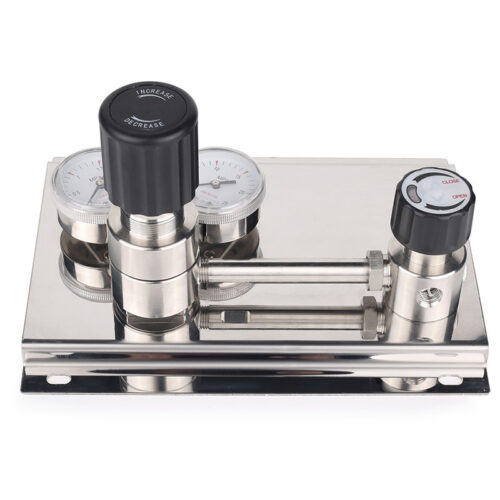
Stainless Steel Fully Automatic Gas Switchover Manifold System Automatic Gas Cylinder Switchover Co2 Cylinder Auto Changeover Controller
-
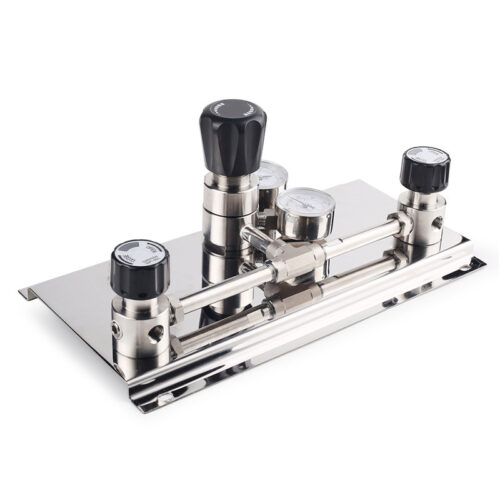
High Purity Semi-Auto Stainless Steel Changeover Manifold System, Nitrogen High Pressure Control Panel With Semiconductor Valve Manifold Box Diaphragm Valves
-
Stainless Steel High-Purity High Temperature Metal Seated Ball Valves JBV3 Series
-
764LR Stainless Steel 316 Reducing Tee UHP Fitting Automatic Buttweld Reducing Tee
-
Stainless Steel Mini Elbow Mini Tee Mini Cross Mini Tribow Ultrahigh Purity Mini Butt Weld Fittings
-
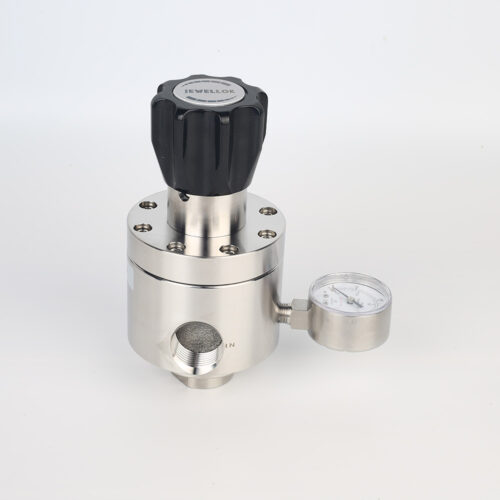
Low Pressure High Flow Line Pressure Regulators And Control Valves JSR-4L Series For Laboratory Pressure Control
-
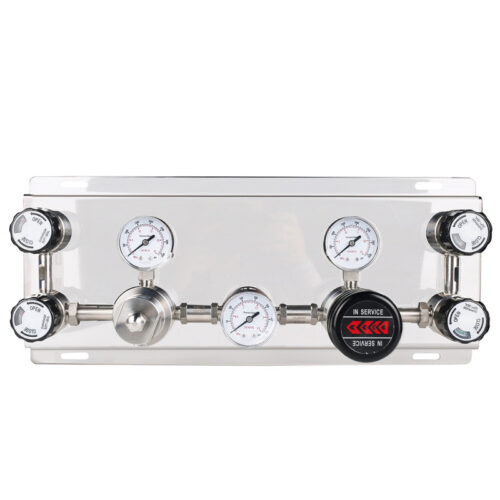
Semi Automatic And Automatic Switching Speicialty Gas Changeover Manifold Panel With Semiconductor Valve Manifold Box Gas Pressure Regulators
-
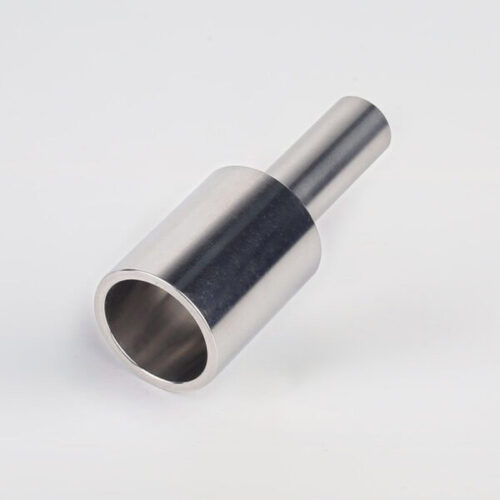
316L Stainless Steel Tube Butt Weld Reducing Fittings Union Reducer RW Series Ultrahigh Purity Process