
Valves Manufacturer Tel: +86 13380377051
How Does a Back Pressure Reducing Regulator Work?
The Dual-Function Guardian of Fluid Systems
In industrial fluid and gas control systems, maintaining precise pressure is not merely a convenience—it is a critical requirement for safety, efficiency, and process integrity. While simple pressure-reducing regulators (PRRs) are common for lowering inlet pressure to a stable outlet pressure, many applications demand a more sophisticated device: the back pressure reducing regulator (BPRR), also known as a back pressure regulator or pressure sustaining valve. This device performs the dual role of maintaining a minimum upstream pressure while also reducing it to a desired downstream level. Understanding its operation is essential for engineers and technicians in industries ranging from oil and gas to pharmaceuticals and food processing. This article explores the working principles, internal components, applications, and key considerations of back pressure reducing regulators.
- Defining the Function: Pressure Reduction vs. Back Pressure Reducing Regulator
To appreciate a BPRR, one must first distinguish it from standard regulators:
- A standard pressure-reducing regulatoris a normally-open valve. Its primary function is to reduce a higher, variable inlet pressure to a lower, steady outlet pressure. It responds to downstream pressure changes: if downstream pressure rises (e.g., due to decreased demand), the regulator closes slightly to restrict flow and maintain the set point.
- A back pressure regulatoris typically a normally-closed valve. Its function is to maintain a set pressure upstream of itself by opening to release excess fluid when the upstream pressure exceeds the set point. It acts like a relief valve but for process control, not just safety.
- A back pressure reducingregulator combines these functions. It is installed in-line where it must both reduce a high inlet pressure to a lower, stable outlet pressure (like a PRR) and maintain a minimum upstream pressure in its supply line (like a back pressure regulator). This is crucial in complex systems where supply pressure must be safeguarded for other branch lines or processes, while the downstream process requires a specific, lower pressure.
- Core Components and Their Roles
The most common design for a BPRR is a spring-loaded diaphragm-operated valve. Its key components are:
- Valve Body:The main housing containing the fluid path and the valve seat.
- Valve Plug and Seat:The plug moves against the seat to open or close the orifice, controlling flow.
- Diaphragm:A flexible membrane that separates the valve’s upper chamber from the process fluid. It is the primary sensing element.
- Spring (Loading Element):Located above the diaphragm, it applies a force that determines the set point. Adjusting the spring compression adjusts the set pressure.
- Actuator Stem:Connects the diaphragm assembly to the valve plug.
- Sensing Lines:Critical internal or external passages that port the pressure to be controlled (either upstream or downstream) to the chamber underneath the diaphragm.
The pivotal design difference from a standard PRR lies in these sensing lines. A BPRR has two key pressure zones:
- The “controlled” pressure zone(the one it is set to maintain) is ported underneath the diaphragm.
- The “secondary” pressure zoneis ported above the diaphragm (often to atmospheric pressure or a reference signal).
- Step-by-Step Operational Principle
Let’s follow the mechanics of a typical BPRR configured to reduce inlet pressure (P1) while maintaining a minimum back pressure on its supply line.
At Steady-State Operation (Flow = Demand):
- The inlet pressure (P1) is above the desired minimum upstream set point. This pressure P1 is ported to the chamber underneaththe diaphragm.
- The force from P1 pushing upon the diaphragm area is balanced by the combined forces of the adjustable spring (pushing down) and the downstream pressure (P2) acting on the top of the diaphragm (if so configured) or the valve plug area.
- The valve plug finds an equilibrium position, creating a specific orifice opening. Flow passes through, and the outlet pressure (P2) is reduced to the required lower level as determined by the pressure drop across the orifice.
When Downstream Demand Decreases (Flow tries to drop):
- Downstream equipment closes, causing flow to attempt to decrease.
- Initially, the reduced flow leads to a slight rise in downstream pressure (P2), but more importantly, a rise in upstream pressure (P1)because the regulator is restricting flow less than needed.
- The increased P1 is sensed under the diaphragm. The upward force now exceedsthe spring force.
- The diaphragm lifts, pulling the valve plug toward the seat(closing movement).
- This closure achieves two things simultaneously:
- It further restricts flow to the downstream side, preventing P2 from rising excessively.
- It maintains P1 at or above its set minimum by creating a restriction, thereby “holding back” pressure in the supply header.
When Downstream Demand Increases (Flow tries to surge):
- Downstream equipment opens, calling for more flow.
- This tends to decrease both P2 and, crucially, P1 (as fluid rushes out).
- The decreased P1 under the diaphragm reduces the upward force.
- The spring force dominates, pushing the diaphragm down and moving the valve plug away from the seat(opening movement).
- This increased opening allows more flow to pass, satisfying downstream demand while preventing P1 from falling below the set point and protecting the upstream system from pressure drops.
Upstream Supply Pressure Fluctuations:
If the source pressure varies (e.g., a pump surge), the BPRR compensates automatically. A supply pressure spike increases P1 under the diaphragm, causing the valve to close slightly to maintain the set P1 and protect downstream from over-pressure. A supply dip decreases P1, causing the valve to open to maintain the set P1, ensuring adequate flow availability.
- Visualizing the Setup: A System Diagram
Imagine a pump supplying a main header that feeds two separate process lines, A and B.
- Line Arequires a high pressure (e.g., 80 psi).
- Line Brequires a lower pressure (e.g., 50 psi).
A BPRR is installed specifically on Line B.
- Function 1 (Reducing):It reduces the header pressure (80 psi) down to the 50 psi required for Line B.
- Function 2 (Back Pressure):By creating a controlled restriction at the branch take-off, it ensures the header pressure does not drop below 80 psi when Line B’s demand changes, thereby guaranteeing that Line A continues to receive its required 80 psi supply. Without the BPRR, a high flow demand from Line B could “steal” pressure from the header, causing Line A to fail.
- Key Applications and Industries
BPRRs are indispensable in scenarios where pressure must be both contained and reduced:
- Chemical & Process Industries:Protecting sensitive upstream equipment (like filters or reactors) from low-pressure scenarios while feeding a lower-pressure downstream process.
- Oil & Gas Production:Maintaining wellhead or separator pressure to optimize production rates while regulating pressure for downstream gathering lines or injection systems.
- Fuel Gas Systems:Ensuring burner trains receive a constant, reduced pressure while maintaining header pressure for other users.
- Steam Distribution:Reducing high-pressure boiler steam for use in low-pressure processes while keeping the main header at optimum pressure.
- Water Treatment & Distribution:Sustaining pressure in a main supply line while providing reduced pressure to a secondary loop or preventing pump cavitation by maintaining net positive suction head (NPSH).
- Laboratory and Analytical Systems:Providing precise, stable pressure to analytical instruments from a higher-pressure source while isolating them from downstream fluctuations.
- Selection and Sizing Considerations
Choosing the correct BPRR is critical:
- Set Pressure Range:The spring must be capable of the required control pressure.
- Flow Capacity (Cv):The valve must be sized to handle the minimum, normal, and maximum expected flow rates while maintaining stable control. Oversizing can lead to hunting (cycling); undersizing causes excessive pressure drop and inability to meet demand.
- Fluid Compatibility:Materials (body, seat, diaphragm) must be compatible with the process fluid (gas, liquid, steam, corrosive media).
- Pressure Ratings:The body must withstand the maximum inlet pressure.
- Accuracy & Sensitivity:Determined by diaphragm size, spring rate, and friction in the moving parts. A large diaphragm area provides finer control for a given spring force.
- Internal vs. External Sensing:Most are internally sensed, but complex applications may require external sense lines for more accurate control at a remote location.
- Advantages and Limitations
Advantages:
- Simplifies Piping Systems:Replaces the need for two separate valves (a PRR and a back pressure valve).
- Enhances System Protection:Actively prevents both over-pressure and under-pressure conditions in critical parts of the loop.
- Improves Process Stability:Decouples pressure interactions between interconnected system branches.
Limitations/Challenges:
- More Complex Tuning:Requires careful adjustment to balance both control objectives.
- Potential for Interaction:In highly dynamic systems, the dual control loops (upstream and downstream) can interact, requiring good system design.
- Cost:Typically more expensive than a single-function regulator.
Conclusion
The back pressure reducing regulator is a masterclass in mechanical feedback control. By intelligently sensing pressure and leveraging the balance of forces on a diaphragm, it performs the seemingly contradictory tasks of pressure reduction and pressure sustenance simultaneously. It acts as a vigilant gatekeeper, ensuring that upstream processes are shielded from vacuum or low-pressure conditions while downstream processes receive a consistent, reduced pressure regardless of fluctuating demand. This dual functionality makes it a cornerstone of robust and efficient fluid system design in countless industrial applications. For engineers, a deep understanding of its operation is not just academic—it is a practical tool for designing safer, more reliable, and more efficient fluid control systems. As processes become more integrated and demands for precision grow, the role of such versatile control elements will only become more central.
For more about how does a back pressure reducing regulator work, you can pay a visit to Jewellok at https://www.jewellok.com/ for more info.
-
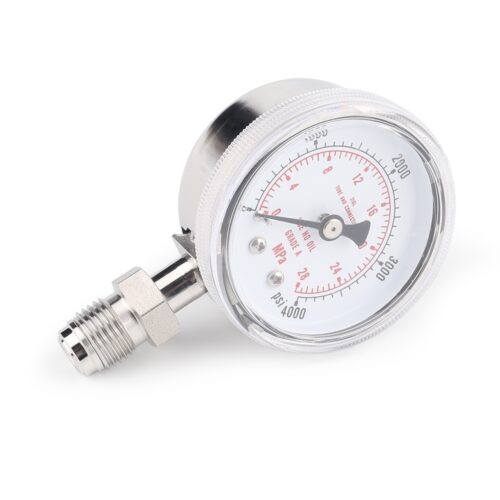
Ultra High Purity Oxygen Pressure Gauge For Semiconductor Gases JG Series Pressure Instruments For Semiconductor Manufacturing
-
High Purity Stainless Steel Mini Tube Butt Weld Fittings For Semiconductor
-
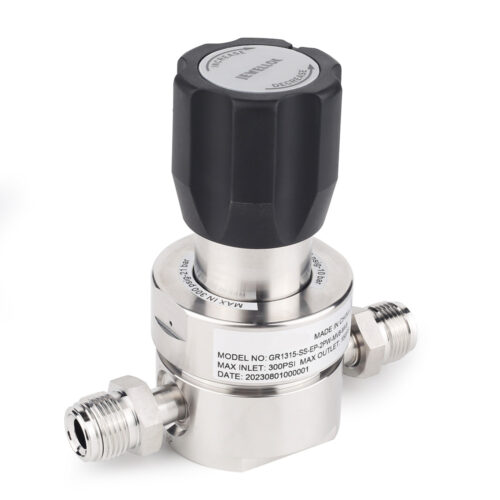
JR1300 Series Ultra High Purity Single Stage Regulator High Flow Line Regulator For Ultra High Purity Intermediate Flow
-
739 High Purity LMR Male Adapter Tube To Pipe Fittings And Adapters
-
767LT Reducer Pressure Reducing Valve Adjustment High purity Pressure Reducing Union Fittings And Tubing
-

Automated Bulk Liquid Chemical Delivery System (BCDS) with PLC Controls for High-Volume Industrial Fluid Transport
-
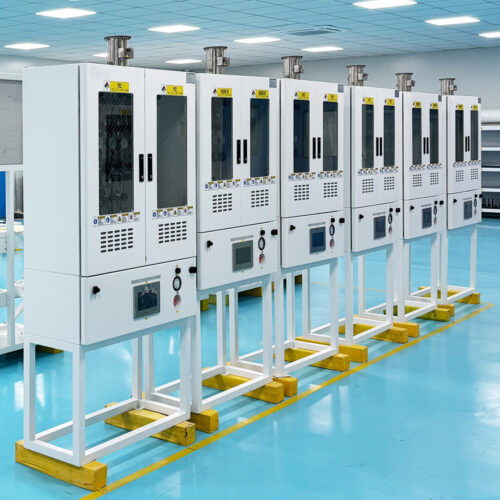
Ultra High Purity Gas Delivery Systems And Liquid Chemical Delivery Systems JW-300-LDS
-
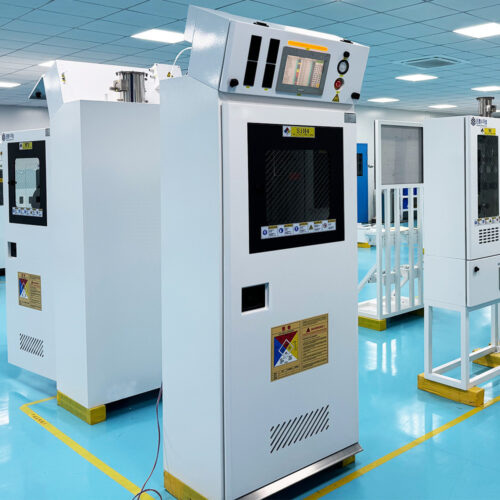
Fully Automated Gas Cabinet For Precise UHP Gas Delivery And High Purity Gas Delivery Systems JW-300-GC