
Valves Manufacturer Tel: +86 13380377051

Multi-Stage Pressure Regulation Technology: Addressing the Challenges of High-Pressure Hydrogen Storage
The Hydrogen Infrastructure Bottleneck
The global energy landscape is undergoing a profound transformation, driven by the urgent need to decarbonize. Among the suite of renewable energy solutions, green hydrogen—produced via electrolysis using renewable power—has emerged as a cornerstone for achieving net-zero emissions. Its high energy density by mass and its potential for long-term storage make it ideal for hard-to-abate sectors such as heavy industry, long-haul transport, and power generation.
However, the “hydrogen economy” faces a significant physical and engineering paradox: hydrogen has the lowest volumetric energy density of any fuel. At atmospheric pressure, it requires roughly 3,000 times more volume to store the same energy as a liter of gasoline. To make its storage and transport economically viable, hydrogen must be densely compacted. The most mature and widely adopted solution for this is high-pressure compression.
Today, hydrogen is typically stored at either 350 bar (5,000 psi) for applications like heavy-duty trucks, or 700 bar (10,000 psi) for light-duty fuel cell electric vehicles (FCEVs). These extreme pressures allow for a practical driving range. However, the journey from the storage vessel to the point of use—specifically, the fuel cell stack itself—requires a dramatic and precise reduction in pressure. The fuel cell operates at a low pressure, typically between 0.5 and 2 bar. This is where the unsung hero of hydrogen systems comes into play: the multi-stage pressure regulator. Bridging the gap between 700 bar and 1 bar is not a simple task of throttling; it presents a formidable challenge in thermodynamics, materials science, and precision engineering.
The Physical Challenge: The Joule-Thomson Effect and Real-Gas Behavior
The primary technical hurdle in hydrogen pressure reduction is not merely mechanical; it is thermodynamic. When a gas expands rapidly from high pressure to low pressure—a process known as throttling—its temperature changes. This is known as the Joule-Thomson effect.
For most gases, this expansion results in cooling. However, hydrogen exhibits a unique and problematic behavior. Above a certain temperature, known as the inversion temperature (approximately 202 K or -71°C for hydrogen), the Joule-Thomson coefficient becomes negative. This means that at ambient temperatures, expanding hydrogen actually heats up initially.
This phenomenon creates a two-fold thermal management problem:
-
Initial Heating: As 700 bar hydrogen enters the regulator, its temperature can spike. This subjects the regulator’s internal seals and diaphragms to thermal stress, potentially degrading elastomers and shortening component life.
-
Catastrophic Cooling: If the hydrogen gas is pre-cooled (as is common in 700-bar dispensing to prevent overheating during tank filling) or if the pressure drop occurs in multiple stages, the gas temperature can plummet. Once the temperature drops below the inversion point, the Joule-Thomson effect reverses, and further expansion causes intense cooling. This can lead to temperatures low enough to embrittle metals and freeze any residual moisture, causing seals to fail and the regulator to malfunction.
A single-stage regulator attempting to drop pressure from 700 bar to near-ambient levels would be subjected to this entire thermal gauntlet. The mechanical stresses, extreme temperature gradients, and potential for icing make a single-stage solution impractical, unsafe, and unreliable. This thermodynamic reality is the primary driver for the adoption of multi-stage regulation.
The Solution: The Architecture of Multi-Stage Regulation
A multi-stage pressure regulating system mitigates these issues by distributing the total pressure drop across several discrete stages. Each stage is designed to handle a specific pressure range, allowing the gas to settle toward thermodynamic equilibrium between stages. This approach offers three distinct advantages: controlled temperature management, reduced mechanical stress on components, and significantly improved outlet pressure stability.
A typical high-pressure hydrogen system, such as that found in an FCEV, will utilize a three-stage regulation architecture:
-
Stage 1 (The High-Pressure Reducer): This is the primary interface with the hydrogen storage tank. It is designed to withstand the full cylinder pressure of up to 700 or 350 bar. Its function is to reduce the pressure to an intermediate level, typically around 10 to 50 bar. This stage must be constructed from robust materials like high-grade stainless steel or aluminum, often with specialized coatings to resist hydrogen embrittlement. The large pressure drop in this stage generates significant heat, which must be managed through the thermal mass of the regulator body and careful material selection.
-
Stage 2 (The Intermediate Regulator): The gas, now at a moderate pressure, enters the second stage. Here, the pressure is further reduced, usually to a range of 2 to 10 bar. Because the pressure differential across this stage is significantly smaller than the first, the thermodynamic stresses are lower. This stage often incorporates more sensitive control elements, such as a balanced poppet or diaphragm, to begin fine-tuning the pressure stability.
-
Stage 3 (The Final Control / Low-Pressure Regulator): This is the precision stage. It takes the intermediate pressure and delivers a final, highly stable output to the fuel cell stack. The pressure here is typically just above ambient, usually between 0.5 and 2 bar. This regulator must be extremely sensitive to ensure that the fuel cell receives a constant and precise flow, regardless of fluctuations in upstream pressure or downstream demand. The pressure drop in this stage is minimal, so thermal effects are negligible, allowing for the use of highly flexible diaphragms for ultimate precision.
By compartmentalizing the pressure drop, the extreme temperature excursions are avoided. The heat generated in the first stage is dissipated into the metal body of the regulator before the gas moves to the second, where a smaller temperature change occurs.
Material Science: The Battle Against Embrittlement
Beyond thermodynamics, the choice of materials is perhaps the most critical factor in the design of hydrogen pressure regulators. Hydrogen, being the smallest and lightest molecule, is notoriously difficult to contain. It can diffuse into the crystalline structure of metals, a phenomenon known as Hydrogen Embrittlement.
This process causes ductile metals to become brittle and crack, leading to catastrophic failure. The problem is exacerbated by high pressure and cyclic loading (repeated pressurization and depressurization). Therefore, every component in a multi-stage regulator must be carefully selected.
-
Metallic Components: Standard carbon steels are generally unsuitable for high-pressure hydrogen service. Instead, regulators rely on austenitic stainless steels (such as 316L), aluminum alloys, and copper-beryllium alloys. These materials have a face-centered cubic structure that is far more resistant to hydrogen embrittlement. They retain their ductility and toughness under high-pressure hydrogen exposure.
-
Seals and Elastomers: The seals are the weakest link in any high-pressure system. Traditional elastomers like nitrile rubber (NBR) can degrade rapidly under high-pressure hydrogen exposure due to rapid gas decompression. As hydrogen permeates the seal material, a sudden pressure drop can cause the gas to expand explosively within the seal, leading to blisters and fractures. To combat this, multi-stage regulators employ specialized materials such as:
-
Perfluoroelastomers (FFKM/FFPM): These offer excellent chemical resistance and low permeability.
-
PTFE (Polytetrafluoroethylene): Often used for backup rings and dynamic seals due to its low friction and high chemical resistance.
-
Polyether Ether Ketone (PEEK): A high-performance thermoplastic used for seals and structural components due to its exceptional strength and resistance to both high pressure and temperature extremes.
-
-
Internal Coatings: To further reduce the risk of embrittlement and friction, internal surfaces are sometimes coated with materials like molybdenum disulfide (MoS2), which provides dry lubrication and acts as a barrier against hydrogen permeation.
Smart Integration: The Role of Electronics and Sensors
Modern multi-stage pressure regulation has evolved beyond purely mechanical devices. To meet the stringent safety and performance requirements of automotive and industrial applications, these systems are now “smart.” They form a crucial part of the vehicle’s or system’s overall control architecture.
Pressure transducers are strategically placed at various points within the multi-stage system. Sensors monitoring the outlet of the first stage or the final delivery pressure provide real-time data to an Electronic Control Unit (ECU). This allows for:
-
Fault Detection: The ECU can continuously monitor the expected pressure drop across each stage. A deviation from the norm—for example, a slower-than-expected pressure build-up in the intermediate chamber—could indicate a leak or a regulator malfunction, triggering a safety protocol, such as closing the tank’s main shut-off valve.
-
Performance Optimization: Data from the sensors can be used to calibrate the system’s performance over its lifetime, compensating for wear and tear.
-
Thermal Management Integration: The ECU can coordinate the regulator’s operation with other thermal management systems, such as a heat exchanger, to ensure the gas entering the fuel cell is at the optimal temperature.
Future Trends: Higher Pressures and Direct Integration
As the hydrogen economy matures, the demands on pressure regulation technology are intensifying. Several key trends are shaping the future of this critical component.
-
Towards 1,000 Bar: To further increase the energy density of storage, particularly for long-haul trucking and maritime applications, there is a push toward even higher storage pressures, potentially up to 1,000 bar. This will require a new generation of multi-stage regulators capable of withstanding these extreme conditions, pushing the boundaries of material science and thermodynamic management even further.
-
Integrated Systems (The “Block” or “Unitized” Regulator): Current systems often consist of discrete regulators connected by tubes and fittings. The future lies in highly integrated, unitized blocks. In this design, the flow channels for the first, second, and third stages are all machined directly into a single metal block. This eliminates potential leak points from fittings, reduces the overall system weight and footprint, and improves thermal management by consolidating the entire regulating system into a single thermal mass. This is analogous to the transition in hydraulic systems from hose-and-fitting assemblies to machined manifold blocks.
-
Integration with Ejectors: To maximize fuel efficiency, particularly in larger fuel cell systems, engineers are integrating the final stage of pressure regulation with an ejector. This device uses the high-velocity flow of fresh hydrogen to create a vacuum, recirculating unspent hydrogen from the fuel cell stack exhaust back into the inlet stream. This improves overall system efficiency and simplifies the balance of plant.
Conclusion
The journey from a 700-bar hydrogen storage tank to a 1-bar fuel cell stack is one of the most demanding in modern mechanical engineering. It is a journey fraught with thermodynamic extremes and material challenges. Multi-stage pressure regulation technology is not merely a solution; it is a fundamental enabler of the entire hydrogen mobility ecosystem.
By intelligently dividing the immense pressure drop, managing the unique Joule-Thomson behavior of hydrogen, and employing cutting-edge materials and smart electronics, these sophisticated devices ensure that fuel cells receive a stable, safe, and precise flow of energy. As we push toward a future powered by hydrogen, the continued evolution of multi-stage pressure regulators—toward higher pressures, smarter integration, and greater reliability—will remain critical to unlocking the full potential of this versatile and clean energy carrier. The unsung hero of the hydrogen wave, the multi-stage regulator, quietly ensures that the immense power stored under pressure is delivered with precision and safety, one controlled stage at a time.
For more about the multi-stage pressure regulation technology: addressing the challenges of high-pressure hydrogen storage, you can pay a visit to Jewellok at https://www.jewellok.com/ for more info.
-
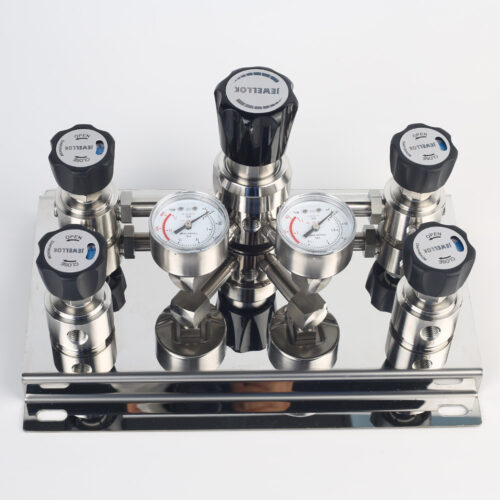
Single Stage Wall And Cabinet Mounting Pressure Control Panels JSP-2E Series For High Purity Gases
-

Engineering Ultra-High Purity Fluid Control Liquid Chemical Delivery Module (CDM) And Chemical Delivery System (CDS) for Pharmaceutical Grade Applications
-
Custom Chemical Delivery System (CDS) Engineering for Hazardous Etchants and Volatile Organic Solvent Distribution Systems
-
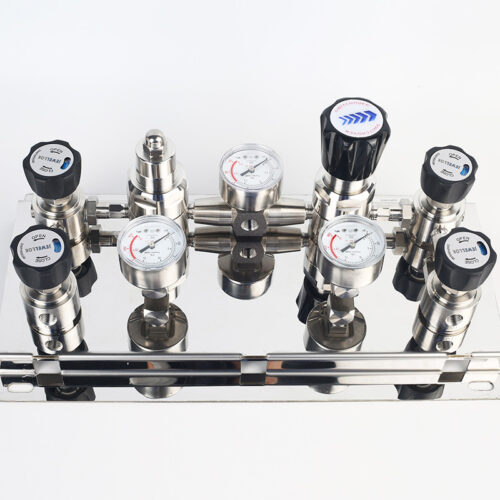
Semi Automatic Gas Changeover Manifold System Manual Changeover Manifold Panel Single Stage Automatic Switchover Board
-
UHP Metal Gasket Face Seal Fittings Vacuum Coupling Metal Face Seal Join Long Gland And Short Gland
-
High Purity High Pressure 316 Stainless Steel Ball Valves JBV1 Series From High Pressure Ball Valve Manufacturer And Supplier In China
-
Stainless Steel High Purity High Temperature Pneumatic Actuated Ball Valves JBV2 Series
-
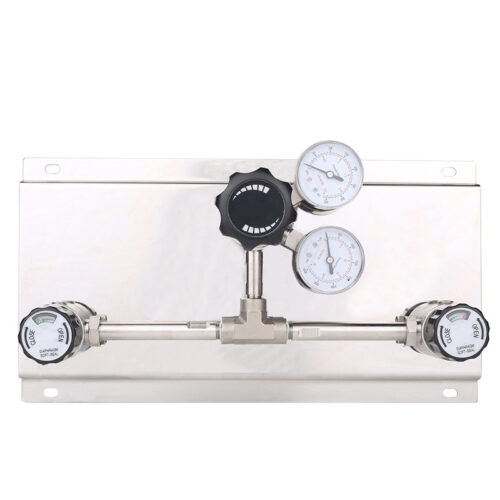
High Pressure High Flow Specialty Gas Control Panel With Diaphragm Valve , 3000Psig Oxygen Control Medical Changeover Manifold Panel