
Valves Manufacturer Tel: +86 13380377051
Xenon Gas Regulator with Full Port Valves & Electro-Polished Finish: Engineering Excellence for Critical Applications
In the realm of high-purity and specialty gas delivery, the regulation of xenon gas presents unique challenges that demand precision engineering. Xenon, a noble gas with applications spanning from medical imaging and semiconductor manufacturing to advanced propulsion and scientific research, requires handling systems that ensure utmost purity, consistent flow, and reliable performance. This article delves into the technical specifications, design philosophy, and operational advantages of a specialized xenon gas regulator incorporating two critical features: Full Port (or Full Flow) Valves and an Electro-Polished Finish. We will explore how the synergy of these elements creates a regulator that mitigates contamination, minimizes pressure drop, and delivers unparalleled control for critical xenon-based processes.
1. The Xenon Handling Imperative
Xenon is a heavyweight among noble gases, both literally and figuratively. With its high atomic mass and exceptional chemical stability, it is invaluable in applications where performance cannot be compromised. In medical settings, xenon is used as a contrast agent in advanced MRI and as an anesthetic. In the semiconductor industry, it is employed in plasma etching for next-generation chips. In aerospace, it serves as the propellant for ion thrusters in satellite station-keeping. Each of these applications shares a common demand: the xenon must be delivered from its high-pressure storage cylinder to the point of use without degradation, contamination, or fluctuation.
A standard industrial regulator is often insufficient for this task. Traditional designs can introduce turbulence, create pockets for contaminant entrapment, and contribute to pressure drops that affect process stability. The solution lies in a purpose-built regulator that addresses these pitfalls at a fundamental design level. The integration of Full Port Valves and an Electro-Polished Finish represents a holistic approach to achieving the highest standards of gas delivery integrity.
2. Core Design Feature: Full Port (Full Flow) Valves
The valve is the heart of any regulator, controlling the flow of gas from the high-pressure inlet to the regulated low-pressure outlet. In a Full Port design, this control mechanism is optimized for minimal flow restriction.
2.1. Design and Operational Principle
A Full Port valve, sometimes called a Full Bore valve, features an internal orifice and a sealing mechanism (such as a stem and seat) designed so that the internal diameter of the flow path at the point of the valve is essentially equal to the diameter of the regulator’s inlet and outlet ports. This is in stark contrast to standard or reduced-port valves, where the orifice is significantly smaller than the connecting piping.
In the context of a xenon regulator:
-
When Open: The gas encounters a smooth, uninterrupted flow path with no sudden constrictions. This is akin to a highway maintaining the same number of lanes through an interchange, as opposed to forcing traffic into a narrow toll booth.
-
Functionality: It operates typically as a stem-and-seat valve. A precision-machined stem retracts fully from a matching seat when open, creating the full-port condition. When closed, it forms a gas-tight seal, often using advanced materials like PCTFE (Kel-F) or ultra-pure elastomers compatible with xenon.
2.2. Technical Advantages for Xenon Service
-
Minimized Pressure Drop: The primary benefit is a drastic reduction in permanent pressure loss across the regulator when the valve is open. This is crucial for maintaining consistent upstream pressure to the process and for maximizing efficient use of the entire xenon cylinder content, especially important given xenon’s high cost.
-
Enhanced Flow Capacity (Cv Value): The regulator’s Flow Coefficient (Cv) is significantly higher than that of a reduced-port equivalent. This allows for higher flow rates if needed, or, more commonly for xenon, enables the same flow rate to be achieved with a finer, more controllable adjustment and less exertion on the control knob.
-
Reduced Turbulence and Particle Generation: Sudden constrictions cause turbulence, which can lead to micro-vibrations and the potential dislodgement of particulate matter from internal surfaces. The streamlined flow of a full-port design promotes laminar or transitional flow regimes, minimizing this risk.
-
Superior Cleanliness: A smooth, unobstructed path is easier to clean and purge. During evacuation and purge cycles prior to introducing xenon, the full-port design ensures no “dead legs” or hidden areas where moisture or air can be trapped.
3. Core Design Feature: Electro-Polished Finish
While the Full Port valve governs the dynamics of flow, the internal surface finish of the regulator governs the interaction between the gas and the regulator itself. For xenon, this surface interaction must be minimized, and an electro-polished finish is the gold standard for achieving this.
3.1. The Electro-Polishing Process
Electro-polishing is an electrochemical process that removes a thin layer of material from a metal surface (typically 316L or 316L VIM/VAR stainless steel in high-purity regulators). The component acts as an anode in an electrolyte bath. Controlled electrical current removes ions from the surface, preferentially dissolving microscopic peaks and asperities.
The result is not a coated surface, but an integral, ultra-smooth surface with:
-
Radically Reduced Surface Roughness (Ra): Average roughness (Ra) values can be reduced to 10 micro-inches (0.25 µm) or lower. A mirror-like finish is achieved.
-
Passivation: The process simultaneously enhances the natural chromium oxide layer on the stainless steel, improving corrosion resistance.
-
Deburring: It removes microscopic burrs and sharp edges left from machining processes.
3.2. Technical Advantages for Xenon Service
-
Minimized Adsorption and Desorption: All gases, including inert ones, can adsorb (cling) to microscopic surface imperfections. A rough surface has a vastly higher effective surface area. Electro-polishing reduces this area, minimizing the amount of xenon that can be temporarily “lost” by clinging to the regulator walls. More importantly, it prevents the regulator from acting as a “sponge” for moisture or hydrocarbons, which could later desorb and contaminate the xenon stream.
-
Elimination of Particulate Generation: A smooth surface has no loose grains or peaks to break off and become particulate contaminants. This is critical in semiconductor etching, where a single particle can ruin a microchip die.
-
Improved Cleanability and Purgability: Without microscopic pits and crevices, the regulator can be cleaned to extremely high standards (e.g., per ASTM G93 levels) and purged of all ambient gases with far greater efficiency. Moisture and other contaminants have nowhere to hide.
-
Corrosion Resistance: The enhanced passive layer provides exceptional resistance to any potential corrosive agents, ensuring long-term integrity and preventing the release of metallic ions into the gas stream.
4. Synergistic Performance in Xenon Delivery Systems
The true engineering excellence of this regulator lies in the synergy between the Full Port Valve and the Electro-Polished Finish. They address different but complementary aspects of gas handling:
-
The Flow Path: The Full Port Valve ensures the geometry of the flow path is optimal—straight, open, and unrestricted.
-
The Flow Channel Surface: The Electro-Polished Finish ensures the texture of that flow path is optimal—smooth, inert, and non-adsorptive.
This combination directly impacts key performance metrics for a xenon system:
-
Purity Retention: The gas exiting the regulator has the same purity as the gas entering it. The system adds no particulates, moisture, hydrocarbons, or other contaminants.
-
Delivery Consistency: The low pressure drop and high Cv value ensure stable outlet pressure and flow, even as inlet pressure decays from cylinder depletion. This is vital for processes like ion thruster operation or precision etching.
-
System Efficiency: Faster pump-down and purge times, less gas adsorption loss, and full cylinder utilization lead to lower operational costs and increased productivity.
-
Reliability and Longevity: The non-reactive, smooth surfaces and robust valve design reduce wear, prevent seat damage from particulates, and ensure a consistent, leak-tight seal over countless cycles.
5. Application-Specific Considerations
The value of this specialized regulator is most apparent in specific high-stakes applications:
-
Semiconductor Fabrication: In plasma etch chambers, xenon is used for its high mass and isotropic etch properties. Any contamination or flow instability can alter etch rates, critical dimensions, and yield. This regulator ensures a pristine, predictable gas feed.
-
Medical Imaging & Research: For hyperpolarized xenon MRI of lungs, the xenon must be uncontaminated to allow for polarization and safe inhalation. The electro-polished, ultra-clean interior is essential.
-
Satellite Ion Propulsion: Xenon ion thrusters require extremely precise mass flow control of expensive propellant over years of operation. The full-port design maximizes flow control fidelity and efficiency, while the polished finish prevents any outgassing in the vacuum of space.
-
Fundamental Physics Research: In particle detectors and dark matter experiments, xenon is used as a scintillation or ionization medium. Ultra-low background contamination from the gas system is paramount, making the non-adsorptive, cleanable nature of this regulator critical.
6. Selection and Specification Guidelines
When specifying a Xenon Gas Regulator with Full Port Valves and Electro-Polished Finish, engineers should consider:
-
Material: 316L Stainless Steel, with verification of low-cobalt content for semiconductor applications.
-
Surface Finish Specification: Demand a quantitative Ra value (e.g., Ra < 15 µin) and a reference to the electro-polishing standard.
-
Cleanliness: Specify a cleaning and packaging standard, such as ASTM G93 Level B or C.
-
Connection Types: Ensure CGA 580 (or appropriate high-pressure) inlet and VCJ® or Ultra-Seal™ face-seal outlets to maintain integrity throughout the system.
-
Pressure Ratings: Match the inlet rating to the xenon cylinder pressure (often up to 2000 psi / 138 bar) and select an appropriate outlet pressure range for the application.
7. Conclusion
The regulation of xenon gas is a task that transcends standard industrial gas handling. It demands a paradigm where flow efficiency and surface inertness are given equal priority. The integration of Full Port Valves and an Electro-Polished Finish into a single regulator design represents a tailored response to this challenge. By eliminating flow restrictions and creating a pristine, non-interactive internal environment, this technology safeguards the valuable properties of xenon from the cylinder to the point of use. For industries pushing the boundaries of technology—from manufacturing the most advanced microchips to propelling spacecraft and enabling cutting-edge medical diagnostics—such precision-engineered components are not merely accessories but foundational elements for success, reliability, and innovation. Investing in this level of gas handling technology is, fundamentally, an investment in the integrity and repeatability of the most critical processes that depend on the unique capabilities of xenon.
For more about xenon gas regulator with full port valves & electro-polished finish: engineering excellence for critical applications, you can pay a visit to Jewellok at https://www.jewellok.com/ for more info.
-
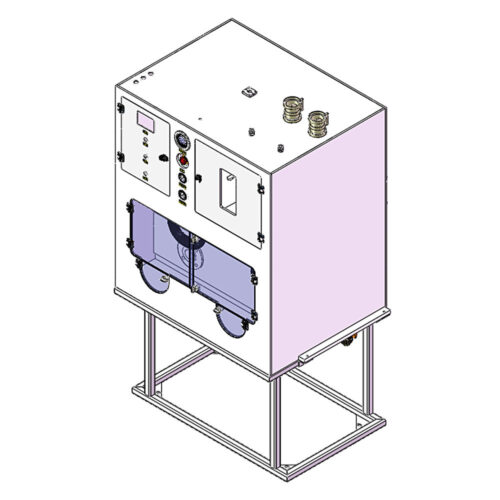
Clean Connection Cabinet JW-300-CCB Valve Manifold Box And Control Valve Box
-
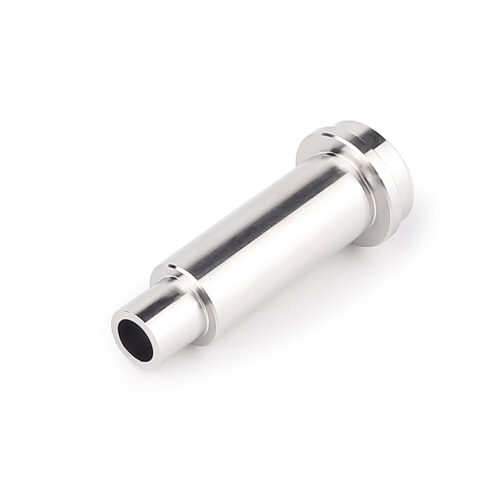
UHP Metal Gasket Face Seal Fittings Vacuum Coupling Metal Face Seal Join Long Gland And Short Gland
-
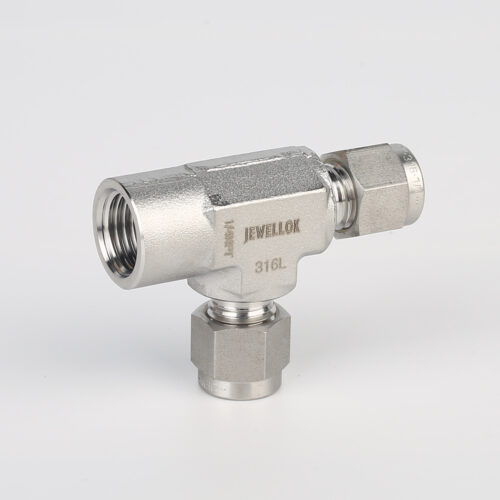
771LF Female Run Tee | Stainless Steel Tube Fitting Compression Fittings 1/4 In 3-Way Tee Female Run Tee
-
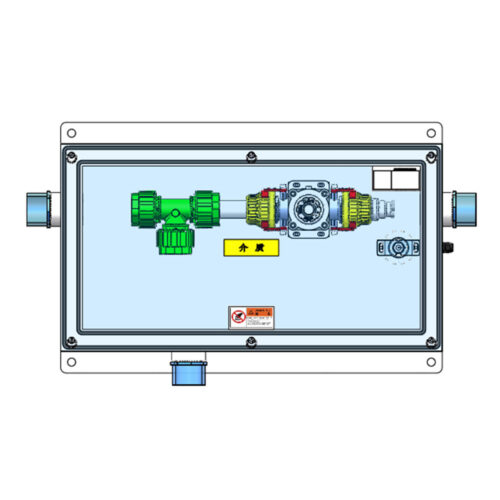
T-BOX JW-TB-C Special Gas Delivery System Gas Valve Manifold Boxes
-
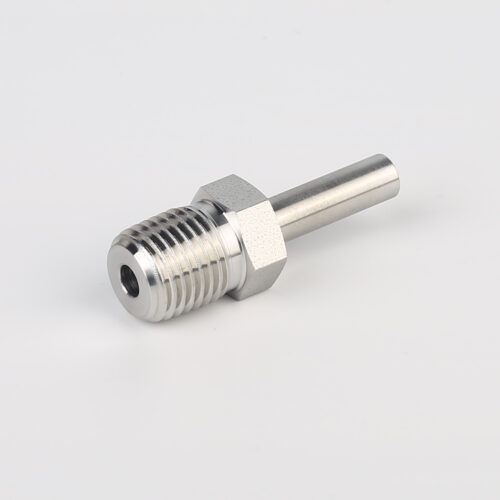
739 High Purity LMR Male Adapter Tube To Pipe Fittings And Adapters
-

BSGS Large Flow Specialty Gas Supply Cabinet 3 Cylinder Gas Storage Cabinet Fully Automated PLC Control Bulk Specialty Gas Systems (BSGS) Gas Cabinets
-

Automated Bulk Liquid Chemical Delivery System (BCDS) with PLC Controls for High-Volume Industrial Fluid Transport
-
High Purity High Pressure 316 Stainless Steel Ball Valves JBV1 Series From High Pressure Ball Valve Manufacturer And Supplier In China