
Valves Manufacturer Tel: +86 13380377051
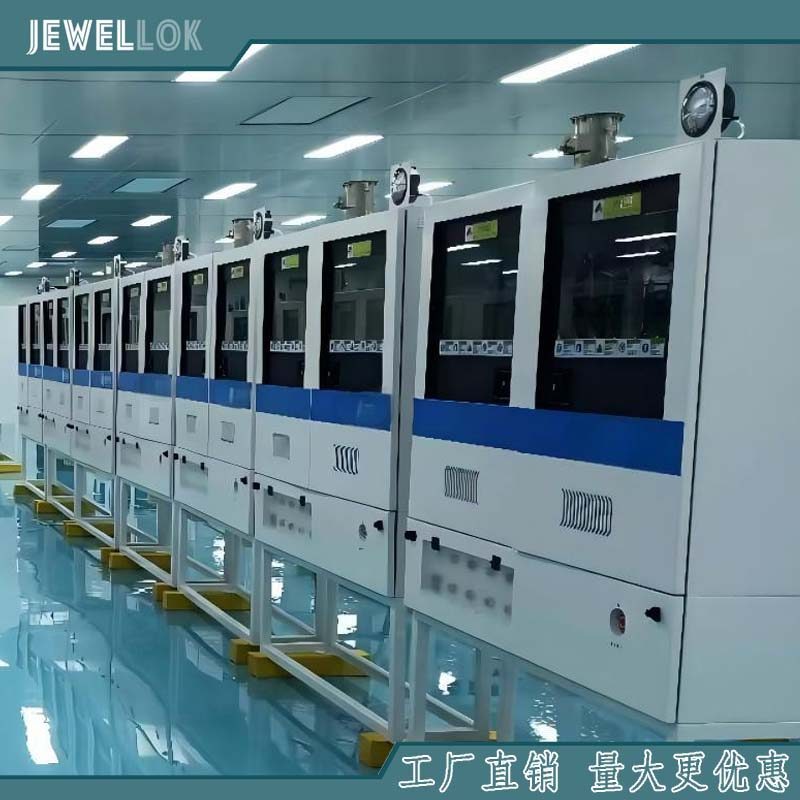
High Performance Specialty Gas Cabinet for Hazardous Gas Applications
In semiconductor manufacturing, photovoltaic production, advanced electronics, compound semiconductor fabrication, and other high-technology industries, specialty gases are essential for processes such as deposition, etching, cleaning, doping, and surface treatment. Many of these gases are toxic, corrosive, pyrophoric, oxidizing, or otherwise hazardous. As a result, the safe storage, distribution, pressure regulation, monitoring, and emergency isolation of specialty gases require highly engineered gas handling equipment.
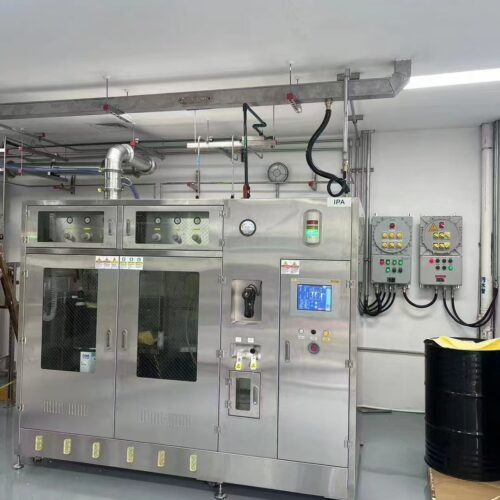
A high performance specialty gas cabinet for hazardous gas applications provides a controlled and enclosed environment for gas cylinders and associated delivery components. By integrating pressure control, automatic valve operation, gas detection, ventilation, purge functions, and safety interlocks into a single system, the gas cabinet can significantly improve process reliability while reducing risks associated with hazardous gas handling.
What Is a Specialty Gas Cabinet?
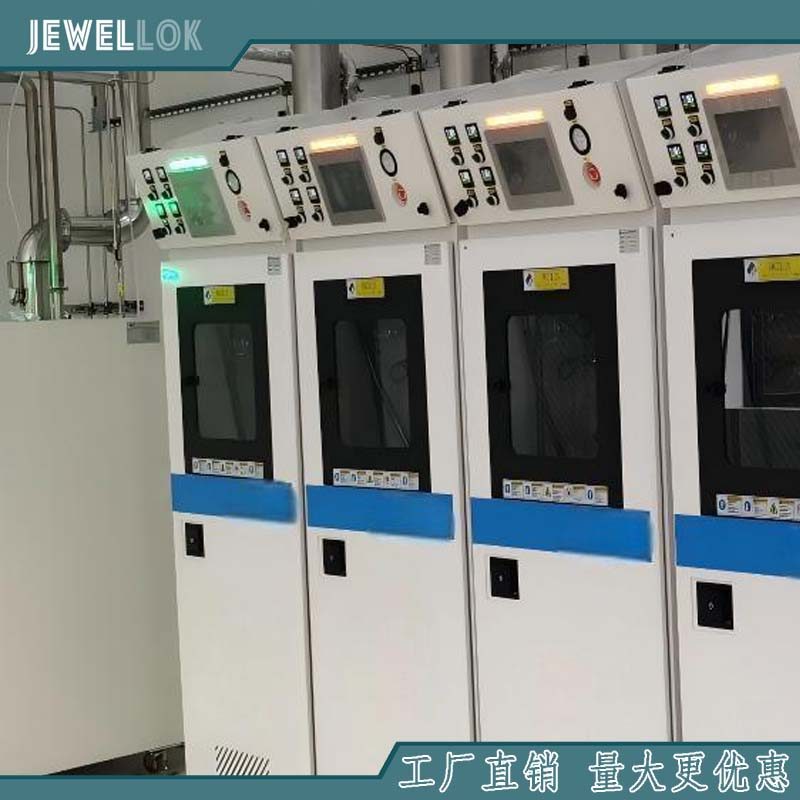
A specialty gas cabinet is an enclosed equipment system designed to house gas cylinders and control the delivery of specialty gases to manufacturing equipment. Unlike a simple gas storage enclosure, a high-performance gas cabinet integrates multiple functions, including gas pressure regulation, flow control, automatic shutoff, purge management, leak detection, exhaust ventilation, and system monitoring.
For hazardous gas applications, the cabinet normally operates as a controlled enclosure. If a leak occurs inside the cabinet, the ventilation system helps prevent uncontrolled accumulation of hazardous gas in the surrounding facility. Gas sensors and pressure monitoring devices can provide early warning, while automatic safety valves can isolate the gas supply when abnormal conditions are detected.
The cabinet can be configured for a single cylinder or multiple cylinders depending on process requirements. It may also be integrated with automatic or semi-automatic gas changeover systems to maintain continuous gas supply to production tools.
Why Hazardous Gas Applications Require High-Performance Cabinets
Specialty gases used in advanced manufacturing can present different safety challenges. Toxic gases may create serious exposure risks, corrosive gases can damage components and piping, while pyrophoric gases may react rapidly with air. Some gases also require strict control of pressure, flow rate, temperature, and contamination levels.
A high-performance gas cabinet addresses these challenges through several layers of engineering protection.
First, the gas cylinder and gas delivery components are physically enclosed. Second, controlled exhaust ventilation maintains appropriate airflow through the cabinet. Third, gas detection systems can monitor the cabinet atmosphere. Fourth, automatic valves and programmable control systems can respond to abnormal conditions. Finally, purge sequences can help remove residual process gas from selected sections of the gas delivery system.
This layered approach is particularly important in semiconductor fabs, where both personnel safety and process contamination control are critical.
Key Components of a High Performance Specialty Gas Cabinet
The performance of a specialty gas cabinet depends on the quality and compatibility of its internal components. A typical configuration may include gas cylinders, high-purity regulators, automatic valves, pneumatic valves, pressure sensors, filters, check valves, purge valves, gas detection sensors, exhaust connections, and a PLC-based control system.
1. High-Purity Gas Pressure Regulation
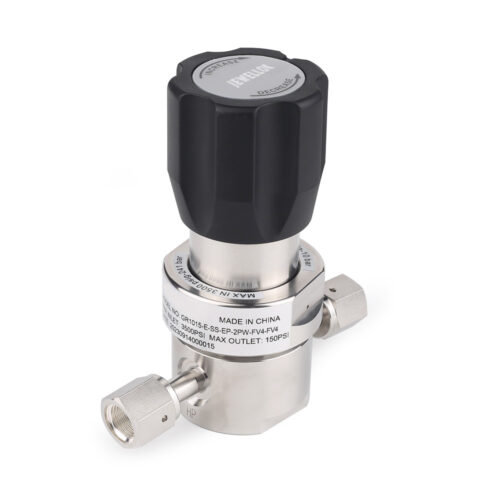
Pressure regulation is one of the most important functions in a specialty gas cabinet. The regulator reduces cylinder pressure to a controlled delivery pressure suitable for downstream equipment.
For high-purity applications, regulators should be manufactured from materials compatible with the specific gas. Stainless steel, particularly high-quality 316L stainless steel, is commonly used in high-purity gas delivery systems because of its corrosion resistance and suitability for controlled surface finishing.
The regulator design should also minimize internal dead volume and potential particle generation. Depending on the application, diaphragm-sealed regulators may be preferred because they provide strong separation between the process gas and the operating mechanism.
2. Automatic Shutoff Valves
Automatic shutoff valves provide an important layer of protection during emergency conditions. If the gas detection system identifies a hazardous gas concentration, or if the control system detects abnormal pressure or ventilation conditions, the cabinet can initiate an automatic gas isolation sequence.
Pneumatically actuated valves are frequently used in semiconductor gas delivery systems because they can be integrated into automated control architectures. Valve selection must consider gas compatibility, pressure rating, temperature range, leakage performance, cycle life, and required cleanliness.
3. Purge System
A properly designed purge system helps remove residual specialty gas from selected sections of the delivery line before cylinder replacement, maintenance, or other operations.
Inert gases such as nitrogen may be used for purging where compatible with the process and safety requirements. A controlled purge sequence can involve isolation of the process gas, introduction of purge gas, evacuation through the appropriate exhaust path, and confirmation of the required system condition.
The exact purge procedure should be determined through engineering analysis and the applicable facility safety requirements.
4. Gas Detection
Gas detection is essential for hazardous gas applications. Sensors installed in or around the cabinet can monitor for abnormal gas concentrations and provide signals to the control system.
When a detection event occurs, the system can initiate predefined safety actions such as closing automatic gas valves, activating alarms, maintaining or increasing exhaust operation, and notifying the facility monitoring system.
The type and location of gas sensors should be selected according to the properties of the gas, cabinet design, ventilation characteristics, and applicable safety standards.
5. Exhaust Ventilation
Ventilation is a fundamental feature of a hazardous gas cabinet. The cabinet should be connected to a suitable facility exhaust system capable of maintaining the required airflow.
Effective ventilation helps control the cabinet environment and directs potentially hazardous gases toward the facility’s exhaust treatment or abatement system rather than allowing them to migrate into occupied areas.
The cabinet design should therefore consider exhaust flow, pressure balance, duct configuration, access doors, airflow monitoring, and facility exhaust capacity.
PLC-Based Control and Automation
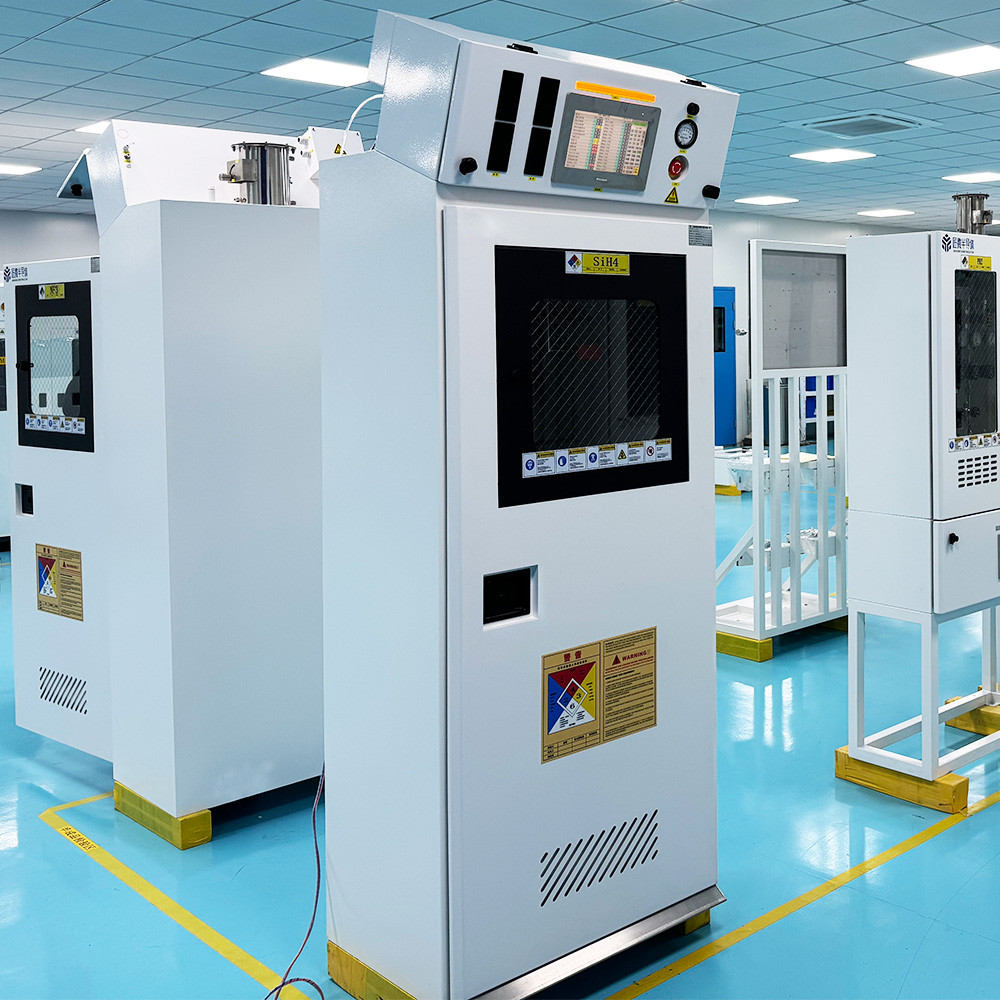
Modern specialty gas cabinets increasingly use PLC-based control systems to coordinate gas delivery and safety functions. A programmable logic controller can continuously monitor pressure sensors, gas detectors, valve status, cabinet door status, exhaust conditions, and other critical signals.
The PLC can execute predefined sequences for startup, shutdown, cylinder changeover, purge, alarm handling, and emergency isolation.
A human-machine interface (HMI) can provide operators with system status, alarm information, pressure readings, valve states, and maintenance notifications. Communication with a factory monitoring system can also allow engineers to observe gas cabinet conditions from a centralized control platform.
Automation reduces dependence on manual operation and can improve consistency between different gas cabinets across a manufacturing facility.
Material Selection for Hazardous Gas Service
Material compatibility is a critical consideration when designing a specialty gas cabinet. The internal gas-wetted components must be selected according to the chemical characteristics of the gas.
316L stainless steel is widely used for high-purity gas piping, valves, regulators, and fittings. Depending on the application, manufacturers may specify electropolished surfaces and controlled internal roughness to reduce particle generation and improve cleanability.
For corrosive gases, material compatibility must be evaluated carefully. Elastomers, seals, valve seats, regulators, tubing, and other components can have different resistance characteristics. Selecting materials solely based on general corrosion resistance is not sufficient; compatibility should be evaluated against the specific gas, pressure, temperature, concentration, and operating conditions.
High-Purity Piping and Connection Technology
The gas cabinet’s piping system directly influences gas purity and system reliability. High-purity applications typically require carefully controlled tubing, orbital welding where appropriate, and reliable high-integrity connections.
VCR-type connections are commonly used in high-purity gas systems where removable connections are required. Proper installation, cleaning, inspection, and leak testing are essential to maintain system integrity.
The internal configuration should also minimize unnecessary bends, dead legs, and unused branches. Good piping design helps reduce contamination risks and improves purge efficiency.
Safety Interlocks and Emergency Functions
A high-performance hazardous gas cabinet should incorporate multiple safety interlocks rather than relying on a single protection mechanism.
Typical interlock conditions may include:
- Hazardous gas detection
- Loss of cabinet exhaust
- Abnormal cylinder or line pressure
- Cabinet door status
- Valve position feedback
- Loss of control power
- Emergency stop activation
- Abnormal purge conditions
When a critical fault occurs, the control system can place the cabinet into a predefined safe state. The exact response should be established through a documented hazard analysis and facility safety design.
Emergency shutdown systems should be designed so that operators can quickly understand the cabinet condition and identify the appropriate response.
Leak Testing and Quality Control
Leak integrity is particularly important for hazardous specialty gas systems. Even a small leak can create a significant safety concern depending on the toxicity, reactivity, or physical properties of the gas.
Before shipment and commissioning, gas cabinets may undergo pressure testing, leak testing, functional testing, valve verification, sensor testing, and control-system validation.
For high-purity applications, manufacturers should also establish controlled cleaning and assembly procedures to minimize particles, moisture, hydrocarbons, and other contaminants.
Documentation is another important part of quality control. A professional supplier should be able to provide relevant drawings, component specifications, test records, operating instructions, and maintenance information according to the project requirements.
Applications Across Advanced Manufacturing
High-performance specialty gas cabinets are widely applicable to industries where hazardous or high-purity gases are required.
In semiconductor manufacturing, they can support processes involving deposition, etching, ion implantation, chamber cleaning, and other wafer fabrication operations. In compound semiconductor manufacturing, gas cabinets may be used for processes involving specialized gases required for materials such as gallium nitride and related semiconductor structures.
Other applications include photovoltaic manufacturing, LED production, display manufacturing, research laboratories, and advanced material processing.
For each application, the cabinet configuration should be customized according to the gas type, number of cylinders, required delivery pressure, flow requirements, process sequence, facility exhaust system, and applicable regulations.
How to Select the Right Specialty Gas Cabinet
When selecting a specialty gas cabinet, buyers should evaluate more than the cabinet’s external dimensions or number of cylinders.
Important considerations include gas compatibility, maximum cylinder pressure, delivery pressure, required flow rate, valve and regulator specifications, gas detection requirements, exhaust capacity, purge configuration, control architecture, communication protocols, and maintenance accessibility.
The supplier’s engineering capability is equally important. A customized gas cabinet requires coordination between mechanical design, process piping, instrumentation, electrical control, safety engineering, and facility interfaces.
For semiconductor and other high-purity applications, the supplier should also understand contamination control and the requirements associated with UHP gas delivery.
Conclusion
A High Performance Specialty Gas Cabinet for Hazardous Gas Applications is more than a cylinder enclosure. It is an integrated safety and gas delivery platform combining high-purity components, pressure control, automatic valves, purge systems, gas detection, exhaust ventilation, PLC automation, and safety interlocks.
A well-engineered cabinet can help manufacturers achieve reliable specialty gas delivery while improving operational control and reducing potential risks associated with hazardous gases. The most effective solution is one designed around the actual gas characteristics, process requirements, facility infrastructure, and applicable safety standards.
For semiconductor fabs, advanced electronics facilities, photovoltaic manufacturers, and research environments, investing in a properly engineered specialty gas cabinet can provide an important foundation for safe, stable, and repeatable gas delivery. With the combination of high-quality 316L stainless steel components, reliable valve technology, intelligent PLC control, effective gas detection, and professional engineering, modern gas cabinets can meet the demanding requirements of today’s advanced manufacturing processes.
For more about high performance specialty gas cabinet for hazardous gas applications, you can pay a visit to Jewellok at https://www.jewellok.com/ for more info.
-
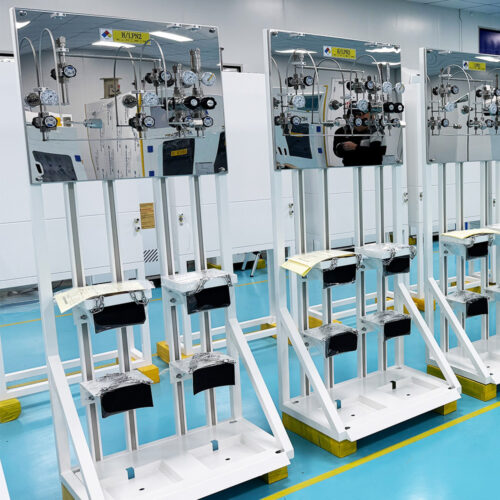
Semi-Automatic VMB Gas Cabinet With Semiconductor Valve Manifold Box Diaphragm Valves And Gas Pressure Regulators
-
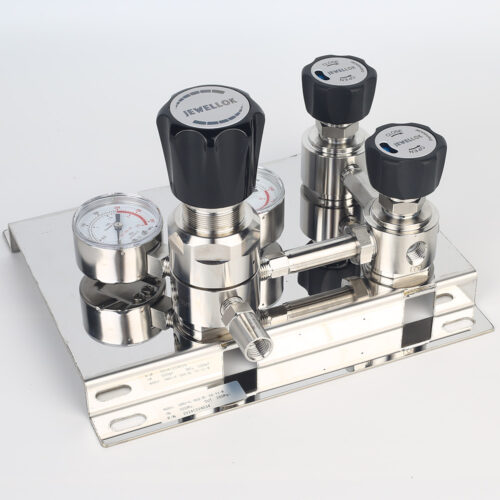
Stainless Steel 316L Single Stage Regulator Pressure Control Panels JSP-1E Series For Semiconductor Fluid Control
-
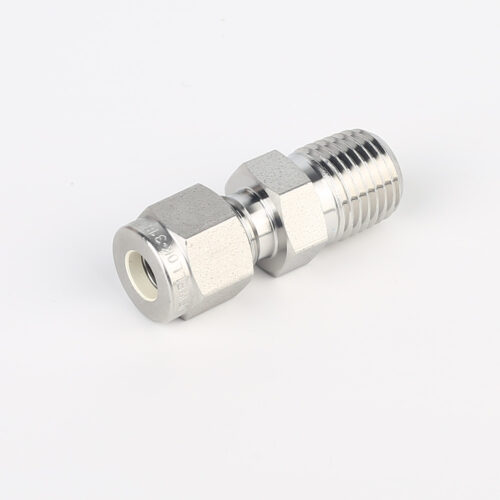
768L Stainless Steel Male Tube Butt Weld Connector | Clean Weld Fittings And Ultra-High Purity Fittings
-
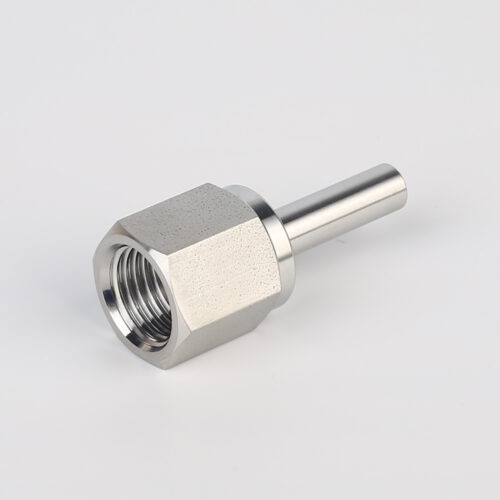
739LF High Purity Female Adapter Tube To Pipe Fittings And Connectors
-
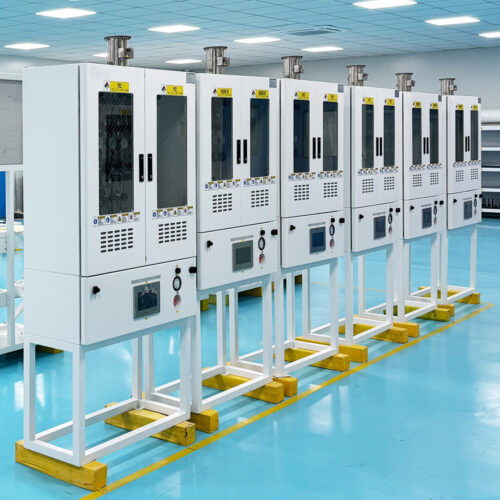
Ultra-High Purity Chemical Delivery Module (CDM) and Valve Manifold Box Integration Improving Semiconductor Yield
-

UHP Liquid Chemical Delivery System (CDS) Implementation for High-Volume Photovoltaic and Renewable Energy Component Production Lines
-
Precision Liquid Chemical Delivery Module (CDM) with PLC Control for Parts-Per-Trillion Purity in Solar Cell Production
-
JR1000 Series UHP Ultra High Purity Single Stage Pressure Reducing Regulator And Low To Intermediate Flow