
Valves Manufacturer Tel: +86 13380377051
In-Depth Discussion: Toxic Gas Scrubbing Equipment Technology and Applications
The release of toxic gas scrubbing equipments into the atmosphere poses significant risks to human health, environmental stability, and industrial compliance. As global regulations tighten and industrial processes become more complex, the demand for efficient, reliable, and robust gas scrubbing technologies has never been higher. This article provides a comprehensive technical overview of toxic gas scrubbing equipment, delving into the fundamental principles of mass transfer, the primary types of scrubbers—including packed bed, venturi, and carbon adsorption systems—and the critical chemical and mechanical design considerations that define their performance. Furthermore, we explore emerging trends in smart monitoring and advanced materials that are shaping the future of emissions control.
1. The Imperative for Gas Scrubbing
From chemical manufacturing and semiconductor fabrication to wastewater treatment and pharmaceutical production, toxic and hazardous gases are often unavoidable byproducts. Gases such as ammonia (NH₃), chlorine (Cl₂), hydrogen chloride (HCl), sulfur dioxide (SO₂), and volatile organic compounds (VOCs) require stringent abatement before exhaust streams can be safely released.
Gas scrubbing, or air pollution control, is the process of removing these harmful constituents from an industrial gas stream. While the specific chemistry varies depending on the target contaminant, the underlying principle remains the same: bringing the gas phase into intimate contact with a liquid or solid sorbent to facilitate mass transfer. This article offers an in-depth look at the engineering and technology that make this possible.
2. Core Principles: The Fundamentals of Mass Transfer
At its heart, a gas scrubber is a mass transfer device. The efficiency of this transfer is governed by principles outlined in the Two-Film Theory. According to this theory, resistance to mass transfer exists in a thin gas film and a thin liquid film at the gas-liquid interface. For a gas molecule to be captured, it must diffuse through the gas film, cross the interface, and then be absorbed into the bulk liquid.
The driving force for this process is the concentration gradient. The rate of absorption can be enhanced by:
-
Increasing Interfacial Surface Area: Creating more contact points between the gas and liquid.
-
Increasing Turbulence: Reducing the thickness of the stagnant films.
-
Maintaining a High Concentration Gradient: This is often achieved chemically by neutralizing the absorbed gas in the liquid phase, effectively reducing its partial pressure at the interface to zero and maximizing the driving force.
3. Primary Scrubbing Technologies: A Technical Breakdown
The selection of a scrubbing technology depends on several factors, including the chemical properties of the contaminant, its concentration, the gas flow rate, and the physical form of the pollutant (gas or particulate).
3.1. Packed Bed Scrubbers (Countercurrent Flow)
The packed bed scrubber is the workhorse of the chemical industry for treating soluble or reactive gases.
-
Design and Mechanism: The unit consists of an empty vertical column filled with a “packing” material—randomly dumped structures (like Pall rings or saddles) or structured grids. Contaminated gas enters at the bottom and rises upward. Simultaneously, a scrubbing liquid is sprayed from the top and trickles down over the packing, creating a thin, wetted film across a massive surface area.
-
Mass Transfer Dynamics: This countercurrent flow maximizes the concentration gradient. The “cleanest” gas at the top meets the “freshest” liquid, ensuring the lowest possible outlet concentration.
-
Packing Media: The choice of packing is critical. Modern plastic (PP, PVDF), metal, or ceramic packings are designed to offer high void fractions (to minimize pressure drop) and high specific surface area (to maximize contact).
-
Applications: Ideal for HCl, NH₃, and SO₂ removal where the gas is soluble in water or a weak chemical solution.
3.2. Venturi Scrubbers
When dealing with particulate-laden gas streams or highly soluble gases, the Venturi scrubber offers a unique advantage: it can perform simultaneous gas absorption and particulate removal.
-
Design and Mechanism: The gas stream is forced to accelerate through a constricted “throat” section. Scrubbing liquid is injected either at the throat or just before it. The high-velocity gas (often reaching 60-150 m/s) atomizes the liquid into millions of tiny droplets.
-
Mass Transfer Dynamics: The intense turbulence and high relative velocity between the gas and the droplets create an enormous surface area for mass transfer. The energy required for this atomization comes from the gas stream itself, resulting in a high pressure drop (typically 10-100 inches of water gauge).
-
Applications: Particularly effective for fly ash from incinerators, fumes from smelting operations, and highly reactive gases like HF (hydrogen fluoride).
3.3. Dry Scrubbers (Adsorption Systems)
For gases that are poorly soluble in water or where liquid effluent is a concern, dry scrubbing using adsorption is the preferred method.
-
Design and Mechanism: These systems utilize solid media with high internal porosity, such as Activated Carbon, impregnated alumina, or zeolites. As the gas stream passes through a fixed bed of this media, the toxic gas molecules adhere to the surface via physisorption (Van der Waals forces) or chemisorption (chemical reaction with the media).
-
Media Considerations: Standard activated carbon is excellent for VOCs. For acid gases (Cl₂, SO₂, HCl), the carbon or alumina is often impregnated with chemicals like potassium hydroxide (KOH) or sodium hydroxide (NaOH) to neutralize the acid upon contact, preventing re-release.
-
Applications: Widely used in semiconductor cleanrooms, laboratory exhaust, and for odor control where low concentration, high-efficiency removal is required.
3.4. Wet Scrubbing Chemistry: The Role of Reagents
The efficiency of a wet scrubber is heavily dependent on the chemistry of the liquid phase. While water alone can handle highly soluble gases (like HCl), most applications require a chemical reaction.
-
Acid Gas Neutralization: For gases like Cl₂, SO₂, or H₂S, an alkaline scrubbing solution (typically NaOH or Ca(OH)₂ slurry) is used. The acid gas dissolves and reacts to form a neutral salt, such as sodium chloride or sodium sulfate. This reaction consumes the gas as soon as it enters the liquid, maintaining a zero partial pressure and a high absorption rate.
-
Base Gas Absorption: For alkaline gases like ammonia (NH₃), an acidic solution (sulfuric or phosphoric acid) is used to form ammonium sulfate or phosphate, which can sometimes be recovered as a valuable byproduct.
-
Oxidation/Reduction: Some gases, like chlorine, can be reacted with a reducing agent like sodium bisulfite or sodium thiosulfate to convert them into harmless chloride ions.
4. Critical Mechanical Design Considerations
Beyond the core chemistry, the mechanical integrity and design of the equipment are paramount for safety and longevity.
4.1. Material Selection
Handling corrosive acids and bases at elevated temperatures demands careful material selection.
-
Thermoplastics: Polypropylene (PP) and Polyvinylidene fluoride (PVDF) are common for lower temperatures (up to 80°C and 140°C respectively) due to their excellent chemical resistance.
-
Fiber-Reinforced Plastic (FRP): Often used for larger vessels, FRP offers a good balance of structural strength and corrosion resistance.
-
Stainless Steel: Grades like 316L are used for specific chemistries, but they are vulnerable to chlorides.
-
Exotic Metals: For extreme conditions, materials like Hastelloy or Titanium are employed, though at a significant cost premium.
4.2. Mist Elimination
A scrubber that cleans the gas but then allows liquid droplets (containing the contaminant) to be carried out of the stack has failed in its duty. Mist eliminators, or demisters, are critical components.
-
Chevron Blades: Forced the gas to change direction rapidly; the momentum of the droplets causes them to impact the blades and drain back into the sump.
-
Mesh Pads: Woven wire or plastic mesh provides a large surface area for droplet coalescence.
-
Candle Filters: High-efficiency depth filters used for the finest sub-micron mists.
4.3. Liquid Distribution and Redistribution
Ensuring the packing media is fully wetted is essential. Poor liquid distribution leads to “dry spots” or channeling, where gas bypasses the liquid contact and escapes untreated. Scrubbers often include:
-
Spray Nozzles: Designed to provide uniform coverage.
-
Liquid Redistributors: Located at intervals in tall columns to collect liquid migrating toward the wall and re-distribute it over the packing below.
5. A Step-by-Step Design Methodology
Designing a scrubber is an iterative process that balances performance against cost. The typical methodology is as follows:
-
Characterization of Inlet Stream:
-
Volumetric flow rate (ACFM – Actual Cubic Feet per Minute).
-
Temperature and pressure.
-
Concentration and identity of contaminants.
-
Presence of particulates.
-
-
Thermodynamic and Kinetic Analysis:
-
Determine solubility of the gas in the candidate scrubbing liquid (using Henry’s Law).
-
Establish the chemical reaction kinetics.
-
Generate an equilibrium curve for the system.
-
-
Mass Balance and Liquid-to-Gas Ratio (L/G):
-
Determine the minimum liquid flow rate required to absorb the contaminant.
-
Select an operating L/G ratio (typically 1.5 to 3 times the minimum) to provide a safety margin.
-
-
Column Sizing and Packing Depth:
-
Use the Height of a Transfer Unit (HTU) and Number of Transfer Units (NTU) method, or the Height Equivalent to a Theoretical Plate (HETP) method.
-
Calculate the required packing depth to achieve the desired removal efficiency (e.g., 99.9%).
-
-
Hydraulic Analysis:
-
Calculate the pressure drop through the system.
-
Determine the column diameter to avoid flooding (where the upward gas flow prevents liquid from draining down) at the chosen L/G ratio.
-
6. Advanced Features and Future Trends
The field of toxic gas scrubbing equipment is evolving rapidly, driven by Industry 4.0 and stricter environmental standards.
6.1. Smart Monitoring and Control (IoT)
Modern scrubbers are becoming “smart.” Online pH and ORP (Oxidation-Reduction Potential) sensors continuously monitor the scrubbing liquor’s strength, automatically dosing fresh reagent as needed. Gas-specific sensors at the inlet and outlet provide real-time efficiency data. This IoT integration allows for predictive maintenance, alerting operators to pressure drop increases (indicating clogged packing) or chemical feed pump failures before a breakthrough event occurs.
6.2. Advanced Media
Research into novel sorbents is ongoing. Metal-Organic Frameworks (MOFs) offer extraordinarily high surface areas and tunable pore sizes for capturing specific molecules at low concentrations. Similarly, the development of structured packing with micro-channel geometries promises even higher efficiency with lower pressure drops than current designs.
6.3. Energy Optimization
Traditionally, scrubbers, especially Venturi types, are energy-intensive. New designs focus on recovering energy from the exhaust stream or using low-pressure-drop packing to reduce fan horsepower requirements. In some cases, the heat of reaction from neutralization is being captured and reused in plant processes, turning a waste treatment system into an energy asset.
7. Conclusion
Toxic gas scrubbing equipment technology is a mature yet continuously advancing field that sits at the critical intersection of industrial productivity and environmental stewardship. From the robust simplicity of a packed bed column to the intense energy of a Venturi scrubber and the precision of a carbon adsorber, these systems are marvels of chemical and mechanical engineering.
Effective scrubbing is not merely about passing gas through a box of water; it is a sophisticated dance of fluid dynamics, thermodynamics, and chemistry. As industries face the dual pressures of increasing production and decreasing emission limits, the reliance on intelligently designed, chemically optimized, and digitally monitored scrubbing systems will only intensify. The future of clean air lies in our ability to innovate within these technologies, ensuring that industrial progress does not come at the expense of our atmosphere.
For more about in-depth discussion: toxic gas scrubbing equipment technology and applications, you can pay a visit to Jewellok at https://www.jewellok.com/ for more info.
-
763L Stainless Steel High Purity Pressure Reducing Union Fittings And Tubing Pressure Reducing Valve Adjustment
-
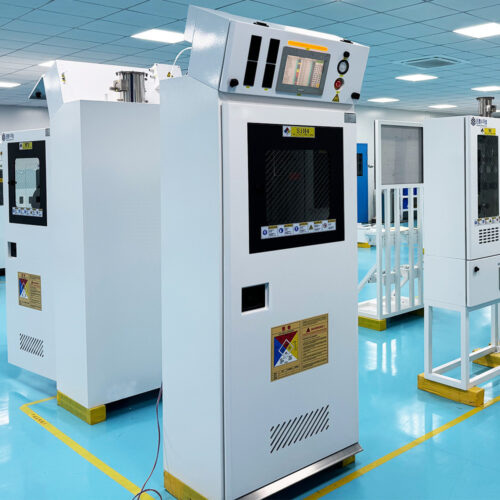
BSGS Large Flow Specialty Gas Supply Cabinet 3 Cylinder Gas Storage Cabinet Fully Automated PLC Control Bulk Specialty Gas Systems (BSGS) Gas Cabinets
-
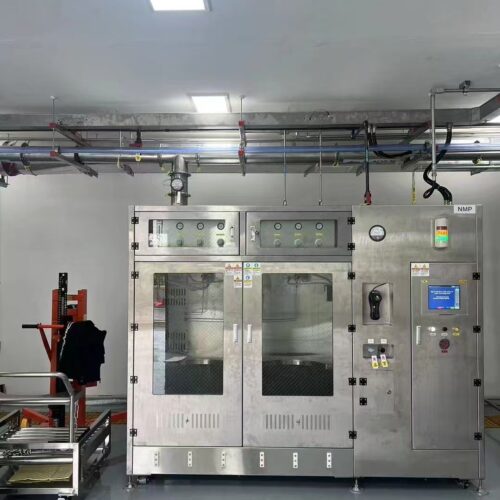
UHP Bulk Liquid Chemical Delivery System (BCDS) Implementation for High-Efficiency Photovoltaic and Solar Cell Production Lines
-
768L Stainless Steel Male Tube Butt Weld Connector | Clean Weld Fittings And Ultra-High Purity Fittings
-

Automated Bulk Liquid Chemical Delivery System (BCDS) with PLC Controls for High-Volume Industrial Fluid Transport
-
Ultra High Purity Trimethylaluminum TMA Gas Cabinet Liquid Delivering Cabinet Used For Specialty Gas Delivery System In Semiconductor
-
Stainless Steel High Pressure Specialty Gas Changeover Manifold For High Purity Oxygen Nitrogen Argon Helium Hydrogen Co2
-
JR1300 Series Ultra High Purity Single Stage Regulator High Flow Line Regulator For Ultra High Purity Intermediate Flow