
Valves Manufacturer Tel: +86 13380377051

Gas Treatment Systems for Semiconductor Exhaust Gas Treatment: Advanced Solutions for Safe and Efficient Semiconductor Manufacturing
Introduction
The semiconductor manufacturing industry relies on highly complex fabrication processes that use a wide range of specialty gases, chemicals, and advanced materials. During processes such as etching, chemical vapor deposition (CVD), atomic layer deposition (ALD), ion implantation, and cleaning, hazardous by-products and toxic exhaust gases are generated. These gases may contain corrosive, flammable, toxic, and environmentally harmful components, including fluorinated compounds (F-gases), acid gases, volatile organic compounds (VOCs), and metal-containing particles.
To ensure safe fab operation, environmental compliance, and reliable production performance, semiconductor manufacturers require advanced gas treatment systems for exhaust gas treatment. These systems are designed to capture, neutralize, decompose, and remove harmful gases before they are released into the atmosphere. A high-performance semiconductor exhaust gas treatment system plays a critical role in protecting workers, maintaining cleanroom safety, reducing environmental impact, and improving semiconductor process reliability.
With increasing demand for advanced semiconductor devices, smaller process nodes, and stricter environmental regulations, next-generation gas treatment technologies are becoming essential equipment for modern semiconductor fabrication facilities.
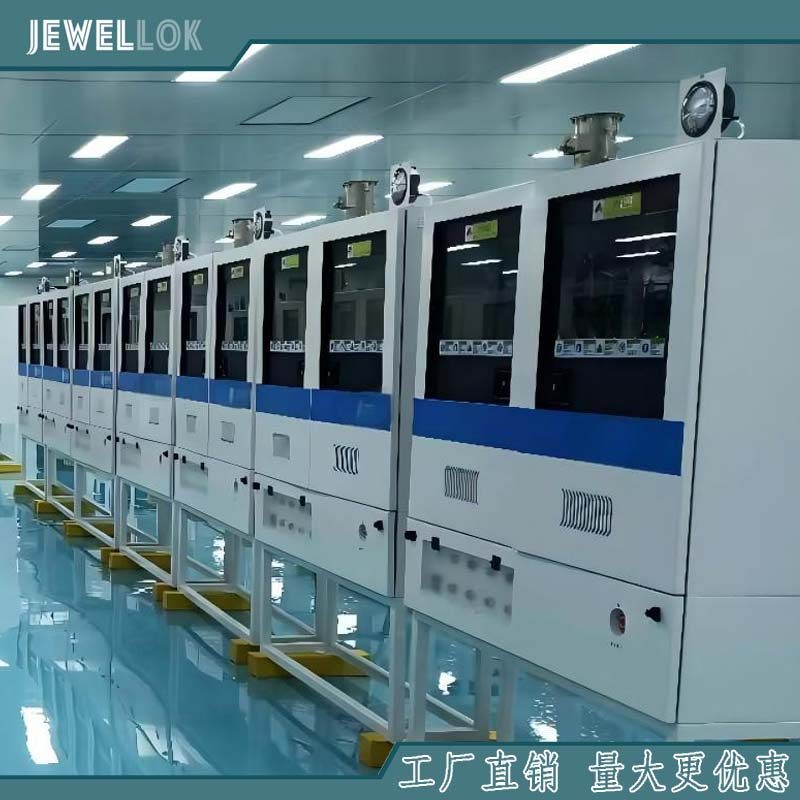
What Is a Gas Treatment System for Semiconductor Exhaust Gas?
A semiconductor exhaust gas treatment system is an advanced pollution control solution designed to treat hazardous gases generated from semiconductor manufacturing equipment. It is typically installed between process tools and the factory exhaust system to remove harmful substances before discharge.
During semiconductor processes, gases such as nitrogen trifluoride (NF₃), sulfur hexafluoride (SF₆), silicon tetrafluoride (SiF₄), chlorine compounds, ammonia (NH₃), hydrogen chloride (HCl), and various solvent vapors may enter the exhaust stream.
A complete gas treatment system generally consists of:
- Exhaust gas collection systems
- Gas dilution and mixing units
- Scrubber chambers
- Chemical neutralization systems
- Thermal oxidation units
- Plasma abatement systems
- Filtration modules
- Monitoring and control systems
The system must operate continuously with high reliability because semiconductor fabs require 24/7 production environments. Any failure in exhaust gas treatment can result in equipment damage, production interruption, safety risks, and regulatory issues.
Importance of Exhaust Gas Treatment in Semiconductor Manufacturing
1. Protecting Cleanroom Safety
Semiconductor manufacturing uses many hazardous gases that require strict control. Even small leaks or insufficient treatment can create serious safety concerns.
Gas treatment systems help:
- Remove toxic gas components
- Prevent hazardous chemical accumulation
- Reduce exposure risks for operators
- Maintain safe cleanroom conditions
Advanced monitoring systems can continuously detect gas concentration, pressure changes, temperature variations, and abnormal operating conditions.
2. Environmental Protection and Regulatory Compliance
Many semiconductor process gases have a high global warming potential (GWP). Fluorinated gases commonly used in plasma etching and chamber cleaning contribute significantly to greenhouse gas emissions if released untreated.
Modern semiconductor exhaust treatment systems help manufacturers:
- Reduce greenhouse gas emissions
- Destroy harmful chemical compounds
- Meet environmental regulations
- Improve sustainability performance
As governments worldwide continue to introduce stricter emission standards, semiconductor companies are investing heavily in more efficient abatement technologies.
3. Improving Semiconductor Process Reliability
Contaminated exhaust gases can negatively affect semiconductor production equipment. Residues from chemical reactions may accumulate inside exhaust pipelines, pumps, and vacuum systems.
Effective gas treatment helps:
- Reduce particle contamination
- Protect vacuum equipment
- Extend equipment lifetime
- Maintain stable process conditions
This is particularly important for advanced semiconductor manufacturing, where contamination control is critical for achieving high wafer yields.
Main Types of Semiconductor Exhaust Gas Treatment Technologies
Different semiconductor processes generate different exhaust compositions. Therefore, gas treatment systems must be customized according to specific gas characteristics.
1. Wet Scrubber Systems
Wet scrubbers are one of the most widely used technologies for semiconductor exhaust gas treatment.
The basic working principle involves contacting exhaust gases with liquid chemicals or water solutions. Pollutants are absorbed, dissolved, or chemically neutralized in the scrubbing liquid.
Typical applications include:
- Acid gas removal
- Chlorine compound treatment
- Ammonia removal
- Water-soluble chemical treatment
Advantages of wet scrubber systems include:
- High removal efficiency
- Continuous operation capability
- Suitable for corrosive gases
- Flexible chemical selection
For semiconductor fabs, high-performance wet scrubbers often use corrosion-resistant materials such as stainless steel, PTFE, PVDF, and specialized coatings to ensure long service life.
2. Thermal Oxidation Systems
Thermal oxidation technology uses high temperatures to break down hazardous gases into less harmful compounds.
During operation, combustible gases are oxidized in a controlled combustion chamber.
Thermal oxidizers are commonly used for:
- VOC treatment
- Organic solvent destruction
- Carbon-based compound removal
Benefits include:
- High destruction efficiency
- Stable operation
- Suitable for high-concentration gases
However, thermal systems require careful energy management because high operating temperatures increase power consumption.
3. Plasma Abatement Systems
Plasma abatement technology has become increasingly important for advanced semiconductor manufacturing.
A plasma reactor generates high-energy particles that break down stable chemical molecules into simpler compounds.
Applications include:
- NF₃ removal
- CF₄ treatment
- SF₆ decomposition
- Advanced etching gas treatment
Advantages:
- High removal efficiency
- Lower fuel consumption compared with thermal methods
- Suitable for advanced process gases
Plasma systems are especially valuable for next-generation semiconductor fabs using advanced etching and deposition technologies.
4. Dry Scrubber Systems
Dry scrubbers use solid chemical materials to capture and neutralize hazardous gases without liquid waste generation.
They are commonly used for:
- Specialty gas cabinets
- Toxic gas delivery systems
- Small-volume semiconductor processes
Advantages:
- No wastewater generation
- Compact design
- Easy installation
- Low maintenance requirements
Dry scrubbers are often integrated with gas delivery systems where space limitations exist.
Key Components of a Semiconductor Gas Treatment System
A reliable semiconductor exhaust gas treatment system requires high-quality components designed for demanding industrial environments.
Gas Detection and Monitoring System
Real-time monitoring is essential for safe operation.
Typical sensors measure:
- Gas concentration
- Pressure
- Temperature
- Flow rate
- System status
Advanced monitoring platforms can provide automatic alarms and shutdown functions when abnormal conditions occur.
Corrosion-Resistant Piping Systems
Because semiconductor exhaust gases are highly corrosive, the piping system must provide excellent chemical resistance.
Common materials include:
- High-purity stainless steel
- PTFE-lined piping
- PVDF components
- Specialty alloys
Proper material selection prevents corrosion, particle generation, and system contamination.
Automated Control System
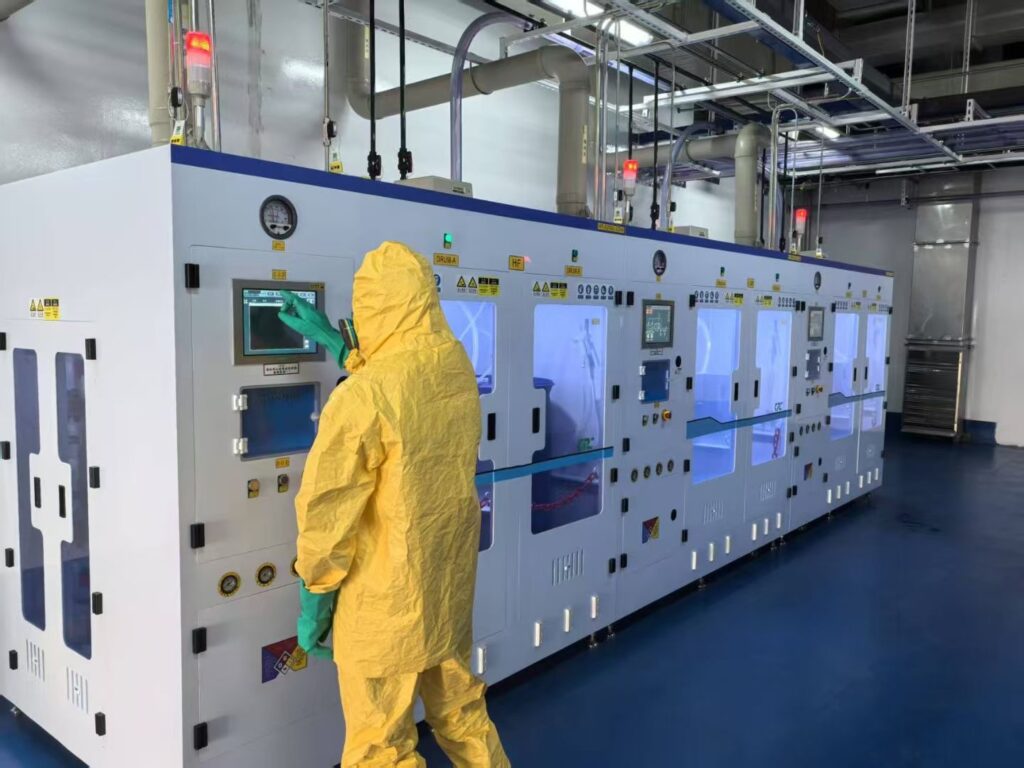
Modern gas treatment systems use PLC-based automation technology to improve operational stability.
Control functions include:
- Automatic startup and shutdown
- Gas flow adjustment
- Temperature control
- Chemical dosing control
- Remote monitoring
Automation reduces human intervention and improves overall system reliability.
Challenges in Semiconductor Exhaust Gas Treatment
Increasing Process Complexity
As semiconductor technology advances toward smaller nodes, manufacturing processes become more complicated.
New materials and advanced processes generate more diverse exhaust compositions, requiring more flexible treatment solutions.
Reducing Energy Consumption
Traditional thermal treatment systems may consume significant energy.
Future gas treatment technologies must focus on:
- Lower power consumption
- Improved heat recovery
- Higher destruction efficiency
- Sustainable operation
Handling New Generation Process Gases
Future semiconductor technologies may introduce new chemical materials and gases.
Gas treatment suppliers must continuously develop:
- Advanced plasma technologies
- Intelligent monitoring systems
- Improved chemical neutralization methods
Future Development Trends of Semiconductor Gas Treatment Systems
1. Intelligent Gas Treatment Systems
Artificial intelligence and industrial IoT technologies are transforming exhaust treatment equipment.
Future systems will include:
- Predictive maintenance
- Real-time performance optimization
- Data-based operation analysis
- Remote equipment management
Smart systems can reduce downtime and improve operational efficiency.
2. Modular and Customized Designs
Semiconductor fabs have different process requirements, so customized gas treatment solutions are becoming increasingly important.
Modular systems provide:
- Faster installation
- Easier expansion
- Flexible configuration
- Reduced maintenance costs
3. Higher Environmental Performance
Environmental sustainability will remain a major focus.
Future systems will aim to achieve:
- Higher gas destruction rates
- Lower emissions
- Reduced wastewater generation
- Lower energy consumption
Semiconductor manufacturers are increasingly selecting suppliers that provide environmentally responsible technologies.
Choosing the Right Semiconductor Exhaust Gas Treatment System Supplier
Selecting a reliable gas treatment system manufacturer is critical for semiconductor production success.
Important evaluation factors include:
Technical Expertise
A qualified supplier should understand:
- Semiconductor processes
- Specialty gases
- Chemical reactions
- Cleanroom requirements
Custom Engineering Capability
Different semiconductor applications require different treatment technologies. A professional supplier should provide customized solutions based on:
- Gas composition
- Flow rate
- Process conditions
- Factory requirements
System Reliability and Support
Because semiconductor fabs operate continuously, suppliers should provide:
- High-quality components
- Factory testing
- Installation support
- Maintenance services
- Long-term technical assistance
Conclusion
Gas treatment systems for semiconductor exhaust gas treatment are essential technologies for modern semiconductor manufacturing. As semiconductor processes become more advanced, the demand for efficient, reliable, and environmentally friendly exhaust treatment solutions continues to grow.
Advanced technologies including wet scrubbers, plasma abatement systems, thermal oxidation units, and intelligent control platforms enable semiconductor manufacturers to safely manage hazardous gases while improving production efficiency and environmental performance.
The future of semiconductor gas treatment will focus on higher removal efficiency, lower energy consumption, intelligent operation, and customized solutions. Companies investing in advanced exhaust gas treatment technologies will be better positioned to meet increasingly strict environmental standards and support the next generation of semiconductor innovation.
For more about gas treatment systems for semiconductor exhaust gas treatment: advanced solutions for safe and efficient semiconductor manufacturing, you can pay a visit to Jewellok at https://www.jewellok.com/ for more info.
-

Managing Hazardous Chemicals with a Custom Bulk Liquid Chemical Delivery System (BCDS) in Pharmaceutical Facilities
-
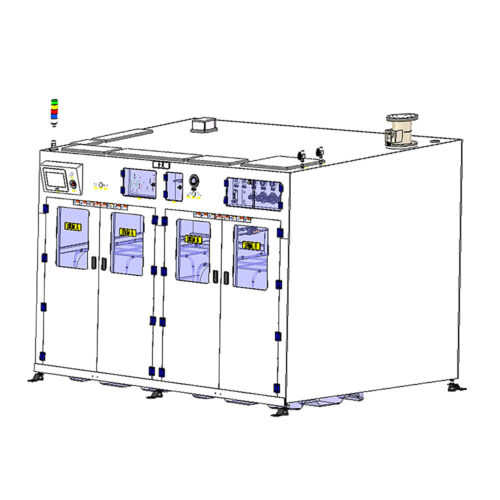
High Purity Chemical Dispense System & Packing System For Semiconductors JW-200L-CDM & JW-1000L-CDM
-
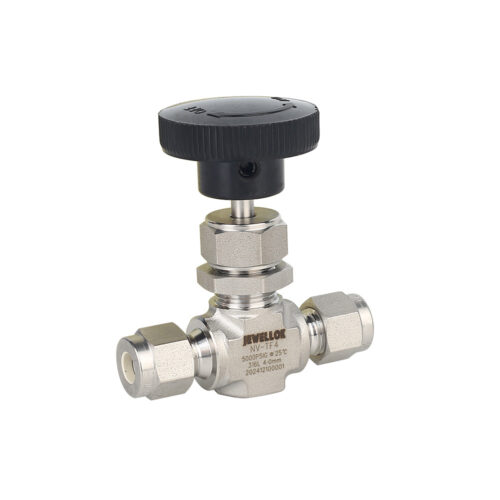
High Purity High Pressure Stainless Steel Needle Valve Natural Gas Flow Control Valve JNV Series
-
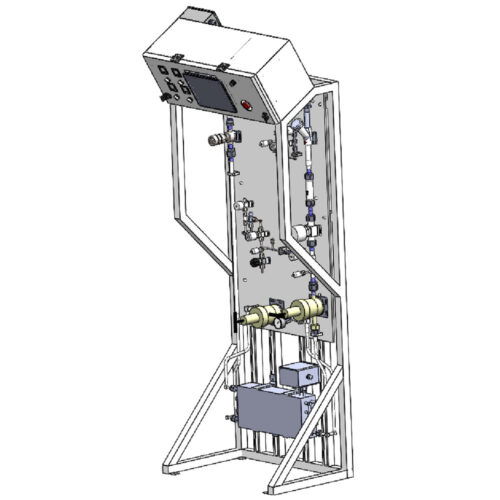
Semiconductor High Purity High Pressure Specialty Gas Bottle Gas Cylinder Storage Cabinet And Gas Pressure Regulating Cabinet
-
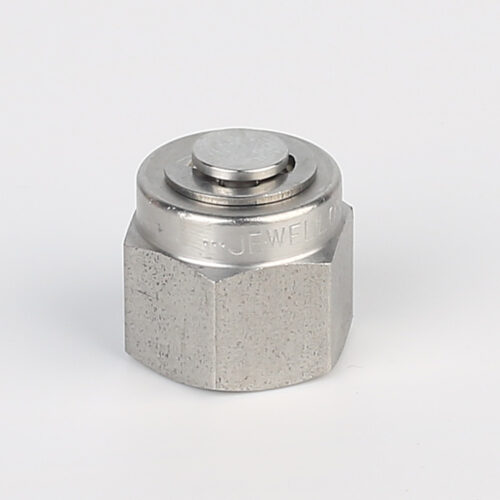
7121L Plug High Purity Plug Fitting And Blanking Plug
-
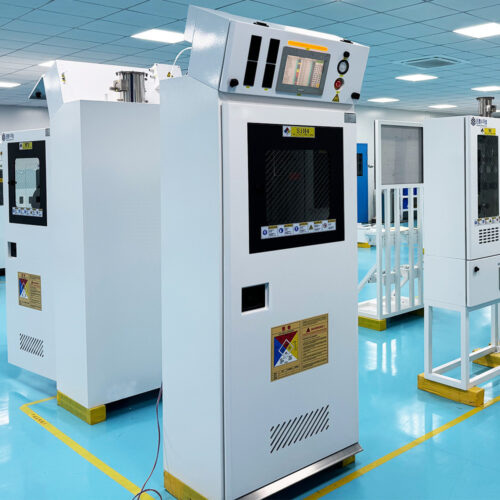
High Purity Bulk Specialty Gas Pressure Control And Filtration Bulk Gas Skid Systems JW-300-BSGS
-
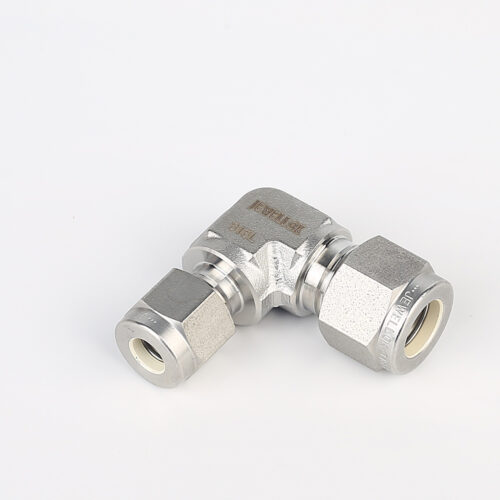
765LR Reducing Tee | Stainless Steel 316 High Purity Butt Weld Fittings Metal Face Seal For Welding Pipe Fitting Reducing Tee
-
Automated Bulk Liquid Chemical Delivery System (BCDS) with PLC Controls for High-Volume Industrial Fluid Transport