
Valves Manufacturer Tel: +86 13380377051

How Do You Select the Right Pressure Regulator for a Laboratory Gas Distribution System?
1. Introduction
Selecting the right pressure regulator is essential for ensuring the safety, stability, and performance of a laboratory gas distribution system. Laboratories rely on accurately controlled gas pressure for analytical instruments, chemical experiments, pharmaceutical research, semiconductor processing, and various scientific applications. An incorrectly selected regulator can cause pressure fluctuations, gas contamination, equipment damage, excessive gas consumption, or potentially hazardous operating conditions.
A laboratory gas pressure regulator reduces gas pressure from a high-pressure source, such as a compressed gas cylinder or centralized gas manifold, to a controlled downstream pressure suitable for the application. Depending on the system design, it may also maintain stable delivery pressure when inlet pressure or gas demand changes.
However, selecting a regulator involves more than matching inlet and outlet pressure ratings. Engineers must evaluate gas compatibility, flow capacity, pressure stability, material selection, purity requirements, connection standards, operating temperature, and safety protection.
This guide explains how to select the right pressure regulator for a laboratory gas distribution system, helping laboratory managers, engineers, equipment purchasers, and system integrators make informed technical decisions.
2. Understand the Function of a Laboratory Gas Pressure Regulator
A pressure regulator controls downstream gas pressure by balancing the forces acting on an internal regulating mechanism. Depending on its design, this mechanism may include a diaphragm, sensing element, spring, valve seat, and poppet assembly.
When downstream pressure decreases because gas consumption increases, the regulator responds by opening the regulating valve further. When downstream pressure rises toward the setpoint, the valve reduces the gas flow. This continuous adjustment helps maintain the required delivery pressure within the regulator’s operating range.
Laboratory gas distribution systems commonly use two main regulator configurations.
2.1 Single-Stage Pressure Regulators
A single-stage regulator reduces source pressure to the required outlet pressure in one regulating stage.
It is suitable for many applications where the source pressure remains reasonably stable or where moderate outlet-pressure variation is acceptable.
However, as cylinder pressure decreases during use, the outlet pressure may change. This behavior is often associated with the regulator’s pressure characteristics and is commonly described as supply-pressure effect or inlet-pressure effect.
For applications requiring highly stable delivery pressure, the effects of changing inlet pressure should be evaluated carefully.
2.2 Two-Stage Pressure Regulators
A two-stage regulator reduces pressure in two successive stages. The first stage reduces the source pressure to an intermediate level, and the second stage controls the final outlet pressure.
This arrangement can improve outlet-pressure stability as cylinder pressure decreases, although actual performance depends on the regulator design, flow demand, and operating conditions.
Two-stage regulators are often considered for analytical instruments, calibration equipment, and laboratory processes where pressure consistency is important.
The choice between single-stage and two-stage regulation should be based on the application’s stability requirements, operating pressure, and expected flow variation.
3. Determine the Type of Gas Being Supplied
The first step in regulator selection is identifying the gas and its chemical properties.
Laboratories use nitrogen, argon, helium, hydrogen, oxygen, carbon dioxide, compressed air, ammonia, and various specialty gases. These gases differ in chemical reactivity, corrosiveness, toxicity, flammability, and compatibility with regulator materials.
For example, nitrogen and argon are commonly used as inert gases, while hydrogen is flammable and requires equipment suitable for hydrogen service. Oxygen requires materials and cleanliness appropriate for oxygen service because contamination with oil or grease can create serious ignition hazards.
Corrosive gases may require specialized alloys, compatible seals, and dedicated regulator designs. Toxic gases may require additional containment, leak detection, and ventilation provisions.
Before selecting a regulator, confirm the following:
- Gas identity and chemical composition.
- Gas purity grade and contamination limits.
- Compatibility of body, diaphragm, valve seat, and sealing materials.
- Maximum and minimum operating temperatures.
- Potential corrosion or reaction risks.
- Applicable industry standards and safety requirements.
A regulator that performs well with nitrogen may not be appropriate for a corrosive, reactive, or high-purity specialty gas.
For mixed-gas applications, compatibility should be assessed for the complete gas composition rather than only the primary component.
4. Calculate the Required Inlet and Outlet Pressure
Pressure ratings are among the most important technical parameters when selecting a laboratory gas regulator.
4.1 Inlet Pressure
The inlet pressure is the pressure entering the regulator from the gas cylinder, manifold, or upstream pipeline.
The regulator’s maximum allowable inlet pressure must be compatible with the highest possible source pressure under the intended operating conditions. Engineers should consider the cylinder’s rated service pressure, maximum expected pressure, temperature effects, and applicable pressure-system requirements.
Selecting a regulator based only on the cylinder’s typical operating pressure can create an unsafe configuration if the actual maximum source pressure is higher.
4.2 Outlet Pressure
The outlet pressure is the regulated pressure delivered to the downstream distribution system or instrument.
The required outlet pressure should be obtained from the instrument manufacturer’s specifications and verified against the system’s pressure losses and operating requirements.
If an analytical instrument requires a specific inlet pressure, the regulator must maintain a suitable pressure at the point of use rather than merely at the regulator outlet.
4.3 Pressure Regulation Range
A regulator’s adjustable outlet range must include the intended operating setpoint.
For example, if a laboratory instrument requires a regulated supply of 3 bar, the selected regulator must have an appropriate outlet-pressure range that includes 3 bar and provides adequate control at the required flow.
A regulator with an unnecessarily high outlet-pressure range may offer less convenient adjustment or unsuitable control characteristics for a low-pressure application.
The regulator’s maximum outlet capability must also be evaluated together with downstream component pressure ratings and overpressure protection.
5. Select the Correct Flow Capacity
Flow capacity is another critical factor. A regulator must deliver the required gas flow while maintaining acceptable outlet-pressure stability.
Laboratory equipment may have low continuous consumption, intermittent high-flow demand, or rapidly changing operating requirements.
The design should identify the minimum, normal, and maximum expected flow rates, including the possibility that multiple instruments will operate simultaneously.
5.1 Understand the Flow Rating
Manufacturers may specify regulator flow performance using standardized flow curves, flow coefficients, or rated flow values under defined inlet and outlet conditions.
These values should not be compared without checking the test conditions. Gas type, inlet pressure, outlet pressure, and temperature can all affect actual flow performance.
For critical applications, use the manufacturer’s flow curves to confirm that the regulator can deliver the required flow at the intended operating pressures.
5.2 Avoid Undersizing
An undersized regulator may cause excessive pressure drop, unstable delivery, or insufficient gas flow during peak demand.
These problems can affect chromatographs, analytical instruments, and other equipment that requires stable gas pressure.
5.3 Avoid Oversizing
Choosing a regulator with substantially more capacity than necessary is not always beneficial. Depending on the design, an oversized regulator may provide less convenient adjustment at very low flow rates or exhibit less favorable control behavior in the intended operating range.
The best selection matches the regulator’s usable flow range to the application’s actual demand.
6. Choose Suitable Materials for Purity and Corrosion Resistance
Material selection directly affects regulator service life, gas compatibility, and contamination control.
Common regulator body materials include stainless steel, brass, and selected specialty alloys. Internal components may use stainless steel, elastomers, fluoropolymers, or other materials according to the gas service.
6.1 Stainless Steel Regulators
Stainless steel regulators are widely used in laboratory and industrial gas systems. They are particularly common in high-purity applications where corrosion resistance, low contamination potential, and suitable internal surface quality are important.
For ultra-high-purity applications, additional specifications may include electropolished surfaces, controlled internal geometry, high-purity cleaning, and suitable packaging.
The exact requirements depend on the gas purity specification and the sensitivity of the downstream process.
6.2 Brass Regulators
Brass regulators can be suitable for many general-purpose gas applications when the gas chemistry and pressure conditions are compatible with the selected product.
They should not automatically be considered suitable for every gas or high-purity process. Compatibility and contamination requirements must be checked against the manufacturer’s specifications.
6.3 Diaphragm and Seal Materials
Diaphragms and seals influence leakage performance, chemical resistance, and regulator response.
PTFE, FKM, EPDM, and other materials have different compatibility characteristics. No single material is suitable for every gas, concentration, pressure, and temperature.
For high-purity or corrosive applications, engineers should verify all wetted materials, including the valve seat, diaphragm, seals, and internal passages.
7. Consider High-Purity Requirements
High-purity gas distribution systems require special attention because small amounts of contamination can affect analytical results, process quality, or equipment performance.
A high-purity regulator should be selected according to the required contamination limits and the complete gas delivery design.
Important considerations include:
- Suitable stainless steel construction.
- Low-contamination internal design.
- Appropriate surface finish and cleaning procedures.
- Compatible diaphragm and sealing materials.
- Low internal dead volume where relevant.
- Reliable leak-tight connections.
- Appropriate filtration when required by the application.
- Protection against contamination during installation and maintenance.
For semiconductor research, gas chromatography, and sensitive analytical testing, moisture, oxygen, hydrocarbons, and particles may be particularly important contaminants.
A regulator marketed as high purity should still be evaluated against measurable specifications. Buyers should request technical documentation regarding materials, cleaning, leak testing, and the intended purity application.
Regulator performance also depends on the quality of the upstream gas source, pipeline materials, valves, fittings, and installation procedures.
8. Evaluate Pressure Stability and Control Accuracy
Pressure stability is particularly important when gas consumption changes or when the gas source gradually loses pressure.
Two important performance characteristics are droop and supply-pressure effect.
Droop describes the change in outlet pressure as flow demand increases. A regulator may maintain a particular pressure under low-flow conditions but experience a pressure decrease as flow rises.
Supply-pressure effect describes the influence of inlet-pressure changes on outlet pressure. In some regulator designs, outlet pressure may rise as inlet pressure decreases, depending on the regulator’s construction and operating conditions.
These characteristics should be reviewed in the manufacturer’s technical documentation.
For analytical instruments, calibration systems, and processes requiring stable gas pressure, choose a regulator with suitable pressure stability over the expected flow and inlet-pressure range.
Other useful parameters include repeatability, sensitivity, lock-up pressure, and response to sudden changes in demand.
A regulator’s advertised accuracy should not be interpreted as a guarantee of identical pressure under all operating conditions. Actual performance depends on the specific operating point and the manufacturer’s test method.
9. Select Appropriate Connections and Installation Features
The regulator’s inlet and outlet connections must match the gas source and downstream piping system.
Common connection types include NPT threads, BSP threads, compression fittings, metal face-seal fittings, and other gas-specific connections.
Thread standards and sealing methods must not be mixed without explicit approval. Incorrect combinations can cause leakage, mechanical damage, or unreliable sealing.
For high-purity gas delivery, metal face-seal connections or other suitable low-leakage connection technologies may be preferred where required by the system design.
Before ordering, confirm:
- Inlet connection type and size.
- Outlet connection type and size.
- Required tubing outside diameter.
- Applicable cylinder valve connection standard.
- Maximum operating pressure.
- Installation orientation and available space.
- Required isolation valves and gauges.
- Maintenance and replacement accessibility.
The regulator should be installed according to the manufacturer’s instructions, with suitable support and appropriate protection from impact, contamination, and environmental exposure.
10. Integrate Safety and Overpressure Protection
Pressure regulator selection must include an assessment of credible failure scenarios.
A regulator can malfunction, become contaminated, or fail to control pressure correctly. The resulting downstream pressure may exceed the ratings of connected equipment.
Depending on the application, the system may require an appropriately selected pressure-relief valve, regulator monitor, excess-flow protection, or other engineered safeguards.
The protection method must be suitable for the gas, pressure, flow, and potential consequences of a release. Relief discharge from hazardous-gas systems must be routed to a safe destination where required.
Additional protective measures may include gas detection, emergency shutoff valves, ventilated gas cabinets, and automatic isolation systems.
Oxygen, flammable gases, toxic gases, and highly reactive gases require service-specific precautions. A regulator alone does not provide complete system safety.
Installation, inspection, and maintenance should be performed by qualified personnel following applicable codes, manufacturer instructions, and the facility’s documented procedures.
11. Common Mistakes When Selecting Laboratory Gas Regulators
Several selection errors can reduce system performance or create safety risks.
Choosing by pressure rating alone: A regulator may have suitable pressure ratings but inadequate flow capacity or poor pressure stability for the application.
Ignoring gas compatibility: Materials suitable for inert gases may be unsuitable for corrosive, reactive, or specialized gas service.
Using general-purpose regulators for high-purity applications: Ordinary construction or cleaning procedures may introduce unacceptable contamination.
Selecting an incorrect outlet range: A regulator should operate comfortably within its intended control range rather than at an unsuitable extreme.
Overlooking downstream protection: The system must account for regulator failure and the pressure limits of downstream equipment.
Ignoring connection standards: Incorrect fittings or sealing methods can create leaks and installation difficulties.
Failing to consider maintenance: Regulators should be accessible for inspection, testing, and replacement without introducing unnecessary operational risks.
Avoiding these mistakes begins with a complete review of gas requirements and system operating conditions before purchasing equipment.
12. How to Choose a Reliable Pressure Regulator Supplier
A qualified supplier should be able to recommend a regulator based on actual technical requirements rather than simply providing a product with a matching pressure rating.
Buyers should evaluate product specifications, gas compatibility information, flow curves, material documentation, pressure ratings, connection options, and quality-control procedures.
For high-purity laboratory gas distribution systems, it is useful to request documentation covering internal surface treatment, cleaning procedures, leakage performance, and contamination control.
The supplier should also clarify maintenance requirements, spare-parts availability, delivery schedules, and technical support.
Jewellok may be considered for inquiries involving high-purity gas pressure regulators, diaphragm valves, and pressure control panels, subject to confirmation of the required gas service, pressure range, flow capacity, and product configuration.
Before placing an order, confirm that the proposed regulator meets the complete application specification and is suitable for integration into the intended gas distribution system.
13. Conclusion
Selecting the right pressure regulator for a laboratory gas distribution system requires a comprehensive evaluation of gas properties, inlet pressure, outlet pressure, flow capacity, material compatibility, purity requirements, and pressure stability.
The regulator must deliver sufficient gas flow while maintaining acceptable downstream pressure under expected operating conditions. Its wetted materials and connections must be compatible with the gas, and the complete installation must include appropriate protection against foreseeable pressure-related hazards.
For high-purity applications, regulator cleanliness, internal design, and leakage performance are just as important as nominal pressure ratings.
By defining the operating requirements before purchasing, reviewing manufacturer performance data, and working with a qualified supplier, laboratories can select pressure regulators that support reliable gas delivery, accurate experimental results, and long-term operational safety.
For more about how do you select the right pressure regulator for a laboratory gas distribution system, you can pay a visit to Jewellok at https://www.jewellok.com/ for more info.
-
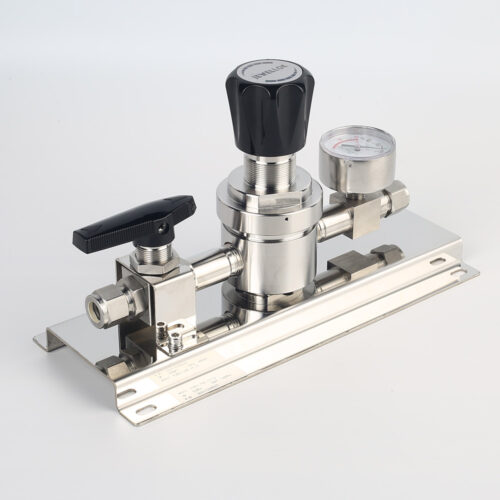
High Purity And Industria Gas Stick Assemblies Precise Pressure Control Gas Systems JSR-1ETG-BV Series
-
7102L Stainless Steel 316L SS Union Cross Ultra High Purity Long Arm Union Elbow Tee Cross Butt Weld Fittings
-
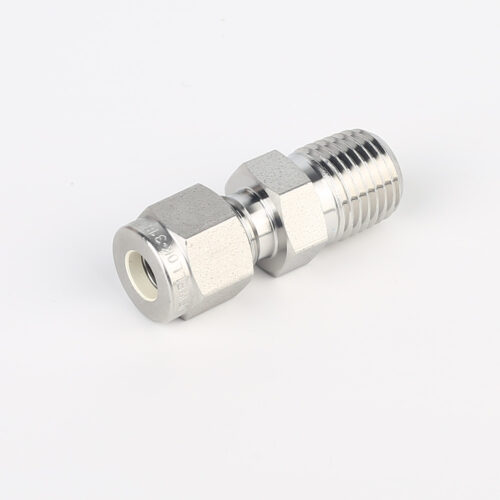
768L Stainless Steel Male Tube Butt Weld Connector | Clean Weld Fittings And Ultra-High Purity Fittings
-
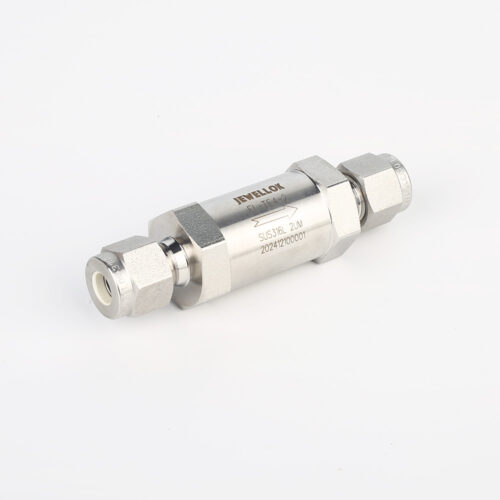
JF Series In-Line Gas Filters | High Purity High Precision High Flow Semiconductor Gas Filter Gas Filtration & Purification
-
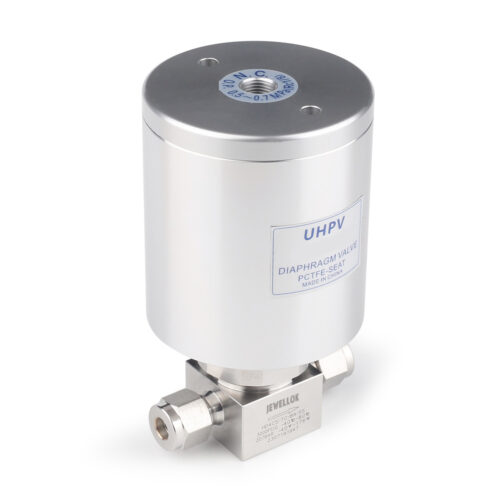
316L Stainless Steel Semiconductor High Purity High Pressure Pneumatic Diaphragm Valve For Laboratory Specialty Gases
-
High Pressure High Temperature Pneumatic Ultrahigh Purity Stainless Steel Diaphragm Valves
-
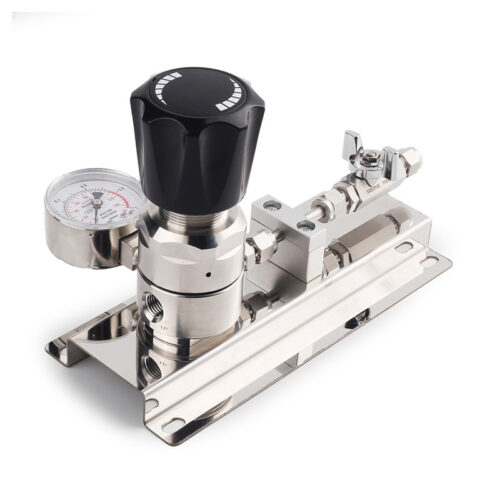
Ultra High Purity Stainless Steel Compressed Gas Changeover Manifold Panel System For Integrated Gas Supply System
-
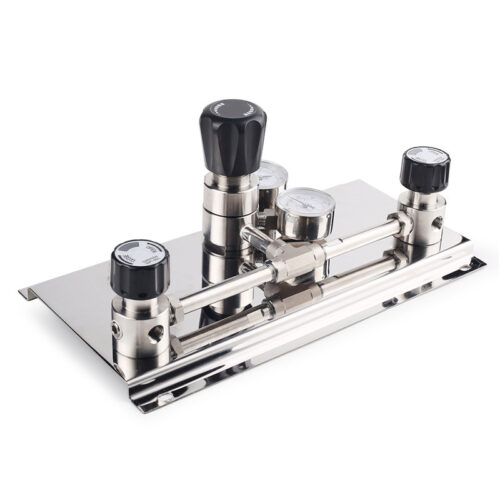
High Purity Semi-Auto Stainless Steel Changeover Manifold System, Nitrogen High Pressure Control Panel With Semiconductor Valve Manifold Box Diaphragm Valves