
Valves Manufacturer Tel: +86 13380377051
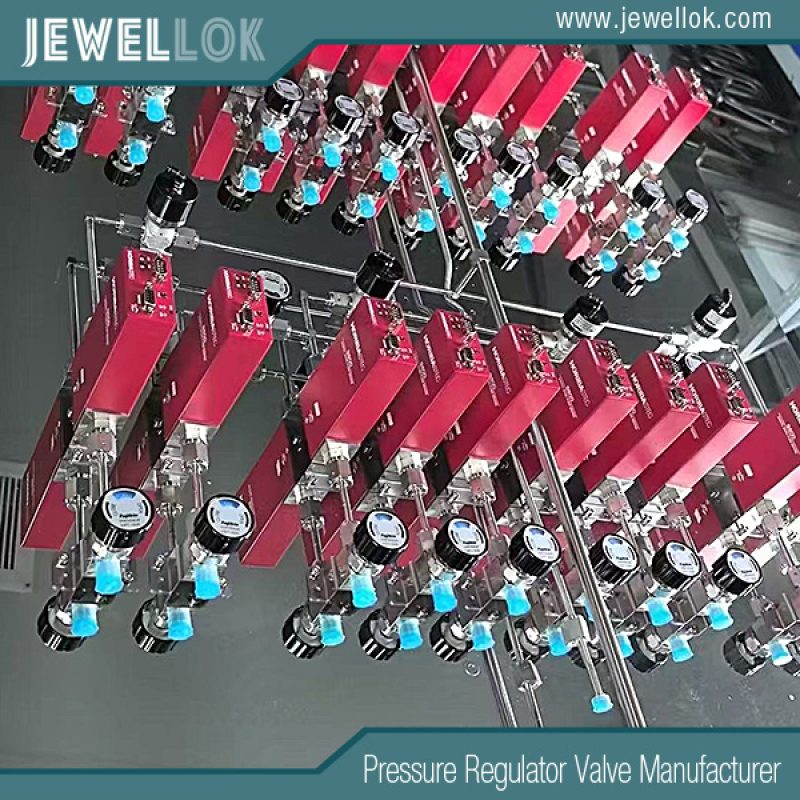
Ultra-High Purity Pressure Regulator for Electronic Grade Gas Systems
In semiconductor manufacturing, photovoltaic production, LED fabrication, flat-panel display manufacturing, and other advanced electronic industries, process gases must be delivered with exceptional purity, stability, and precision. Even trace levels of moisture, oxygen, hydrocarbons, particles, or metallic contamination can affect sensitive manufacturing processes and reduce product yield. For this reason, the pressure regulator has become a critical component of modern electronic grade gas delivery systems.
An ultra-high purity pressure regulator is specifically designed to reduce and control gas pressure while minimizing contamination and maintaining stable process conditions. Unlike conventional industrial regulators, UHP regulators require carefully controlled materials, surface finishes, internal configurations, sealing technologies, and manufacturing processes.
For electronic grade gases such as nitrogen (N₂), hydrogen (H₂), oxygen (O₂), argon (Ar), helium (He), carbon dioxide (CO₂), and specialty process gases, selecting the appropriate pressure regulator is essential for maintaining gas quality and ensuring reliable operation of the entire gas distribution system.
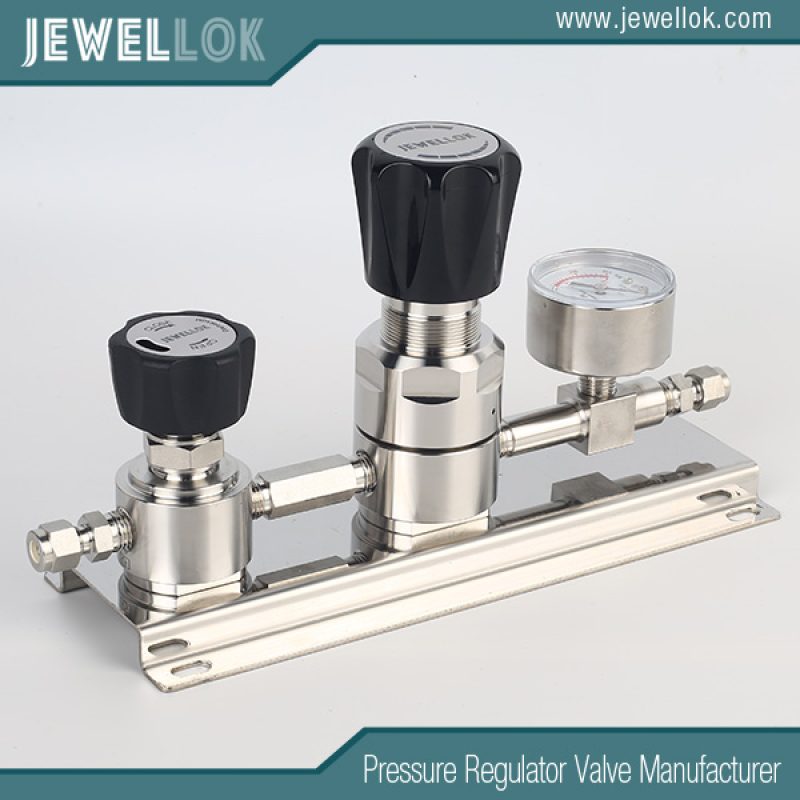
What Is an Ultra-High Purity Pressure Regulator?
An ultra-high purity pressure regulator is a precision pressure-control device used to reduce a high inlet gas pressure to a controlled downstream pressure. It is commonly installed in gas cabinets, gas panels, bulk gas delivery systems, point-of-use systems, and semiconductor process equipment.
The regulator typically consists of a pressure body, diaphragm or sensing mechanism, spring assembly, valve seat, inlet and outlet connections, and adjustment mechanism. During operation, the regulator automatically balances inlet pressure, outlet pressure, and the internal sensing force to maintain the desired downstream pressure.
For electronic grade gas applications, the regulator must do more than simply control pressure. It must also prevent external contamination, minimize internal particle generation, reduce gas adsorption and desorption, and maintain consistent performance over long operating periods.
This combination of pressure control and contamination control distinguishes UHP regulators from standard industrial gas regulators.
Why Pressure Regulation Is Critical in Electronic Gas Systems
Electronic manufacturing processes often require gases to be delivered at precisely controlled pressures and flow conditions. Excessive pressure fluctuations can affect mass flow controllers, process chambers, deposition rates, etching conditions, and chemical reactions.
For example, semiconductor processes such as chemical vapor deposition (CVD), atomic layer deposition (ALD), plasma etching, ion implantation, and cleaning can require tightly controlled gas delivery conditions. A regulator with unstable outlet pressure may cause variations in gas flow, potentially affecting process consistency.
A properly selected UHP pressure regulator provides several important benefits:
- Stable downstream pressure
- Improved process repeatability
- Reduced contamination risk
- Reliable gas delivery
- Better compatibility with sensitive process equipment
- Lower risk of pressure-related equipment damage
- Improved overall gas system safety
In a high-value semiconductor manufacturing environment, even a small pressure-control problem can have significant operational consequences. Therefore, the regulator should be considered an important part of the complete gas delivery architecture rather than an isolated component.
Materials for Ultra-High Purity Regulators
Material selection directly affects the cleanliness, durability, and chemical compatibility of a pressure regulator.
316L stainless steel is widely used for UHP gas system components because of its corrosion resistance, mechanical strength, and suitability for high-purity applications. For demanding semiconductor applications, higher-quality stainless steel and controlled material processing may be specified to minimize impurities and improve surface characteristics.
The internal wetted surfaces are particularly important because they directly contact the process gas. Poorly selected materials can introduce contaminants through corrosion, particle generation, outgassing, or chemical reactions.
Depending on the application, regulator manufacturers may also use specialized diaphragm materials, seals, valve seats, and other engineered components. These materials must be selected according to gas type, pressure range, temperature, chemical compatibility, and required purity level.
For corrosive or reactive specialty gases, material compatibility becomes especially important. The regulator should be evaluated against the specific gas chemistry rather than selected solely according to pressure specifications.
Surface Finish and Internal Cleanliness
Surface finish is another critical factor in UHP gas applications.
Rough internal surfaces can create microscopic areas where moisture, particles, and contaminants may accumulate. These contaminants can later be released into the gas stream and transported toward sensitive process equipment.
High-quality UHP regulators therefore use carefully controlled internal surface finishes. Electropolishing may be used in demanding applications to improve surface smoothness, corrosion resistance, and cleanability.
Manufacturing cleanliness is equally important. A regulator manufactured from high-quality materials can still compromise a gas system if it is assembled in an uncontrolled environment or contaminated during production.
UHP manufacturing typically requires controlled cleaning, assembly, inspection, packaging, and handling procedures. Components may be cleaned using specialized processes to remove oils, particles, moisture, and other residues before final assembly.
The regulator should then be protected from contamination during storage and transportation, often through sealed packaging and controlled handling.
Diaphragm Design and Pressure Control
The diaphragm is one of the most important components in a precision pressure regulator. It separates the sensing mechanism from the gas stream and controls the movement of the regulating valve.
In high-purity applications, diaphragm regulators are often preferred because the diaphragm design can minimize the use of sliding seals and reduce potential contamination pathways.
The diaphragm must provide reliable sensitivity while maintaining mechanical integrity over repeated pressure cycles. Its characteristics influence regulator response, pressure stability, and long-term reliability.
A properly engineered diaphragm assembly can provide precise pressure control while minimizing dead volume and potential contamination. This is particularly valuable in semiconductor gas systems where gas residence time and internal volume can influence system performance.
Pressure Stability and Flow Performance
Pressure stability is a major performance parameter when selecting an electronic-grade gas regulator.
Two important concepts are supply pressure effect and pressure droop. Supply pressure effect describes how changes in inlet pressure can influence outlet pressure. Pressure droop refers to changes in downstream pressure as gas demand increases.
A high-performance UHP regulator should maintain a stable outlet pressure across the expected operating range.
For example, if gas consumption changes rapidly during a semiconductor process, the regulator must respond appropriately without producing excessive pressure fluctuations. Poor pressure regulation can result in unstable downstream flow and may negatively affect process equipment.
Regulator sizing is therefore essential. The regulator should be selected according to inlet pressure, outlet pressure, required flow rate, gas properties, temperature, and expected operating conditions.
Oversizing or undersizing the regulator can both lead to undesirable performance.
Connection Technologies for UHP Gas Systems
Connection design is another key consideration. Electronic grade gas systems commonly use welded connections or high-integrity face-seal fittings.
Face-seal connections, including VCR-type configurations, can provide reliable metal-to-metal sealing for high-purity gas applications. Proper installation helps reduce leakage and contamination risks.
Welded connections can further minimize potential leak paths and dead volume. They are often used in permanently installed gas panels and distribution lines where long-term integrity is a priority.
The choice between removable face-seal connections and welded configurations depends on system architecture, maintenance requirements, installation conditions, and process specifications.
Regardless of connection type, correct installation procedures are essential. Improper assembly, excessive torque, damaged sealing surfaces, or contamination during installation can compromise the entire gas system.
Leak Tightness and Contamination Control
Leak prevention is fundamental to electronic-grade gas delivery.
A pressure regulator should maintain high sealing integrity throughout its operating life. External leakage can allow atmospheric contaminants to enter the gas system, while internal leakage can affect pressure stability and gas consumption.
For semiconductor applications, helium leak testing is commonly used as a method for evaluating the integrity of high-purity gas components.
In addition to leak tightness, internal cleanliness must be considered. Particles generated inside the regulator can travel downstream and potentially contaminate filters, mass flow controllers, process chambers, or wafers.
For this reason, UHP regulators should be manufactured, cleaned, tested, and packaged according to the cleanliness requirements of the target application.
Applications in Semiconductor and Electronics Manufacturing
Ultra-high purity pressure regulators are used across many electronic manufacturing applications.
Semiconductor Fabrication
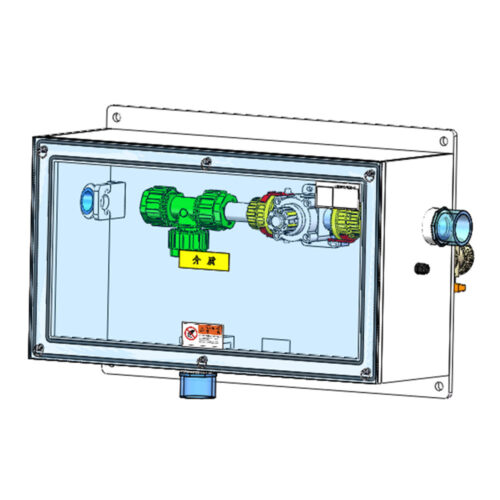
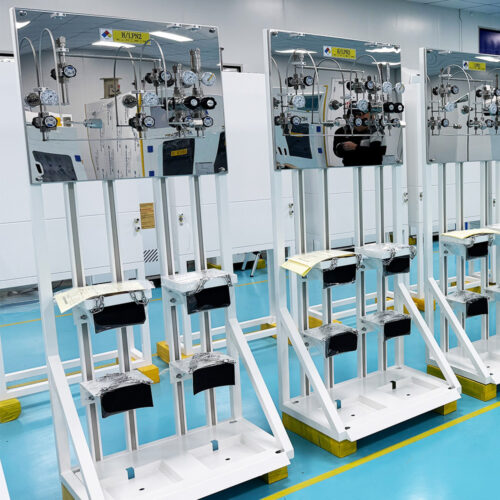
Semiconductor fabs use precision regulators in gas cabinets, valve manifold boxes, gas panels, and point-of-use delivery systems. They can be used with carrier gases, process gases, purge gases, and specialty gas mixtures.
CVD and ALD Systems
CVD and ALD processes depend on controlled gas delivery to achieve repeatable thin-film deposition. Stable pressure regulation helps maintain consistent precursor and carrier-gas delivery.
Etching Systems
Plasma etching processes use specialized gases under carefully controlled conditions. Reliable pressure regulation contributes to stable gas delivery and process repeatability.
LED and Display Manufacturing
LED, OLED, and flat-panel display manufacturing also require high-purity gases for deposition, cleaning, and other production processes. UHP regulators can help maintain stable gas supply conditions while minimizing contamination risks.
Solar Cell Manufacturing
High-purity gases are also used in photovoltaic manufacturing processes. Pressure regulators help provide controlled gas delivery for deposition, cleaning, and related processes.
How to Select the Right UHP Pressure Regulator
Choosing a regulator should begin with a complete review of the application.
Important selection parameters include:
- Gas type: Confirm compatibility with the specific electronic-grade or specialty gas.
- Inlet pressure: Determine the maximum and normal supply pressure.
- Outlet pressure: Identify the required downstream operating pressure.
- Flow rate: Consider both normal and peak gas demand.
- Temperature: Verify the operating temperature range.
- Material compatibility: Evaluate all wetted materials.
- Connection type: Select suitable face-seal, welded, or other high-purity connections.
- Leak rate: Establish the required external and internal leak specifications.
- Surface finish: Consider the required internal surface quality.
- Cleanliness: Confirm the cleaning, assembly, and packaging standards.
- Pressure stability: Evaluate supply pressure effect and droop characteristics.
- Maintenance requirements: Consider whether the regulator needs to be serviced or replaced periodically.
The correct selection should be based on the complete operating environment rather than simply choosing a regulator according to its nominal pressure rating.
Importance of Manufacturing and Quality Control
Quality control is particularly important for UHP pressure regulators because performance depends on both design and manufacturing consistency.
A professional manufacturer should control material traceability, machining accuracy, surface finishing, cleaning, assembly, pressure testing, leak testing, and final inspection.
Typical quality procedures may include dimensional inspection, pressure testing, helium leak testing, cleanliness inspection, and functional performance testing.
For critical semiconductor applications, customers may also require material certificates, test reports, inspection records, and batch traceability.
These quality-control measures provide greater confidence that each regulator will perform consistently in demanding gas delivery environments.
Conclusion
Ultra-high purity pressure regulators are essential components of modern electronic grade gas systems. Their role extends far beyond reducing gas pressure. A high-performance regulator must provide stable pressure control while minimizing particles, moisture, outgassing, leakage, and other contamination risks.
316L stainless steel construction, optimized diaphragm design, high-quality internal surface finishes, reliable sealing technology, controlled manufacturing processes, and comprehensive testing all contribute to regulator performance.
As semiconductor devices become smaller and manufacturing processes become increasingly sensitive to contamination, the requirements for gas delivery systems will continue to become more demanding. Selecting a properly engineered ultra-high purity pressure regulator can help manufacturers improve gas delivery stability, protect downstream equipment, maintain process consistency, and support reliable production.
For semiconductor fabs, electronics manufacturers, and specialty gas system integrators, the best approach is to evaluate the regulator as part of the complete UHP gas delivery system. Matching gas compatibility, pressure range, flow requirements, connection technology, cleanliness level, and testing standards ensures that the regulator can deliver the reliability required by advanced electronic manufacturing.
For more about ultra-high purity pressure regulator for electronic grade gas systems, you can pay a visit to Jewellok at https://www.jewellok.com/ for more info.
-
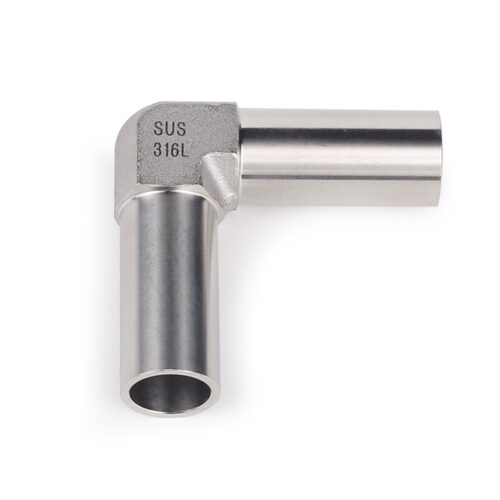
High Purity Stainless Steel Mini Tube Butt Weld Fittings For Semiconductor
-
Scrubber Tail Gas Treatment Cabinet Waste Gas Treatment Wet Scrubber Exhaust Gas Treatment Spray Tower
-
Stainless Steel High Purity High Temperature Pneumatic Actuated Ball Valves JBV2 Series
-
Stainless Steel Low Pressure Seal Pneumatic Diaphragm Control Valve For For HP & UHP Gases
-
Semi-Automatic VMB Gas Cabinet With Semiconductor Valve Manifold Box Diaphragm Valves And Gas Pressure Regulators
-
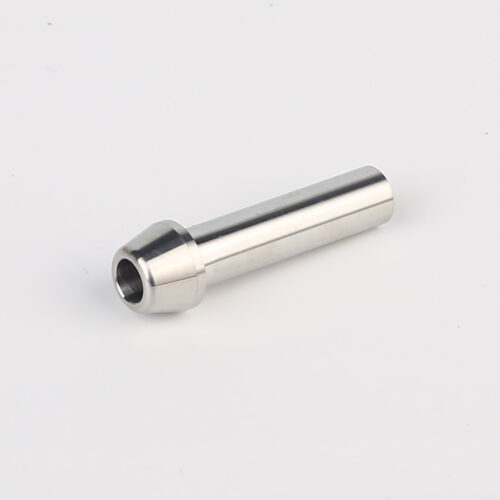
767LP Port Connector Ultra High Purity VCJ Metal Gasket Face Seal Tube Fittings
-
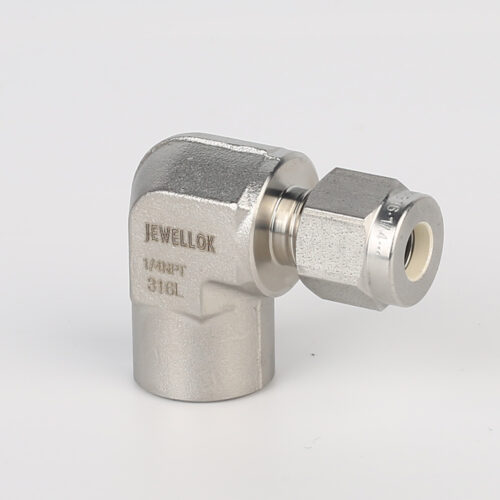
770L Female Elbow | Stainless Steel High Purity Weld Fittings Female Micro Elbow Fittings
-
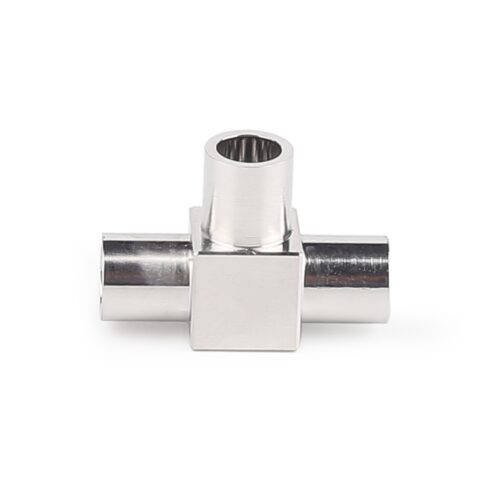
Stainless Steel Ultra High Purity Mini Butt Weld Mini Tee Reducer MTRW Series Fittings