
Valves Manufacturer Tel: +86 13380377051
How to Achieve Zero Emissions or Closed-Loop Water Treatment in Wet Scrubber Tail Gas Treatment
Wet scrubbers are cornerstone technologies in industrial air pollution control. Widely deployed across chemical manufacturing, semiconductor fabrication, power generation, and waste incineration, they efficiently remove acid gases, particulates, and volatile organic compounds (VOCs) from exhaust streams by transferring pollutants from the gas phase into a liquid phase.
However, conventional wet scrubber systems face a significant environmental paradox: they solve an air pollution problem by creating a liquid wastewater problem. Scrubber blowdown—the purge water continuously or intermittently discharged to prevent salt and impurity accumulation—contains high concentrations of suspended solids, heavy metals, chlorides, sulfates, and chemical oxygen demand (COD).
Achieving zero liquid discharge (ZLD) or a closed-loop water treatment system transforms this linear disposal model into a circular engineering process. This article explores the architectural, chemical, and mechanical methodologies required to achieve true closed-loop operation in wet scrubber tail gas treatment.
1. The Engineering Challenge: Understanding Scrubber Blowdown
To close the water loop, engineers must first understand the operational dynamics of wet scrubbers. In a typical absorption scrubber, tail gas interacts with a scrubbing liquid (often water dosed with caustic soda, lime, or acid depending on the target pollutant).
-
Evaporative Loss: Due to the thermal energy of the incoming flue gas, a substantial portion of the scrubbing water evaporates, concentrating dissolved minerals and chemical species.
-
Purge Requirement: To prevent scaling, equipment corrosion, and slurry thickening, a fraction of the liquid must be purged (blowdown) and replaced with fresh makeup water.
-
Contaminant Profile: Blowdown water is typically characterized by extreme scaling potential, high total dissolved solids (TDS), fluctuating pH levels, and suspended particulates.
2. Core Principles of a Closed-Loop Architecture
A closed-loop water treatment system eliminates liquid discharge by treating, recycling, and concentrating the scrubbing effluent internally or via dedicated side-stream treatment units. The design revolves around three primary tenets:
-
Maximum Internal Recirculation: Reusing treated water directly back into the primary or secondary scrubbing stages.
-
Side-Stream Purification: Removing scaling precursors, suspended solids, and targeted contaminants before they exceed saturation limits in the main recirculation tank.
-
Volume Reduction and Crystallization: Concentrating the remaining brine to dryness or recovering solid salts for disposal or beneficial reuse.
3. Key Technologies for Achieving ZLD in Scrubber Systems
Achieving closed-loop operation requires a multi-barrier treatment train. No single technology can handle the complex matrix of scrubber blowdown. Below is the typical sequence of technologies utilized in modern industrial plants.
A. Pre-Treatment and Solids Removal
Before water can be processed by advanced membrane or thermal systems, suspended solids and specific scaling ions must be removed to prevent fouling.
-
Coagulation and Flocculation: Addition of coagulants (e.g., ferric chloride or polyaluminum chloride) and polymers to agglomerate fine particulates.
-
Clarification or Lamella Separators: Settling out suspended solids and precipitated heavy metals (often precipitated as hydroxides or sulfides).
-
Media Filtration / Ultrafiltration (UF): Serving as a final polishing step to ensure zero suspended solids enter downstream membrane units (Silt Density Index < 3).
B. Chemical Softening and Anti-Scalant Dosing
Scrubber blowdown is frequently supersaturated with calcium, magnesium, silica, and sulfate ions, which pose severe scaling risks.
-
Lime-Soda Ash Softening: Precipitating calcium as calcium carbonate and magnesium as magnesium hydroxide.
-
Advanced Anti-Scalants: Utilizing specialized polymers designed to inhibit calcium sulfate and silica polymerization at high concentrations.
C. Advanced Membrane Concentration
To minimize the energy-intensive thermal stage, modern ZLD designs utilize robust membrane technologies to concentrate the pre-treated water.
-
High-Pressure Reverse Osmosis (HPRO): Operating at elevated pressures to push water through membranes, achieving high recovery rates.
-
Electrodialysis Reversal (EDR): Applying an electrical potential to migrate ions through ion-exchange membranes, separating a clean permeate stream from a concentrated brine.
-
Forward Osmosis (FO): Utilizing an osmotic pressure gradient to draw clean water across a semi-permeable membrane into a draw solution, leaving contaminants behind.
D. Thermal Concentration and Crystallization
The final stage of zero emissions involves evaporating the concentrated brine from the membrane or softening units to achieve complete dryness.
-
Mechanical Vapor Recompression (MVR): An energy-efficient evaporation technique where secondary steam is compressed and reused as the heating medium.
-
Multi-Effect Evaporators (MEE): Passing steam through a series of vessels, each operating at a lower pressure, to maximize thermal efficiency.
-
Crystallizers / Spray Dryers: Converting the final heavy brine slurry into dry crystalline salt cakes or solid powder suitable for landfill disposal or industrial reuse.
Summary of Treatment Technologies
| Technology Stage | Primary Function | Target Contaminants | Key Engineering Considerations |
| Pre-treatment | Solid-liquid separation | TSS, heavy metals, free oils | Polymer selection, pH optimization |
| Chemical Softening | Hardness reduction | Calcium, magnesium, silica | Chemical dosing accuracy, sludge management |
| Membrane Separation | Volume reduction | TDS, dissolved salts | Membrane fouling, scaling potential, osmotic pressure limits |
| Thermal Evaporation | Final ZLD achievement | High-salinity brine | Energy consumption, materials of construction (corrosion) |
4. Materials Selection and Corrosion Engineering
Operating a closed-loop water treatment system connected to a wet scrubber introduces severe metallurgical challenges. As water loops are closed, the concentration of corrosive ions—particularly chloride ($Cl^-$) and fluoride ($F^-$)—increases exponentially.
-
Pitting and Crevice Corrosion: High chloride concentrations combined with fluctuating low pH levels can rapidly destroy standard austenitic stainless steels (such as 304 or 316L).
-
Advanced Alloys: Engineers must specify super austenitic stainless steels (e.g., 254 SMO), nickel-based alloys (e.g., Hastelloy C-276, Alloy 22), or titanium for wetted parts, piping, and heat exchangers.
-
Non-Metallic Linings: Fiberglass Reinforced Plastic (FRP), rubber linings, and fluoropolymer coatings (such as PTFE or PVDF) are widely utilized in scrubber towers and reaction tanks to withstand aggressive chemical environments.
5. Operational Optimization and Control Strategies
Maintaining a closed-loop system requires sophisticated automation and real-time monitoring to prevent system upsets.
-
Real-Time Ion Monitoring: Continuous measurement of conductivity, oxidation-reduction potential (ORP), pH, and specific ion concentrations (e.g., chlorides) in the recirculation loop.
-
Automated Blowdown and Purge Control: Integrating smart sensors with automated valve actuation to regulate side-stream treatment flow rates dynamically based on flue gas load fluctuations.
-
Energy Integration (Heat Pinch Analysis): Integrating waste heat from industrial processes or the scrubber exhaust itself to drive thermal evaporators, significantly reducing the overall carbon footprint of the ZLD system.
Conclusion
Achieving zero emissions and closed-loop water treatment in wet scrubber tail gas treament is no longer just an aspirational environmental goal—it is a mandatory engineering strategy for industries facing strict discharge regulations and water scarcity.
By integrating multi-stage physical-chemical pre-treatment, advanced membrane concentration, thermal crystallization, and corrosion-resistant metallurgy, industrial facilities can successfully eliminate wastewater discharges, recover valuable by-products, and achieve true environmental sustainability in air pollution control.
For more about how to achieve zero emissions or closed-loop water treatment (Closed-Loop Water Treatment) of wet scrubber tail gas treatment, you can pay a visit to Jewellok at https://www.jewellok.com/ for more info.
-

Liquid Chemical Delivery Module (CDM) Maintenance: Optimizing UHP Diaphragm Valves for Maximum System Process Uptime
-

Ultra High Purity Liquid Chemical Delivery System And Bulk Chemical Delivery Handling System For Semiconductor Cleanrooms
-
UHP Bulk Liquid Chemical Delivery System (BCDS) Implementation for High-Efficiency Photovoltaic and Solar Cell Production Lines
-
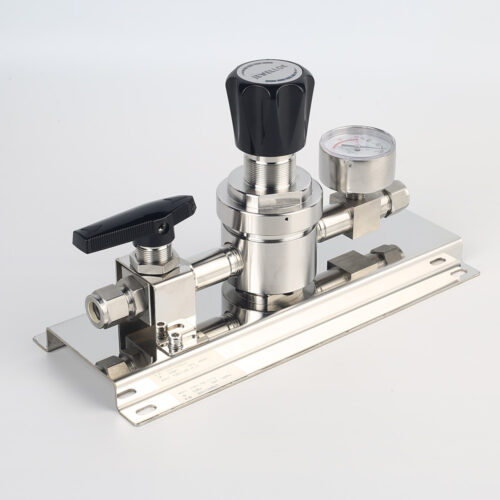
High Purity And Industria Gas Stick Assemblies Precise Pressure Control Gas Systems JSR-1ETG-BV Series
-
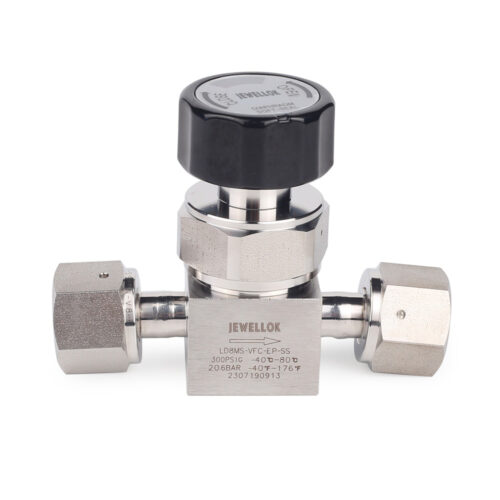
316L Vim Var Stainless Steel Ultra High Purity Diaphragm Valve Options For Semiconductor Gas Distribution Systems
-
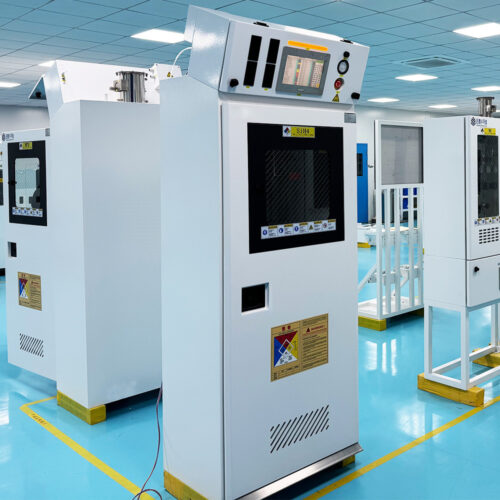
Bulk Specialty Gas Systems (BSGS) Gas Cabinets And Scrubber Tail Gas Treatment Cabinets For High Purity Bulk Specialty Gas Delivery
-
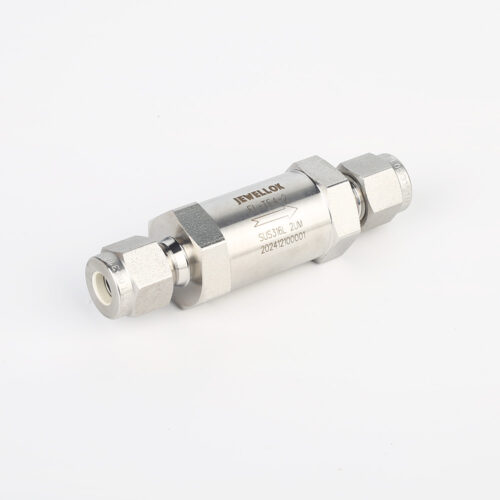
JF Series In-Line Gas Filters | High Purity High Precision High Flow Semiconductor Gas Filter Gas Filtration & Purification
-
Stainless Steel Mini Elbow Mini Tee Mini Cross Mini Tribow Ultrahigh Purity Mini Butt Weld Fittings